LANGUAGE
 中文简体
中文简体 русский
 Français
 Español
 Português
 عربى
عربى
Content
- 1 Compare extrusion equipment by whole-line behavior, not by screw size alone
- 2 Core equipment signals worth reviewing in a cable extruder
- 3 A practical equipment matrix for insulation and jacketing lines
- 4 Hidden losses after the extruder: tension drift and reel changes
- 5 From extruder to pallet: integration steps that decide real capacity
- 6 Industry application differences: power cable, communication cable, and building wire
- 7 Maintenance and compliance habits for a long extrusion asset life
Cable makers often compare extrusion equipment by screw diameter, motor rating, or claimed speed first. Those numbers matter, but they do not tell the whole story. In a cable factory, the higher-risk decisions sit in material compatibility, heating and cooling control, tension stability, and the coiling or packaging steps that follow the extruder. A line with a modest headline speed but tight temperature control and continuous-line design usually returns more usable output than a faster machine that keeps stopping for drift, cleaning, or reel changes.
The practical conclusion is simple: treat extrusion equipment as part of a production system, not as an isolated machine. Before signing an order, confirm how the extruder will be fed, how tension will be managed during spool changes, and how the finished coil will be handled downstream. Those three points determine whether a new line reaches its real utilization rate.
Compare extrusion equipment by whole-line behavior, not by screw size alone
A cable extrusion line does not earn money only during the minutes when the screw turns. It earns money when the operator can change from a PVC jacket compound to a PE compound without spending hours purging, when a take-up reel can be swapped without opening a long section of scrap, and when the finished coil arrives at packing without soft or deformed windings.
Therefore, meaningful equipment selection starts with the product mix. A plant that mainly runs PVC and PE insulation needs different screw geometry, barrel materials, and control logic than a plant that also runs PP or cross-linkable PE compounds. For formula-heavy shops, the high-efficiency PP/PVC/PE cable extruder guide explains why the same machine cannot be treated as a universal solution for every material.
Another common mistake is pricing the extruder before defining the process window. A supplier may offer an extruder with a wide speed range, but the real question is whether temperature can be held stable at low speed during start-up, mid speed during normal running, and high speed near the end of a full reel. Temperature stability affects wall thickness, surface finish, and scrap rate far more than a few extra meters per minute on paper.
Three system-level checks to make before comparing quotations
- Confirm the material families that will run this quarter, not just the main product today. PVC, PE, PP, UPVC, and XLPE place different demands on screw design and barrel temperature profile.
- Check whether the line can continue extruding while the reel is changed. Storage racks, dancer assemblies, and tension controls often affect uptime more than the extruder drive.
- Define how the product leaves the line. If coiling or wrapping creates bottlenecks, the new extruder will simply move the problem further downstream.
Core equipment signals worth reviewing in a cable extruder
Once the production context is clear, inspect the machine design details that determine long-term reliability. Four areas deserve attention before a purchase decision.
Material window
The screw and barrel set must match the compounds actually planned. A machine optimized for PVC can struggle with PE because melt flow and shear sensitivity differ. Ask for the machine’s compound list, not just its general specifications.
Heating and cooling response
Rapid, uniform heat-up reduces wasted shift time. Equally important is the cooling side. Without enough cooling capacity, the melt temperature can drift when line speed rises, causing dimensional changes in the insulation layer.
Screw and wear protection
Check the screw material, surface treatment, and whether the supplier offers a clear wear-measurement procedure. Carbon or mineral-filled compounds accelerate wear, and a worn screw changes output and melt quality long before a breakdown appears.
Control repeatability
Temperature and line-speed values should be readable, settable, and recorded. If the control system cannot log deviations, the maintenance team will struggle to find the real cause when scrap appears intermittently.
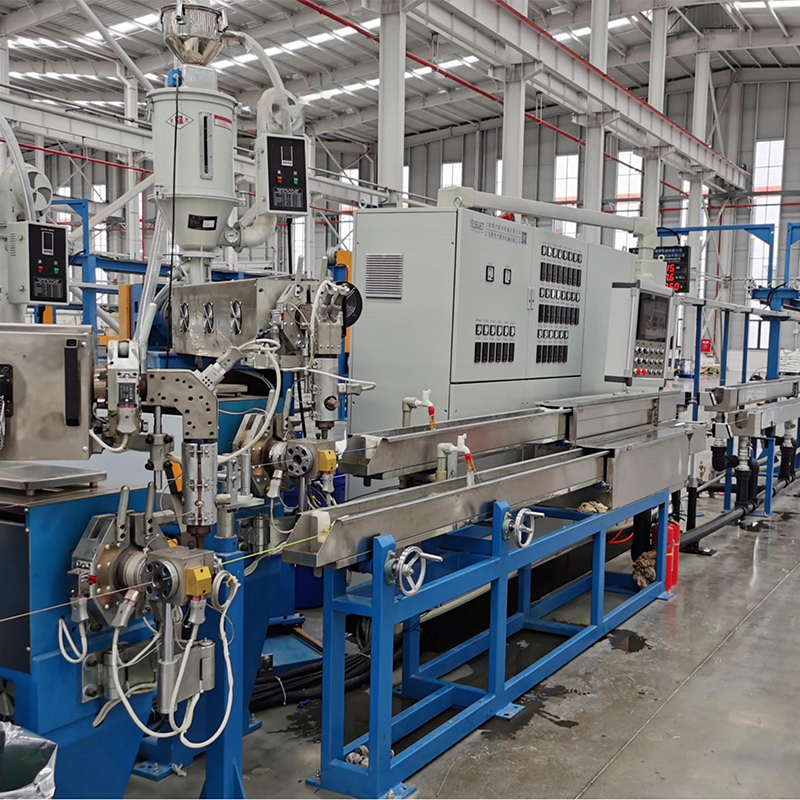
For a continuous insulation line, the machine also needs stable feeding and consistent head pressure. A machine designed for automatic operation, such as the 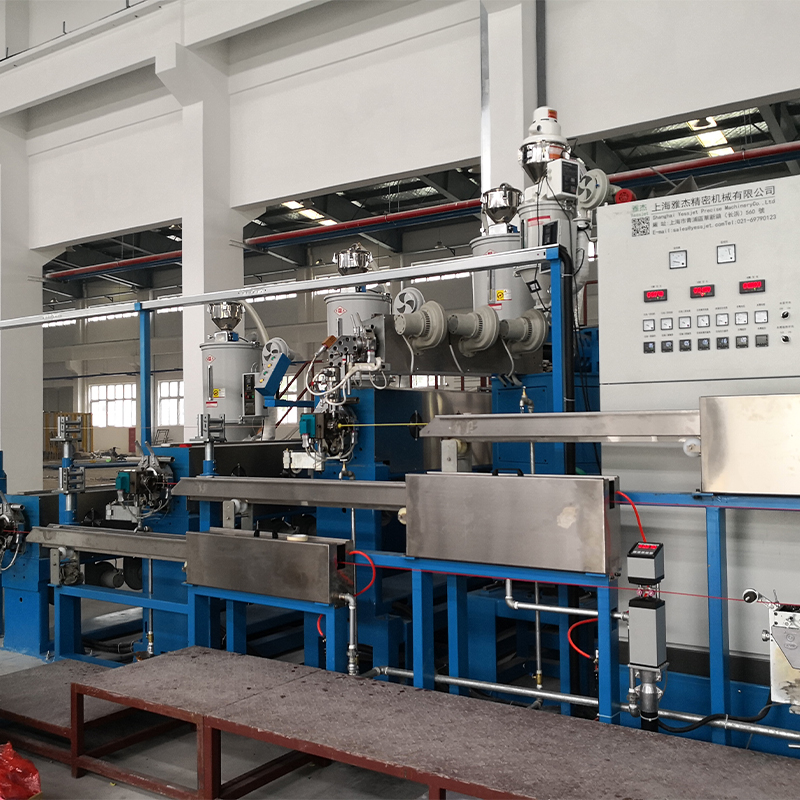 Full-Auto PE/PVC Cable Extruder for Continuous InsulationThis integrated extrusion line automates feeding and pressure control, minimizing operator intervention during long runs. It delivers consistent wall thickness and reduced material waste, making it a practical choice for high-volume insulation production.View Product →, reduces operator dependence during long runs. The value shows up in fewer adjustments, less material waste, and more consistent wall thickness.
A practical equipment matrix for insulation and jacketing lines
The following matrix is not a specification sheet. It is a comparison framework for connecting common cable compounds to typical machine roles.
Machine model
Material window
Design emphasis
Best-fit line role
Full-auto PE/PVC high-performance extruder
PE, PVC
Automatic, continuous high-volume operation
Main insulation and jacketing line for steady product schedules
High-efficiency PP/PVC/PE extruder
PP, PVC, PE
Material flexibility and quick changeover
Multi-formula plants that switch products by order pattern
High-speed durable PVC/PE/UPVC extruder
PVC, PE, UPVC
Long-run speed and mechanical durability
High-speed sheathing and jacketing where long runs dominate
XLPE/PE extruder with water tank
XLPE, PE
Controlled cooling after the head
Cross-linked PE applications needing post-head temperature control
Use the material column as the first filter. If a compound is not listed, ask the supplier for a written compatibility statement before assuming the machine can handle it.
Hidden losses after the extruder: tension drift and reel changes
Field walk-throughs in cable plants often show that the extruder is not the main source of lost time. The chart below is a relative impact index for common losses seen on insulation and jacketing lines. It is a guide to where attention should go first, not an exact plant measurement.
7.6
Tension drift
6.8
Reel changes
5.8
Material changes
5.0
Temperature drift
4.4
Coiling jams
Tension drift is easy to underestimate because it does not always stop the line. It creates layer slippage, oval coils, and surface abrasion that is only discovered at the packing stage. By then, the line has already moved on to the next product, so the waste is hidden in finished-good inspection records.
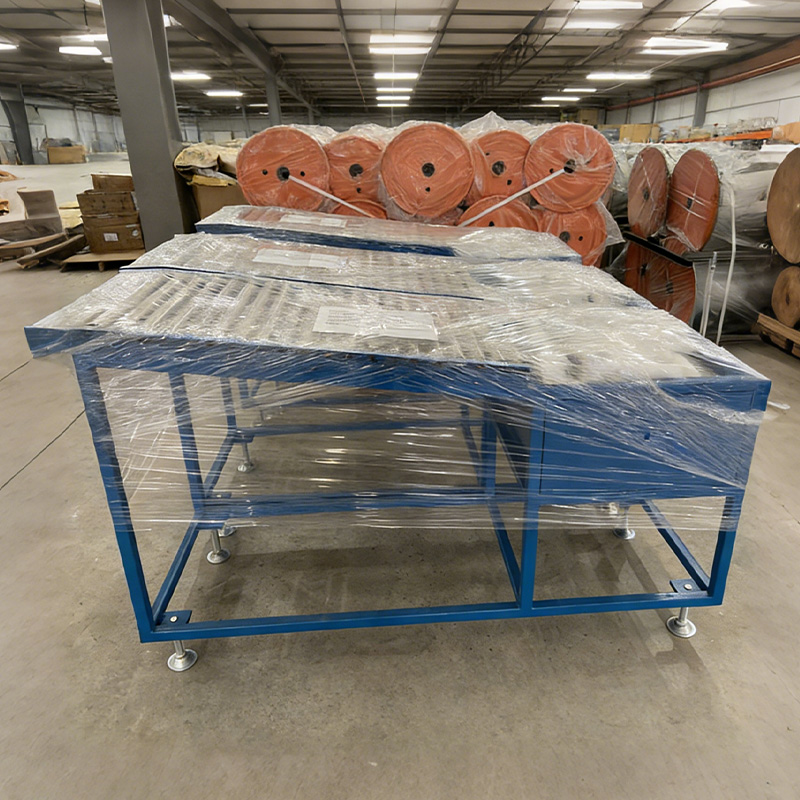
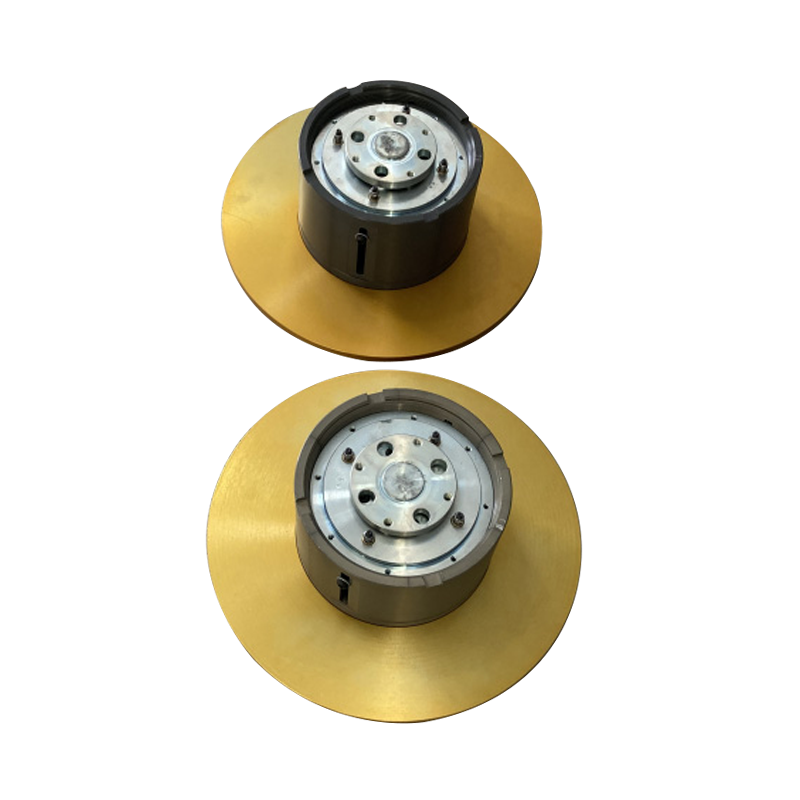
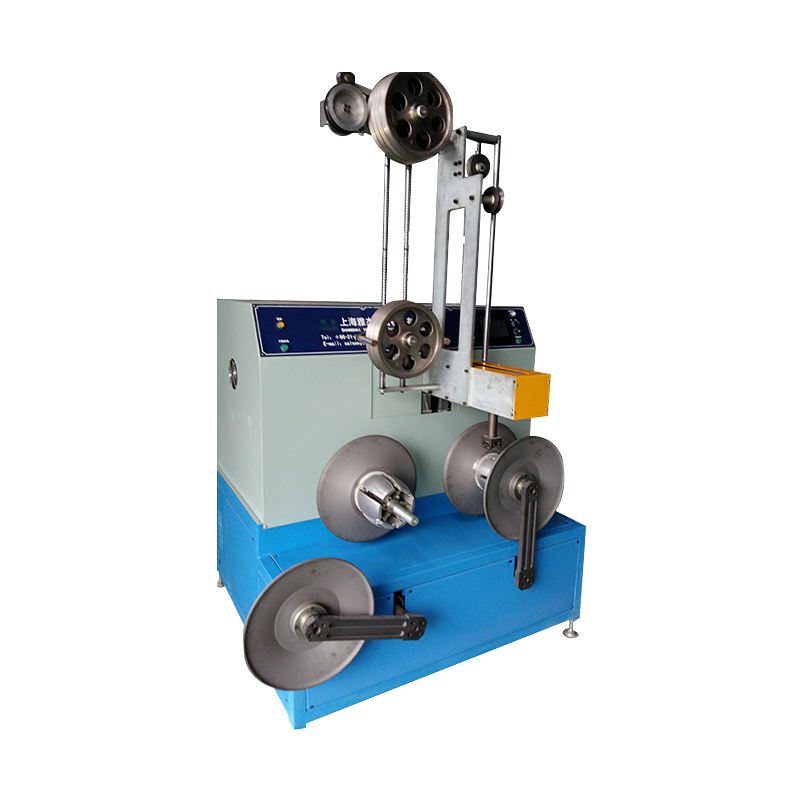
Reel changes are another hidden cost. If the extruder stops every time a drum fills, the screw stops, the melt cools, and the barrel must be purged again on restart. That cycle consumes time and material. A better approach is to keep the extruder running while finished cable is stored on an accumulator during the reel change. Equipment such as an 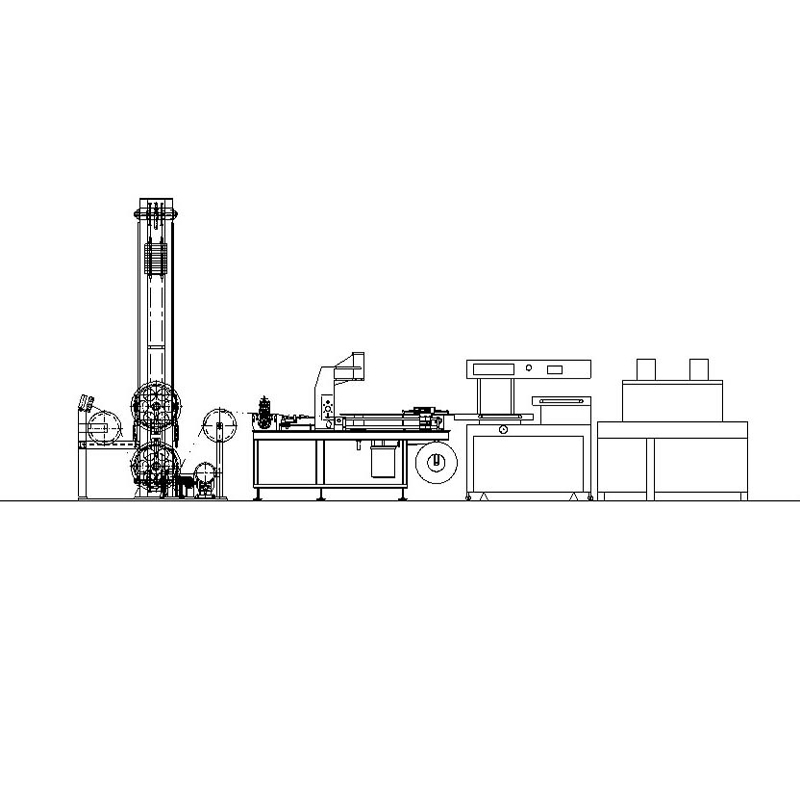 Accumulator Dancer Cable Storage Rack for Reel ChangesThis storage rack accumulates cable during reel changeover, keeping the extruder running without stopping. Available in vertical or horizontal configurations, it supports extrusion, CV, and rewind lines, preventing downtime and thermal cycling.View Product → gives the operator enough time to change a reel without stopping extrusion. The result is longer production windows and less thermal cycling on the screw and barrel.
When comparing suppliers, ask whether the extruder package includes the storage and tension elements or whether those are sold as optional extras. The worst financial outcome is a high-speed extruder that cannot run continuously because the take-up side cannot react fast enough.
From extruder to pallet: integration steps that decide real capacity
A cable line is complete only when the finished coil can leave the plant without manual rework. The following sequence shows the process logic that makes extrusion equipment effective in practice.
- Feed and pay-off: Confirm that the cable enters the extruder with stable tension. Inconsistent pay-off creates variations in wall thickness that cannot be corrected by the extruder control system.
- Extrusion and cooling: The cooling trough must match the line speed. For PE and XLPE compounds, controlled cooling also affects dimensional stability and residual stress in the finished insulation.
- Take-up and coiling: The coiler must handle the final product without stretching it. A cable that looks good before coiling can still be rejected if the coil is wound too tight or the layers cross incorrectly. For continuous extrusion lines, additional storage capacity is explained in the accumulator and dancer systems for continuous extrusion lines.
- Wrapping, binding, and palletizing: Low-cost manual wrapping creates inconsistent protection and consumes floor space during peak shifts. Automated wrapping and stacking remove the last manual bottleneck and reduce product damage.
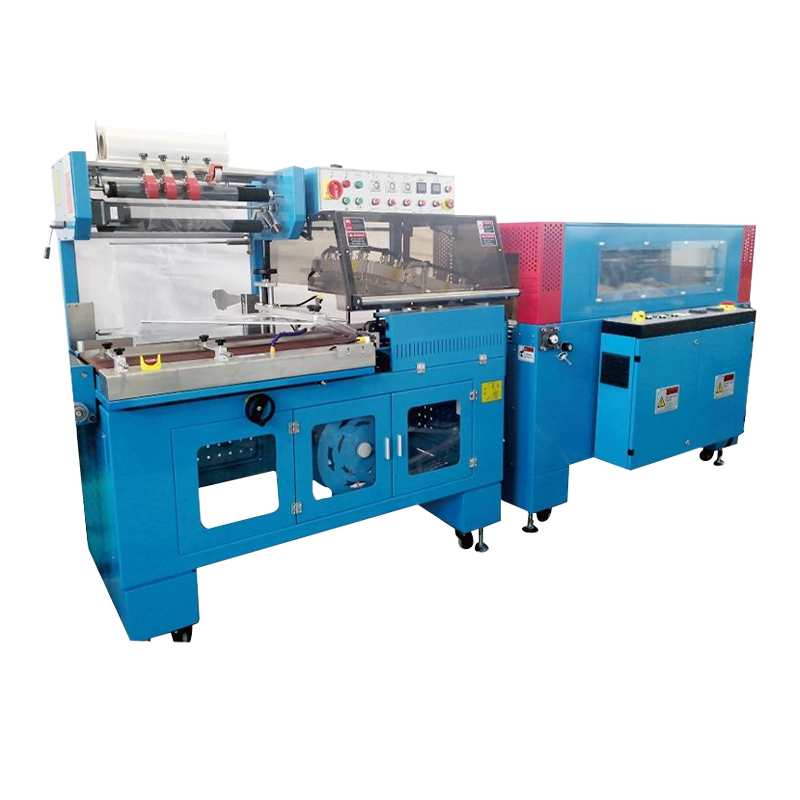
One example of an effective downstream integration is a 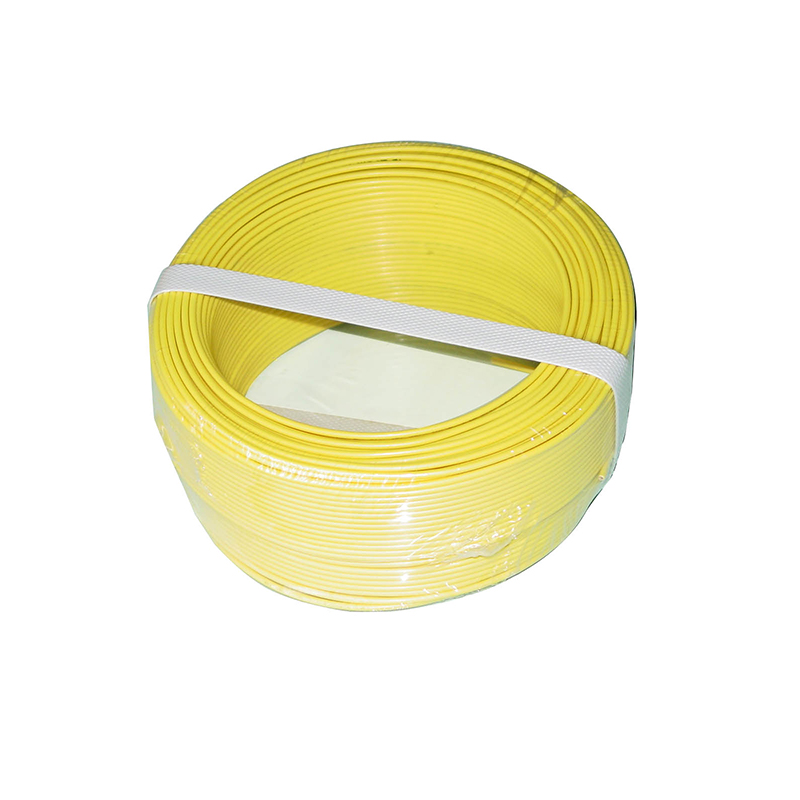 Fully Automatic Coiling Binding and Wrapping MachineThis machine combines coiling, binding, and wrapping into one continuous operation, providing a predictable cycle time. It reduces manual labor and space requirements, making it ideal for producing finished cable coils directly on the line.View Product →. It combines several manual steps into one continuous operation, giving the production line a predictable cycle time. For cable makers that sell finished coils directly, this type of machine protects both product quality and delivery reliability.
Industry application differences: power cable, communication cable, and building wire
The same extrusion equipment must be configured differently for power cable, communication cable, and building wire. The application split below is an illustrative reference for checking whether a proposed line matches the dominant product family. It is not a market-share claim.
- Power cable and medium-voltage insulation
- Communication, LAN, and data cable
- Building wire and general-purpose conduit
- Specialty and short-run cable products
Power cable lines often prioritize layer concentricity and consistent insulation wall thickness. Communication cable lines prioritize line speed and gentle handling of small conductors. Building wire lines prioritize material flexibility and fast changeover between colors. A configuration that suits one category can be inefficient in another, even when the extruder model is similar.
Maintenance and compliance habits for a long extrusion asset life
Buying better equipment is only half of the improvement. The other half is maintaining the conditions that keep the machine within its original process window. A practical maintenance plan for cable extrusion equipment should include the following habits.
- Verify temperature readings against a calibrated reference at least once per maintenance interval. A temperature error of several degrees is often enough to change melt flow and surface appearance.
- Inspect screw and barrel wear regularly, not only after a breakdown. Record screw dimensions, output stability, and motor current so that small changes become visible early.
- Check dancer arm movement, tension-sensor readings, and take-up response together. A sticking dancer creates scrap while the control system continues to report normal values.
- Keep the cooling circuit clean and verify water flow before long production runs. Poor cooling produces heat-related shutdowns and inconsistent product dimensions.
- Maintain a written changeover log for materials, colors, and head tooling. The log helps operators identify cleaning procedures that work and documents compound changes that may affect subsequent runs.
- Review safety interlocks and emergency-stop circuits on every scheduled maintenance day. Electrical guarding is part of the machine’s operating license, not an option that can be deferred.
From a compliance perspective, ask the supplier to document wiring standards, material-contact materials, and any certificates that apply to the destination market. The documentation should be available before installation, because missing compliance papers delay commissioning more than missing spare parts.
In summary, the best extrusion equipment selection combines three actions: define the real material mix, protect line continuity with tension and accumulator systems, and automate the downstream packaging steps. When these elements line up, cable quality and uptime improve together.