LANGUAGE
 中文简体
中文简体 русский
 Français
 Español
 Português
 عربى
عربى
Content
- 1 Precision Plasticization and Material Versatility in Cable Extrusion
- 2 Advanced Torque Transmission and Gearbox Architecture
- 3 Material Utilization Optimization and Cost Reduction Strategies
- 4 Compliance Standards and Quality Assurance Protocols
- 5 Operational Workflow and Preventive Maintenance Framework
Precision Plasticization and Material Versatility in Cable Extrusion
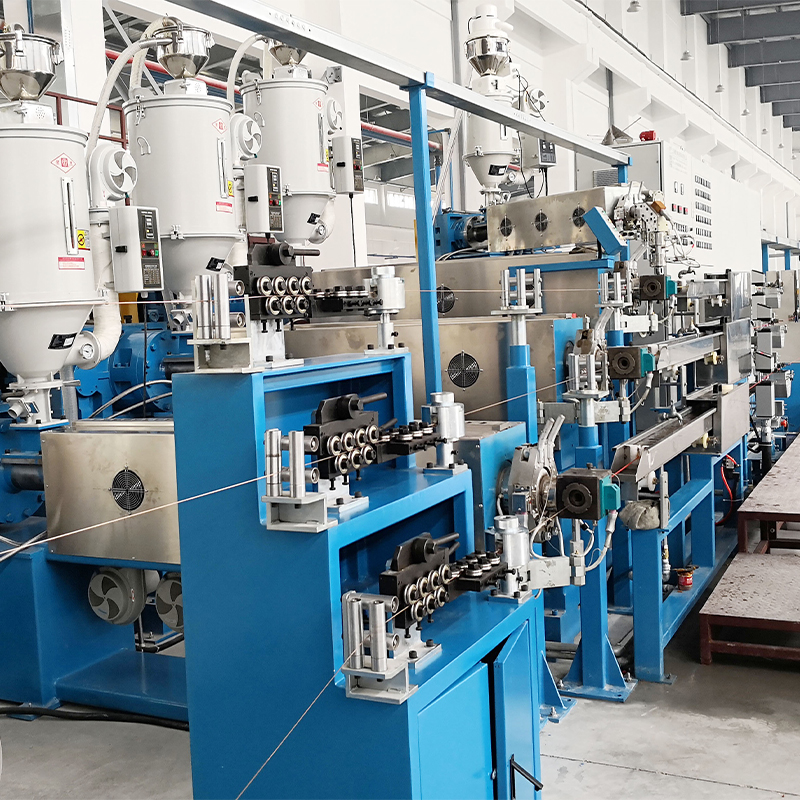
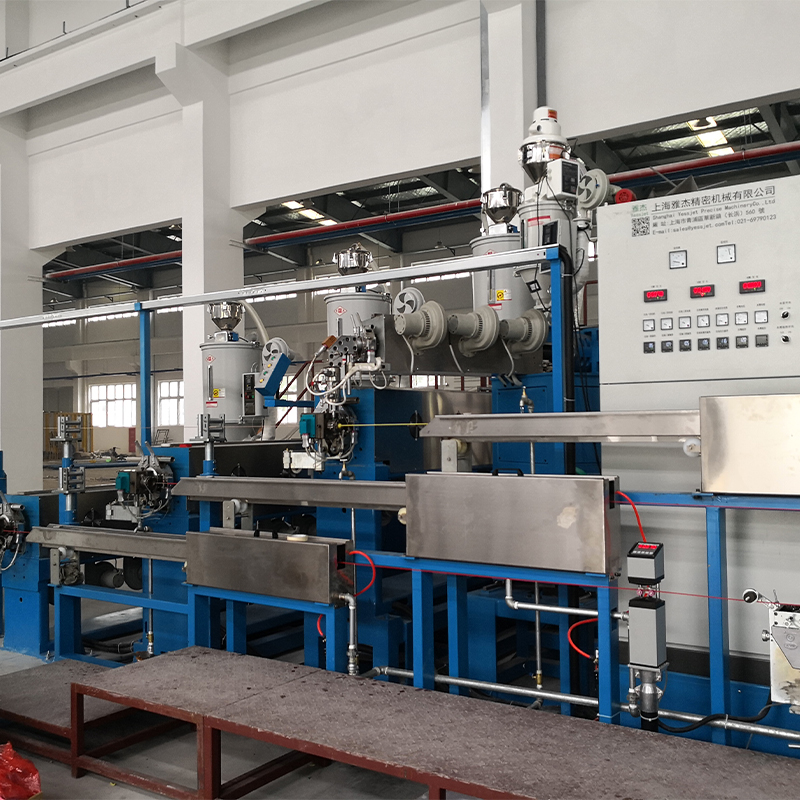
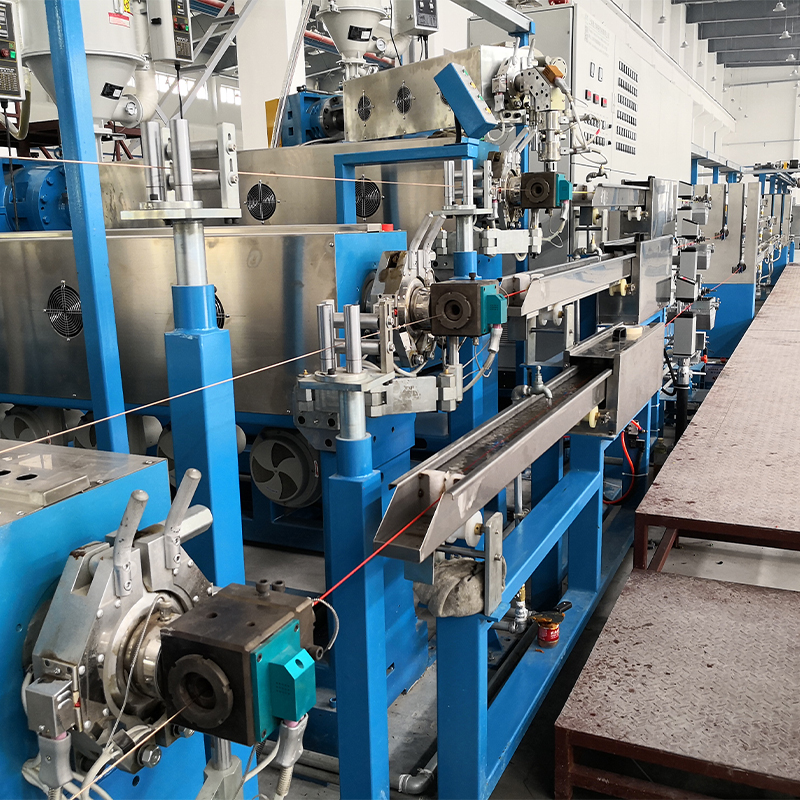
The polymer processing phase within a Cable Extrusion Machine dictates the structural integrity, dielectric performance, and mechanical resilience of the final cable product. Different insulation and jacketing compounds exhibit fundamentally distinct rheological behaviors that demand highly adaptive thermal and mechanical profiles. Polyethylene and polypropylene are semi-crystalline thermoplastics that require sustained shear energy to break down crystalline domains and achieve a uniform melt viscosity. In contrast, polyvinyl chloride operates as an amorphous polymer with a narrow thermal processing window, where excessive heat exposure triggers dehydrochlorination and rapid molecular degradation. The High-Efficiency PP PVC PE Cable Extruder overcomes these contrasting material requirements through a multi-zone barrel architecture coupled with segmented heating and cooling circuits. Each thermal zone is independently monitored by high-response thermocouples that feed real-time data to proportional-integral-derivative controllers, enabling micro-adjustments that prevent thermal runaway or cold bridging. This precision ensures that the polymer achieves optimal molecular alignment and homogenization before reaching the tooling interface, which is critical for maintaining consistent wall thickness and surface finish across long production runs.
Screw geometry plays an equally vital role in managing material transitions and melt consistency. Modern extrusion screws utilize a carefully calculated compression ratio that varies according to the feedstock characteristics. When processing low-smoke zero-halogen or cross-linked polyolefin compounds, a progressive barrier screw design separates unmelted solid pellets from the molten polymer pool, preventing pressure fluctuations and eliminating unmelted particulates that commonly cause insulation breakdown. Integrating a dynamic mixing element near the metering zone further enhances distributive homogenization, ensuring that stabilizers, flame retardants, and color masterbatches are uniformly dispersed throughout the polymer matrix. This level of plasticization control directly translates to improved tensile strength, superior elongation properties, and enhanced resistance to environmental stress cracking, meeting the rigorous demands of industrial and telecommunications cable applications.
Advanced Torque Transmission and Gearbox Architecture
Mechanical power delivery forms the backbone of high-throughput cable manufacturing, where sustained output stability directly correlates with equipment longevity and operational profitability. The hardened helical gear reducer integrated into the drive train provides superior load distribution across gear teeth, significantly reducing localized stress concentrations that typically lead to premature pitting or fatigue failure. Helical gears generate a smoother engagement pattern compared to straight-cut alternatives, which minimizes vibration transmission to the extruder barrel and reduces acoustic noise levels across the production floor. This mechanical refinement allows the system to maintain consistent rotational torque even under peak load conditions, such as when processing high-viscosity PVC formulations or operating at elevated screw speeds for large-caliber conductors. The robust bearing assembly supporting the screw shaft is specifically engineered to withstand axial thrust forces exceeding standard industrial thresholds, ensuring that the screw remains perfectly aligned with the die centerline throughout extended operational cycles.
Intelligent Power Regulation and Load Balancing Mechanics
Dynamic power management systems continuously monitor motor current draw, gearbox temperature, and hydraulic pressure to optimize energy consumption without compromising throughput. Variable frequency drives adjust rotational speed in real time based on melt pressure feedback, automatically compensating for viscosity fluctuations caused by raw material batch variations or ambient temperature changes. When transitioning from polypropylene insulation to polyethylene jacketing, the control architecture recalibrates torque limits and cooling water flow rates to accommodate the differing thermal conductivity and shrinkage characteristics of each material. This intelligent regulation prevents motor overload conditions, reduces electrical waste during startup phases, and extends the service intervals of transmission components. Manufacturers benefit from a stabilized power profile that aligns energy expenditure directly with actual production demand, eliminating the inefficiencies associated with fixed-speed drive systems.
Material Utilization Optimization and Cost Reduction Strategies
Raw material consumption represents the largest operational expense in cable manufacturing, making precise metering and waste minimization critical for maintaining competitive margins. The High-Efficiency PP PVC PE Cable Extruder achieves a fifteen percent improvement in material utilization through synchronized haul-off speed control, laser diameter monitoring, and closed-loop melt pressure regulation. Traditional extrusion setups frequently suffer from over-extrusion due to delayed feedback mechanisms, resulting in excessive insulation thickness that consumes unnecessary compound and increases cable weight. By implementing real-time dimensional scanning immediately after the cooling trough, the system detects sub-millimeter deviations and instantly adjusts the capstan velocity and screw RPM to restore target specifications. This continuous correction loop eliminates material waste at the source, ensuring that every kilogram of polymer purchased translates directly into saleable cable length.
Scrap Minimization Through Process Control
| Production Metric | Conventional Extrusion Line | High-Efficiency System |
|---|---|---|
| Material Waste Rate | 8% to 12% | Below 3% |
| Diameter Tolerance | ±0.15 mm | ±0.05 mm |
| Energy Consumption per kg | 0.38 kWh | 0.29 kWh |
| Changeover Downtime | 45 to 60 minutes | 15 to 20 minutes |
Compliance Standards and Quality Assurance Protocols
Adherence to international regulatory frameworks ensures that manufactured cables meet stringent safety, performance, and durability benchmarks required for global market distribution. IEC 60228 mandates precise conductor classification and electrical conductivity standards, while ASTM D2240 establishes testing methodologies for Shore hardness and elastomeric material properties. The extrusion architecture integrates automated inspection checkpoints that continuously verify insulation thickness, concentricity, and surface defect presence against these specifications. Laser micrometers positioned immediately after the vacuum sizing tank provide non-contact dimensional verification, triggering automatic alarms and line stoppage if tolerances drift beyond acceptable limits. Operators can access comprehensive production logs that document temperature profiles, haul-off speeds, and material batch codes, creating a fully traceable quality audit trail. This systematic compliance approach eliminates manual inspection bottlenecks, reduces human error, and guarantees that every cable reel shipped meets rigorous industry certifications without requiring costly post-production rework.
Operational Workflow and Preventive Maintenance Framework
Sustaining peak equipment performance requires a structured maintenance regimen that addresses mechanical wear, thermal degradation, and control system calibration. Daily operational protocols must include systematic verification of gearbox oil levels, cooling water filtration status, and thermocouple response accuracy before initiating material feeding. Operators should conduct routine die polishing procedures using specialized bronze scrapers and high-temperature cleaning compounds to prevent polymer buildup that disrupts melt flow uniformity. Scheduled replacement of wear components such as barrel liners, thrust bearings, and heating element cartridges prevents unexpected downtime and preserves dimensional precision. Implementing a predictive maintenance strategy that utilizes vibration analysis and infrared thermal imaging enables engineers to identify developing mechanical faults or electrical anomalies before they escalate into catastrophic failures.
- Execute quarterly calibration of laser measurement systems and load cells against certified reference standards to guarantee consistent dimensional accuracy and tension control across all production batches.
- Perform systematic screw and barrel inspection every twelve thousand operating hours to assess wear patterns, replace degraded mixing elements, and restore optimal plasticization geometry for consistent melt homogeneity.
- Maintain closed-loop water cooling circulation with continuous filtration and chemical treatment to prevent scale accumulation in trough channels, which directly impacts heat transfer efficiency and surface cooling uniformity.
- Establish a documented material changeover protocol that includes comprehensive purging cycles, temperature ramp-down sequences, and tooling disassembly procedures to prevent cross-contamination between different polymer formulations.
Integrating these operational disciplines with advanced extrusion technology transforms conventional manufacturing environments into highly efficient, data-driven production facilities. The combination of precision thermal management, robust torque transmission, and intelligent process control enables cable manufacturers to achieve unprecedented levels of consistency, material efficiency, and regulatory compliance. By prioritizing systematic maintenance and continuous operator training, enterprises can maximize equipment lifespan, minimize production interruptions, and maintain a competitive advantage in an increasingly demanding global marketplace.