

 LANGUAGE
 中文简体
中文简体 русский
 Français
 Español
 Português
 عربى
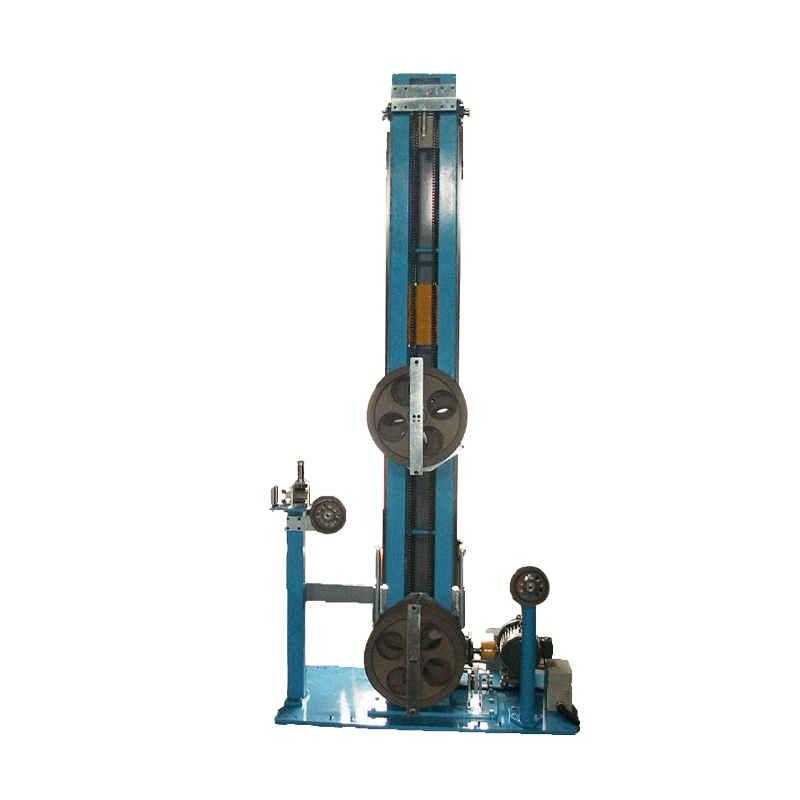
عربى The Accumulator Dancer (Cable Storage Rack) is a professional cable management device engineered to optimize cable processing workflows. Available in vertical and horizontal types, it is perfectly compatible with extrusion, CV and rewind lines, effectively accumulating or controlling cable payoff an...
View More

Wire Cable Production Accessory Equipment Manufacturers
-
Product Accumulator Dancer(cable storage rack)
-
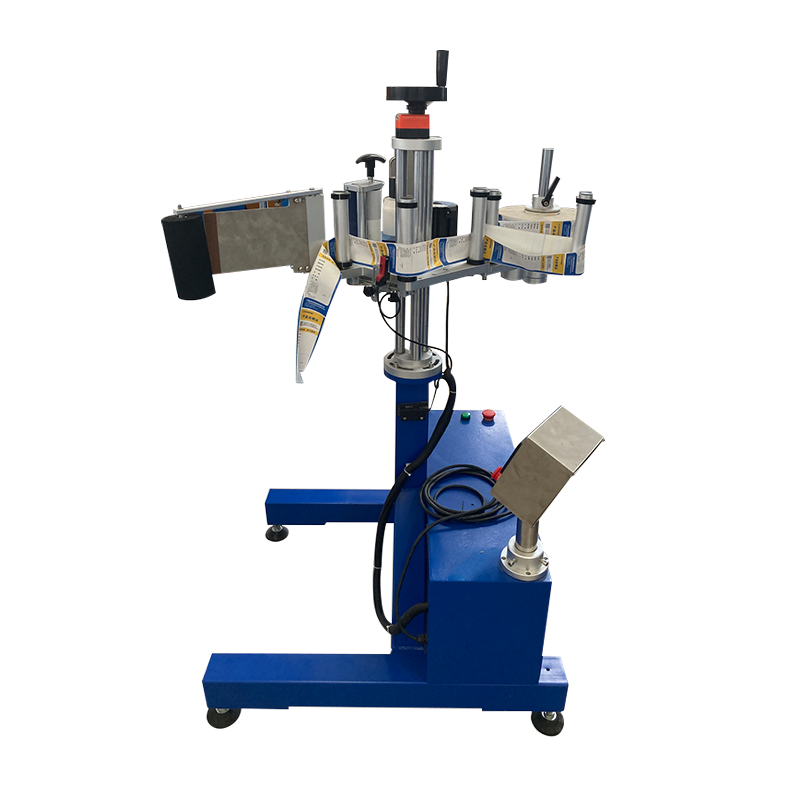
Product Cable Stickers Label FeederSuitable for self-adhesive labeling, the pre made self-adhesive labels can be attached to the side of the coil on the assembly line, achieving beauty and convenience. No manual operation is required. Engineered for efficient self-adhesive labeling on assembly lines, the Cable Stickers Label Feeder a...View More
-
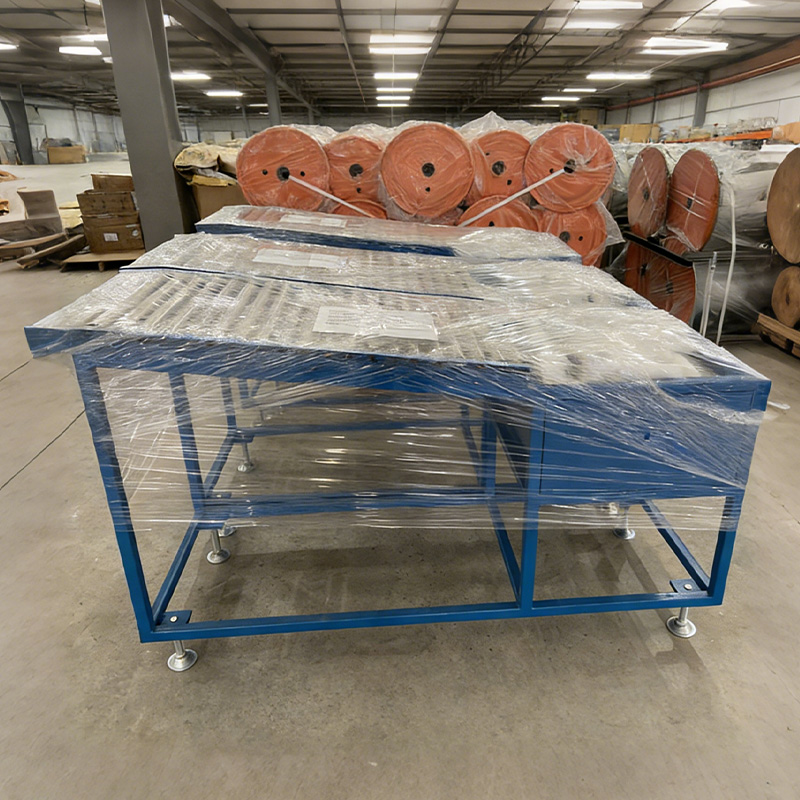
Product Cable Conveyor Belt SystemsCable Conveyor Belt Systems is a reliable material handling solution tailored for packaged goods transfer. It features two flexible transmission platforms: automatic track transmission for consistent, high-efficiency conveyance, and manual roller transmission for easy, flexible operation in small-ba...View More
-
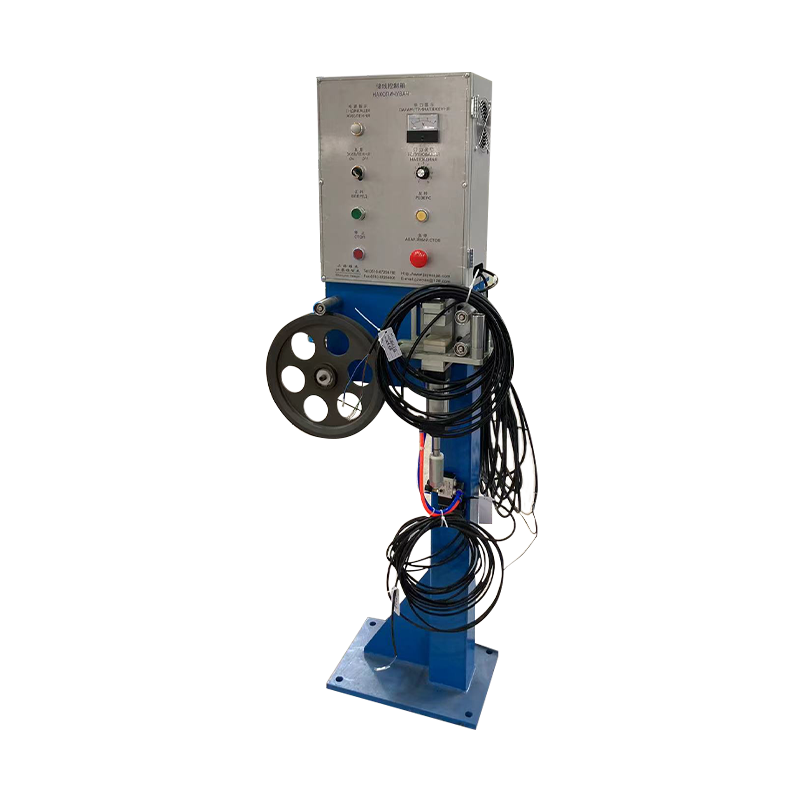
Product Wire Cable Tension Control SystemsDesigned for precise cable tension regulation, the Wire Cable Tension Control Systems are essential equipment for cable winding processes. Its core function lies in real-time adjustment of cable tension, effectively preventing both excessive tension that may stretch or damage cables and insufficient...View More
-
Product Cable Coiling HeadCable Coiling Head is a core replaceable accessory tailored for cable coiling machines, coiling and wrapping machines, as well as coiling and binding machines. It supports flexible size customization to match different cable specifications and equipment models, meeting diverse production needs of us...View More
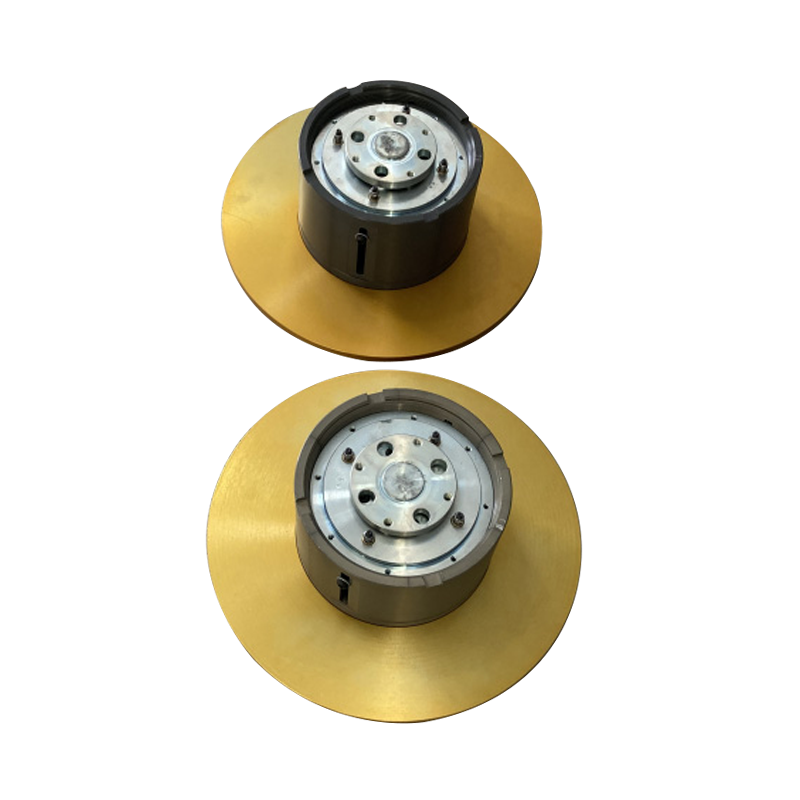
Accessory equipment is a suite of specialized tools engineered to optimize cable production, handling, and management workflows. It covers five core devices: cable storage racks, sticker label feeders, conveyor belt systems, wire cable tensile control systems, and cable coiling heads.
Cable storage racks organize raw cables in an orderly manner, preventing tangling and facilitating easy access. Label feeders automate the application of identification stickers, enhancing traceability. Conveyor belt systems enable smooth, continuous transportation of cables during processing, boosting operational efficiency. Wire Cable Tension Control Systems maintain stable tension to avoid cable damage during pulling or stretching. Cable Coiling heads neatly wind finished cables for convenient storage and shipment.
Shanghai Yessjet Precise Machinery Co., Ltd.
Precision Machinery, Intelligent Solutions Powering Cable Production Worldwide
Shanghai Yessjet Precise Machinery Co., Ltd. was established in Shanghai with investment from
Taiwan
in 2002 as a professional manufacturer dedicated to the research and development of wire and cable
machinery.
In 2017, to expand the company's scale, Jiangsu Yessjet Precise Machinery Co., Ltd. was established with
investment
in Yixing, Wuxi, Jiangsu. Wire Cable Production Accessory Equipment Manufacturers and Wire Cable Production Accessory Equipment Factory in China.
We specialize in designing and manufacturing high-performance production systems — from extrusion lines and automatic coiling machines to robotic palletizing solutions — helping customers achieve efficiency, flexibility, and sustainable growth. Wire Cable Production Accessory Equipment Custom. Integrate all in-house product lines with external resources to provide clients with comprehensive services spanning process design, equipment selection, layout planning, installation and commissioning, and personnel training, ensuring projects achieve successful first-time startup.
View
More
We specialize in designing and manufacturing high-performance production systems — from extrusion lines and automatic coiling machines to robotic palletizing solutions — helping customers achieve efficiency, flexibility, and sustainable growth. Wire Cable Production Accessory Equipment Custom. Integrate all in-house product lines with external resources to provide clients with comprehensive services spanning process design, equipment selection, layout planning, installation and commissioning, and personnel training, ensuring projects achieve successful first-time startup.
YESSJET
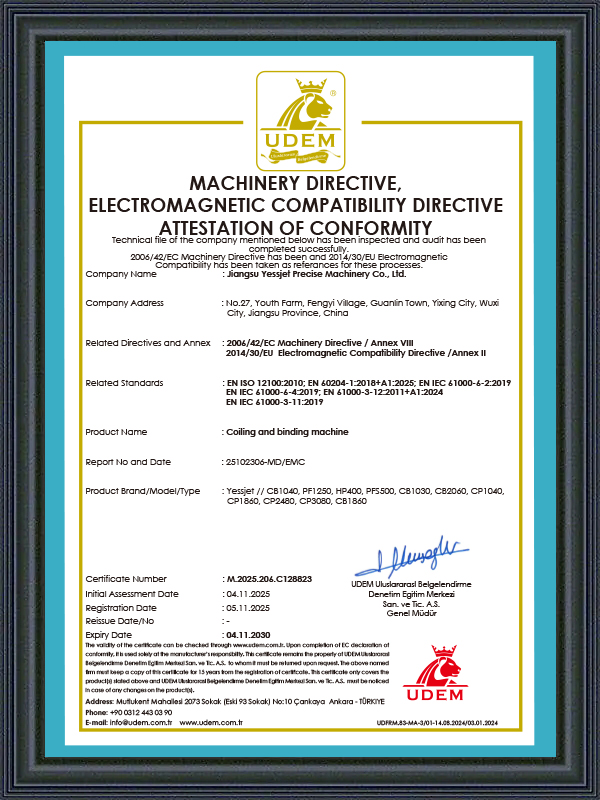
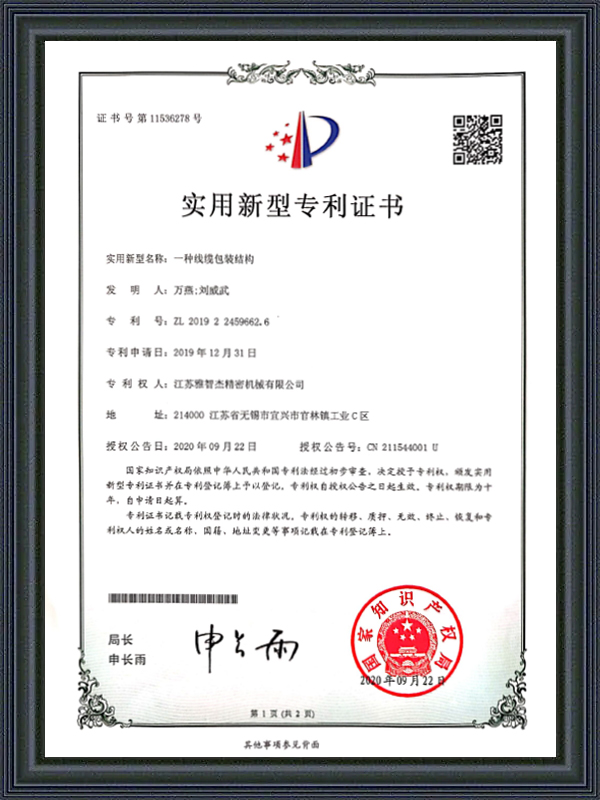
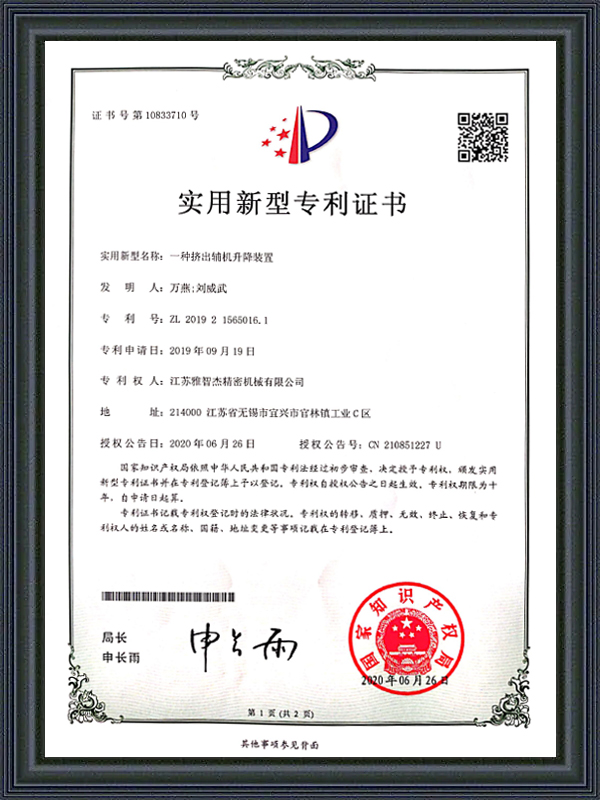
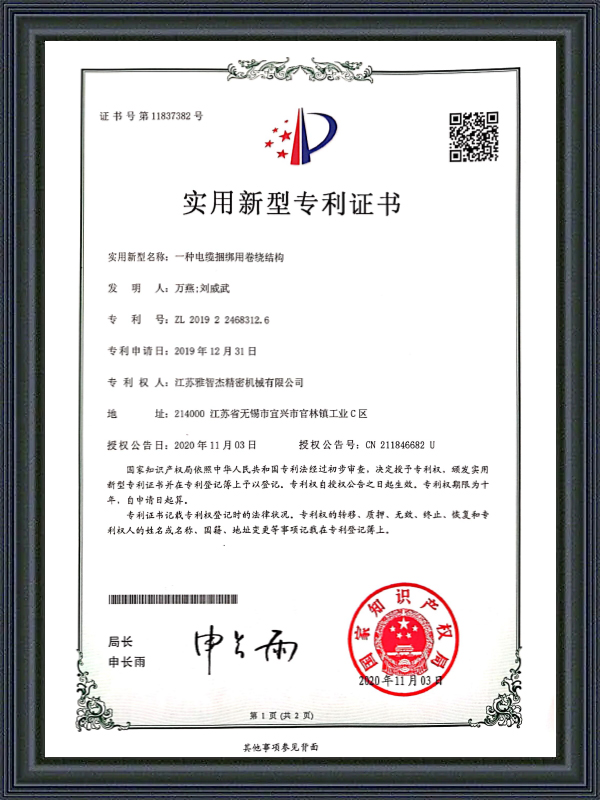
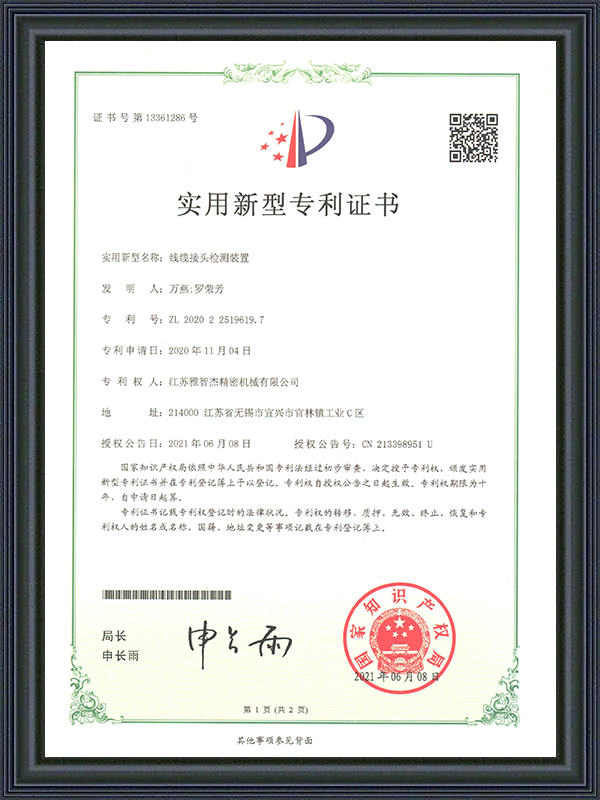
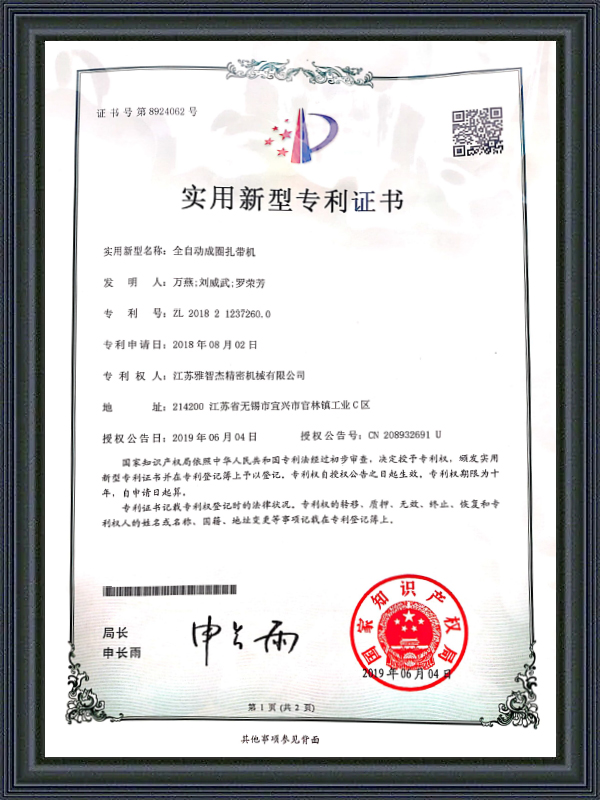
Honorary Certification
CERTIFICATE
Latest Updates
What'S News
-
Extrusion Screw Compression Ratio: How to Match It to Your Cable CompoundA cable plant replacing the screw on a rigid PVC insulation line once ordered a 4.0 compression ratio, on the reasonable-sounding logic that more compression m...
-
Shanghai Yessjet Showcases Cable Extrusion and Packing Solutions at wire China 2026, Booth E2F63Shanghai Yessjet Precise Machinery Co., Ltd. is exhibiting at wire China 2026, the China International Wire & Cable Industry Trade Fair, from September 21 t...
-
Extrusion Process Control: How Temperature, Tension and Line Speed InteractA 70 mm PVC insulation line running at 300 m/min produces roughly 36 km of insulated core in a two-hour window. If the finished diameter drifts 0.05 mm outside...
-
Extrusion Grade Polymers: Selection and Processing Guide for Cable MakersA cable processor in Southeast Asia recently swapped an extrusion-grade polyethylene compound for a cheaper injection-grade resin to save roughly US$0.12 per k...
-
Extrusion Equipment Selection Guide: Cable Manufacturers’ Buying FactorsCable makers often compare extrusion equipment by screw diameter, motor rating, or claimed speed first. Those numbers matter, but they do not tell the whole st...
Industry Knowledge
Spark Tester Integration in Wire Cable Production Accessory Equipment: Voltage Selection and Fault Sensitivity
The spark tester is one of the most operationally critical pieces of accessory equipment on any insulated wire extrusion line, yet its configuration parameters are frequently set once at commissioning and never revisited — even as the product mix changes and new cable specifications are introduced. The test voltage applied by the spark tester must be matched to the insulation wall thickness and material dielectric strength of each specific cable product. Applying a voltage calibrated for 0.6/1kV building wire to a thin-wall 300V appliance cord will generate false rejects from surface discharge events that are not genuine insulation faults; applying the same voltage to a thicker-walled cable at a production line speed optimized for a thinner product will miss pinhole defects whose surface area is too small to ionize at the lower field strength. Neither scenario serves production quality, and both trace directly to incorrect spark tester configuration rather than equipment malfunction.
The industry standard basis for spark test voltage selection is IEC 60227 and IEC 60502 for PVC and XLPE insulated cables respectively, which specify minimum test voltages as a function of nominal voltage rating and insulation thickness. However, these standards define minimum acceptance criteria, not optimal sensitivity settings. In practice, setting the spark tester voltage 15–20% above the standard minimum — while remaining below the insulation's dielectric withstand level — significantly improves the detection probability for small pinholes and thin-spot defects that would pass at the minimum voltage. The detection probability for a 50-micron pinhole in 0.8mm wall PVC insulation increases from approximately 60% at the IEC minimum voltage to above 95% at 115% of the minimum — a substantial quality improvement achieved through parameter adjustment alone, with no hardware change required.
The electrode configuration of the spark tester also affects fault sensitivity in ways that production engineers rarely account for explicitly. Bead-chain electrodes maintain consistent contact with the cable surface across the full OD range of the product mix, but their segmented contact geometry creates brief gaps in the electrode coverage at each bead link — gaps that are typically 0.5–1.5mm wide and can allow a pinhole located precisely at a gap position to pass undetected through the tester. Conductive liquid contact testers eliminate this gap issue entirely but require a sealed liquid chamber that adds maintenance complexity. For high-speed lines producing safety-critical cable, understanding this detection gap and incorporating redundant spark test positions — one before the haul-off and one after — provides the coverage redundancy that eliminates the geometric detection gap as a quality risk.
Cooling Trough Design Factors That Affect Insulation Surface Quality and Dimensional Stability
The cooling trough in a wire cable extrusion line performs a function that directly determines both the geometric quality of the finished cable and the surface appearance of the insulation jacket — yet as a category of Wire Cable Production Accessory Equipment, it receives less engineering attention than the extruder or crosshead during line specification. The critical design parameters of a cooling trough are water temperature control precision, trough entry geometry, cable support spacing, and water turbulence level. Each of these parameters affects a different quality attribute of the finished cable, and optimizing one without considering the others can create new quality problems while solving the original one.
Water temperature at the trough entry point — where the hot extrudate first contacts the cooling medium — has the most direct impact on surface quality. Excessively cold entry water causes the outer jacket surface to quench rapidly, creating a skin layer of higher crystallinity than the underlying material in semi-crystalline polymers like HDPE or LLDPE. This skin layer has different thermal expansion characteristics than the core, generating residual stress at the skin-core interface that can manifest as longitudinal surface cracking under bending or as premature jacket adhesion failure at terminations. A graduated cooling approach — warm water in the first trough section, progressively cooler water in subsequent sections — reduces the thermal gradient at the skin-core interface and produces a more uniform crystallinity profile through the insulation wall thickness.
Cooling Trough Parameter Effects on Cable Quality Attributes
| Trough Parameter | Effect if Too Low / Too Short | Effect if Too High / Too Long | Affected Quality Attribute |
| Entry water temperature | Surface cracking, residual stress, crystallinity gradient | Insufficient surface set, OD sag before first support | Jacket surface quality, dimensional roundness |
| Total trough length | Core temperature above glass transition at take-up, deformation under winding tension | Over-cooled cable — increased bending stiffness, difficult to coil at take-up | Dimensional stability, winding behavior |
| Cable support spacing | Cable sag between supports — ovality defect, eccentric wall on soft insulation | Excessive support friction — surface marking, tension increase at haul-off | Roundness, surface finish, tension stability |
| Water turbulence level | Laminar boundary layer reduces cooling rate — requires longer trough for same throughput | Surface ripple marks on soft jacket compounds at high turbulence | Cooling efficiency, jacket surface appearance |
The entry geometry of the cooling trough — specifically the distance between the die exit and the first contact with water — is called the dry zone or air gap. This gap allows the extrudate surface to develop sufficient structural rigidity before water contact so that the cable does not deform at the first support point. For soft compound jackets on large-diameter cables, inadequate dry zone length causes a flat contact mark at the first trough guide that is permanent and cosmetically unacceptable. Overly long dry zone distances allow gravity to act on the soft extrudate before it enters the water, generating ovality in the cross-section that cannot be corrected downstream. The optimal dry zone length must be determined empirically for each compound and cable size combination, and should be a configurable parameter in the trough design rather than a fixed structural dimension.
Capstan and Caterpillar Haul-Off Selection: When Each Type of Accessory Equipment Is the Better Choice
The haul-off unit is the speed-controlling element of the extrusion line — it sets the production rate and determines the draw-down ratio between die output and finished cable diameter. Two fundamentally different haul-off designs are in common use: capstan haul-offs, which use a multi-turn wrap around a driven wheel to generate pulling force through friction, and caterpillar haul-offs, which clamp the cable between two opposing belt tracks and pull by direct mechanical grip. The selection between these two types of accessory equipment has significant consequences for surface quality, tension stability, and the range of cable sizes a given line can accommodate without tooling changes — yet the decision is frequently made based on capital cost alone rather than on a systematic analysis of the application requirements.
Capstan haul-offs generate pulling force through friction between the cable surface and the capstan wheel — the pulling force is proportional to the normal contact force and the friction coefficient between the cable jacket and wheel surface, following the capstan equation. Because the cable wraps multiple turns around the capstan, the contact force is distributed over a large surface area, minimizing contact pressure and making capstan haul-offs the preferred choice for cables with soft, easily marked jacket compounds such as TPE, silicone, and ultra-flexible PVC. The limitation of capstan haul-offs is that the multi-turn wrap requires the cable to have sufficient flexibility to conform to the capstan wheel curvature — large-diameter, high-stiffness cables cannot achieve adequate wrap angle on a practical capstan wheel diameter, making caterpillar haul-offs the only viable option for cables above approximately 25mm OD.
Caterpillar haul-offs apply pulling force through direct belt-to-cable contact over the full belt contact length. The clamping force is set by the belt tension adjustment, which determines both the pulling force capability and the contact pressure on the cable surface. For soft-jacketed cables, excessive belt clamping force produces permanent surface impressions from the belt edge geometry — a defect that is particularly problematic on smooth-finish cables where any surface marking is cosmetically unacceptable. Proper caterpillar configuration for soft cables requires wider belt pads, reduced clamping pressure, and a belt surface material with high friction coefficient but low hardness — typically a proprietary polyurethane formulation rather than standard rubber belting.
Laser Diameter Gauge Placement Strategy: Why Position on the Line Determines What You Can Control
A laser diameter gauge is a standard item of Wire Cable Production Accessory Equipment on modern extrusion lines, but the value it delivers depends critically on where it is positioned relative to the die exit, cooling trough, and haul-off. The gauge position determines both the type of process feedback available and the transport delay between a process disturbance and its detection — factors that define what the diameter signal can realistically control and what defects will be produced before the control system can respond.
A gauge positioned immediately after the die exit — in the dry zone before the cooling trough — measures the hot extrudate diameter before dimensional stabilization. This position provides the fastest feedback for die centering and extruder output control but measures a diameter that will change during cooling due to thermal contraction. The hot diameter at this position is typically 3–8% larger than the final cooled diameter depending on the compound's thermal expansion coefficient, and the control system must apply a temperature-dependent correction factor to relate the hot gauge reading to the target final OD. Without this correction, the hot-zone gauge will produce control actions based on incorrect diameter references, potentially driving the process away from target rather than toward it.
A gauge positioned after the full cooling trough measures the final ambient-temperature diameter — the value that the customer will measure and that the standard specification requires. This position provides the most accurate and directly relevant diameter measurement but introduces a transport delay equal to the trough transit time, which at 100 m/min line speed and a 6-meter trough is 3.6 seconds. During this delay, the extrusion process has already produced 6 meters of cable at the current diameter before the control system receives any feedback. For lines where diameter variation develops gradually — from progressive screen pack contamination or gradual compound viscosity change — this delay is acceptable. For lines where diameter variation occurs suddenly — from a surge event in the extruder or a tension transient at the haul-off — the delay means that a significant length of off-specification cable is produced before any corrective action is possible.
- Dual-gauge strategy: Placing one gauge in the hot zone for fast process disturbance detection and one gauge after the cooling trough for final dimensional verification provides both rapid response to sudden disturbances and accurate long-term diameter control — the hot-zone gauge triggers immediate corrective action while the cold-zone gauge verifies the correction outcome and adjusts the hot-zone correction factor based on actual thermal contraction observed in production
- Eccentricity monitoring position: An eccentricity monitor — which requires the cable to pass through a water coupling for ultrasonic wall thickness measurement — must be positioned within the cooling trough while the jacket is still partially soft, typically 1–2 meters into the trough, to provide actionable die centering feedback before the jacket solidifies; post-trough eccentricity measurement can only confirm a defect that has already been produced, not prevent it
- Gauge protection requirements: Hot-zone gauges operate in an environment of steam, compound vapors, and occasional purge compound splatter — IP65 minimum protection rating with positive-pressure air purge on the lens windows is essential; gauges specified for clean room or ambient industrial environments will experience rapid lens contamination and calibration drift in the extrusion zone environment
Screen Pack and Breaker Plate Management: Maintenance Intervals and Pressure Drop Monitoring
Screen packs and breaker plates are items of Wire Cable Production Accessory Equipment that directly affect melt quality, extrusion pressure stability, and ultimately insulation integrity — yet they are among the most inconsistently managed consumable components in cable extrusion operations. The screen pack's primary function is to filter contaminants and gel particles from the polymer melt before it enters the crosshead die; the breaker plate provides structural support for the screens and also serves to convert the rotational melt flow from the screw into a linear flow pattern suitable for even die entry. As the screen pack accumulates filtered particles, the flow resistance increases, causing the melt pressure upstream of the screen to rise progressively. This pressure rise is the primary indicator of screen condition — but it is frequently ignored or misinterpreted until the pressure differential becomes severe enough to cause extrusion instability or screen rupture.
Establishing a screen change interval based on pressure differential rather than elapsed time is the technically correct approach and produces more consistent melt quality than time-based intervals. A pressure differential setpoint — typically 20–40 bar above the clean-screen baseline pressure for the current compound and output rate — triggers a screen change recommendation before the pressure rise is large enough to affect melt homogeneity or cause a surge event. Time-based intervals, by contrast, are calibrated to the worst-case contamination rate of the compound being run and will schedule screen changes too frequently for clean compounds and too infrequently for highly contaminated regrind-containing compounds — creating either unnecessary downtime or actual quality incidents depending on which way the contamination rate deviates from the interval assumption.
Established in Shanghai in 2002 with investment from Taiwan and expanded through Jiangsu Yessjet Precise Machinery Co., Ltd. in Yixing, Wuxi in 2017, Shanghai Yessjet Precise Machinery Co., Ltd. incorporates melt pressure monitoring with differential pressure trending into the standard line control system on all extrusion lines it manufactures and retrofits. The pressure differential between the upstream barrel zone and the crosshead inlet is logged continuously, and the control HMI displays a trend graph that allows operators to predict the remaining screen service life based on the current pressure rise rate — enabling planned screen changes during scheduled production breaks rather than emergency changes during runs that produce scrap and startup waste. This integration of screen management into the line control system is an example of how accessory equipment monitoring, when properly embedded in the overall production control architecture, converts a reactive maintenance activity into a predictable, planned process step that supports rather than disrupts production continuity.
Fume Extraction System Specification for Cable Extrusion: Airflow, Capture Velocity, and Compound-Specific Requirements
Fume extraction systems are a category of Wire Cable Production Accessory Equipment that is rarely specified with the same rigor applied to process equipment, despite the direct consequences of inadequate extraction on both operator health and product quality. Cable extrusion generates compound-specific fume profiles that differ significantly in composition, volume rate, and toxicological characteristics between PVC, LSZH, XLPE, and specialty compounds. A single generic extraction system designed around PVC fume volume rates will be dramatically undersized for LSZH compounds, which release substantially higher fume volumes during processing due to their mineral filler content and the decomposition byproducts of the aluminium trihydrate and magnesium hydroxide flame retardant systems used in these materials.
The critical engineering parameter for extraction system effectiveness is capture velocity — the air velocity at the fume source (die face, crosshead area, and hot cable exit zone) required to entrain and transport fumes into the extraction duct before they disperse into the work environment. For cable extrusion applications, the required capture velocity at the die face typically ranges from 0.5 to 1.0 m/s depending on the compound fume emission rate and the geometry of the extraction hood. Hoods that are positioned too far from the fume source — even by 100–150mm beyond the design distance — experience capture velocity reductions of 40–60% at the source point due to the inverse square relationship between hood distance and capture efficiency, rendering the extraction system effectively non-functional despite operating at full design airflow.
- PVC compound extraction: Primary concern is hydrogen chloride (HCl) and plasticizer vapor — requires corrosion-resistant ductwork (stainless steel or PVC-lined), acid-resistant fan impeller materials, and a wet scrubber or activated carbon filter stage to neutralize HCl before exhaust discharge
- LSZH compound extraction: Higher total fume volume than PVC; mineral filler decomposition products include fine particulate that requires a bag filter or HEPA stage downstream of the primary extraction unit to prevent particulate discharge — standard carbon filters alone are insufficient for LSZH fume profiles
- XLPE (peroxide crosslinking) extraction: Methane and acetophenone are the primary byproducts of dicumyl peroxide decomposition — both are flammable at elevated concentrations, requiring ATEX-rated fan motors and non-sparking impellers in the extraction system serving XLPE crosslinking lines
- Silicone rubber extraction: Cyclic siloxane vapors are the primary emission — low toxicity but condense readily in cooler ductwork sections, creating a sticky deposit that progressively reduces duct cross-section and increases system pressure drop; extraction ducts for silicone lines require access panels at low points and scheduled cleaning intervals to prevent deposit accumulation
An extraction system that is correctly specified at commissioning but not maintained will degrade to ineffective performance within 6–18 months on a continuously operating cable extrusion line. Filter media loading, fan bearing wear, duct deposit accumulation, and hood position drift as the line is accessed for maintenance all contribute to progressive reduction in capture effectiveness. Incorporating extraction system airflow measurement — using a simple anemometer check at the hood face — into the quarterly maintenance routine provides objective confirmation of extraction performance without requiring specialist measurement equipment, and identifies degradation before it reaches a level that creates health or product quality consequences.
Quick Links

Product Categories
Contact Us
-
 sales@yessjet.com
-
 +86-0510-87258118
-
 +86-18888031330
-
 No. 27, Youth Farm, Fengyi Village, Guanlin Town, Yixing City, Jiangsu Province China.
Copyright © Shanghai Yessjet Precise Machinery Co., Ltd. Rights Reserved. Custom Wire Cable Production Accessory Equipment Factory
