

 LANGUAGE
 中文简体
中文简体 русский
 Français
 Español
 Português
 عربى
عربى As a multifunctional core device for cable production, the High-Eff PP PVC PE Cable Extruder is engineered for energy-saving, high-yield extrusion of insulation layers and jackets, compatible with PP, PVC, and PE materials. It integrates advanced torque transmission and precision plasticization syst...
View More

Cable Extrusion Machine Manufacturers
-
Product High-Efficiency PP PVC PE Cable Extruder
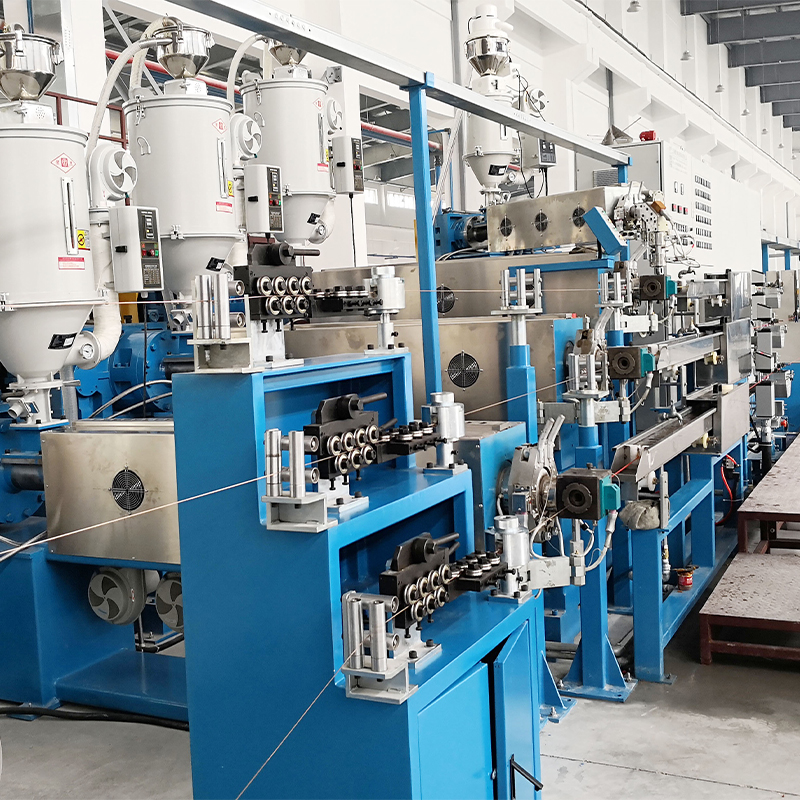
-
Product High-Speed Durable PVC PE UPVC Cable ExtruderThe machine can automatically making electric cable, wire, house wire and so on.Wide range of application: Suitable for many type and size of cable, like PVC, LDPE, LSNH and Nylon so on.These functions make the machine have the advantages of high efficiency, automation and labor saving, and can s...View More
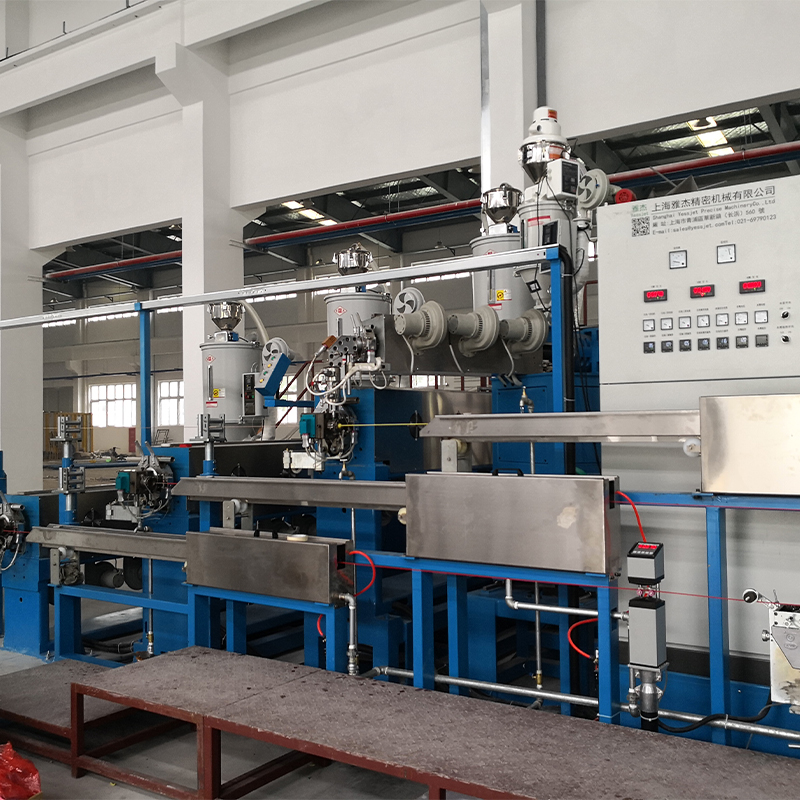
-
Product Full Auto PE PVC High-Performance Cable ExtruderThe Full Auto PE PVC High-Perf Cable Extruder is an integrated production system designed to support cable manufacturers in efficient, high-precision production. It specializes in continuous extrusion of PE and PVC insulation layers and protective jackets for wires and cables, covering power cables,...View More
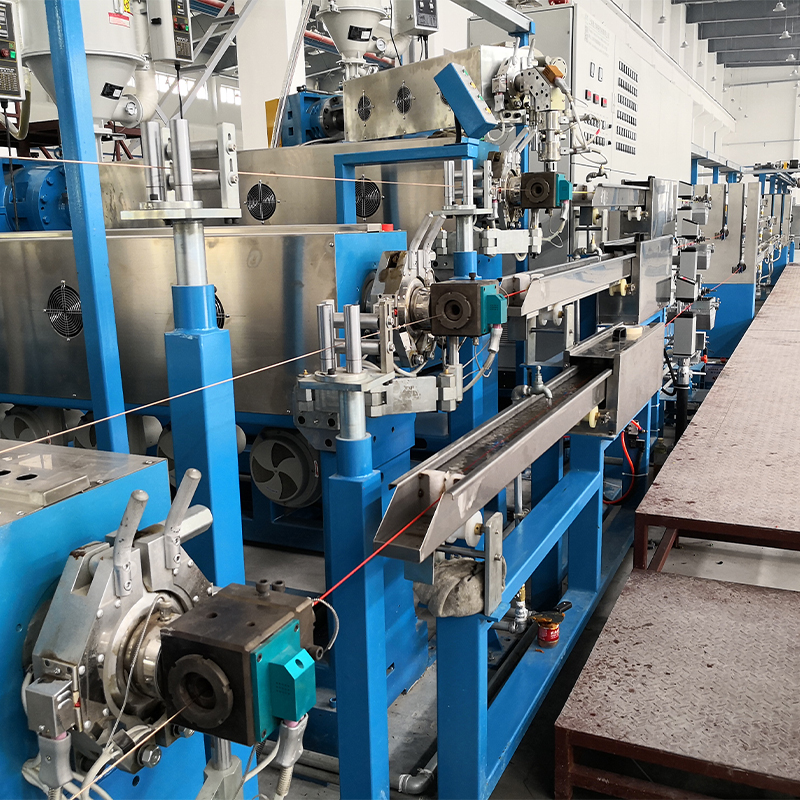
-
Product XLPE PE Cable Extruder with Cooling Water TankThis XLPE PE Cable Extruder w/Water Tank is engineered for extrusion and cooling of XLPE and PE insulated cables, integrating a high-precision single-screw extruder, temperature-controlled electrical heating system, and multi-section water tank to enable continuous, high-quality cable insulation pro...View More
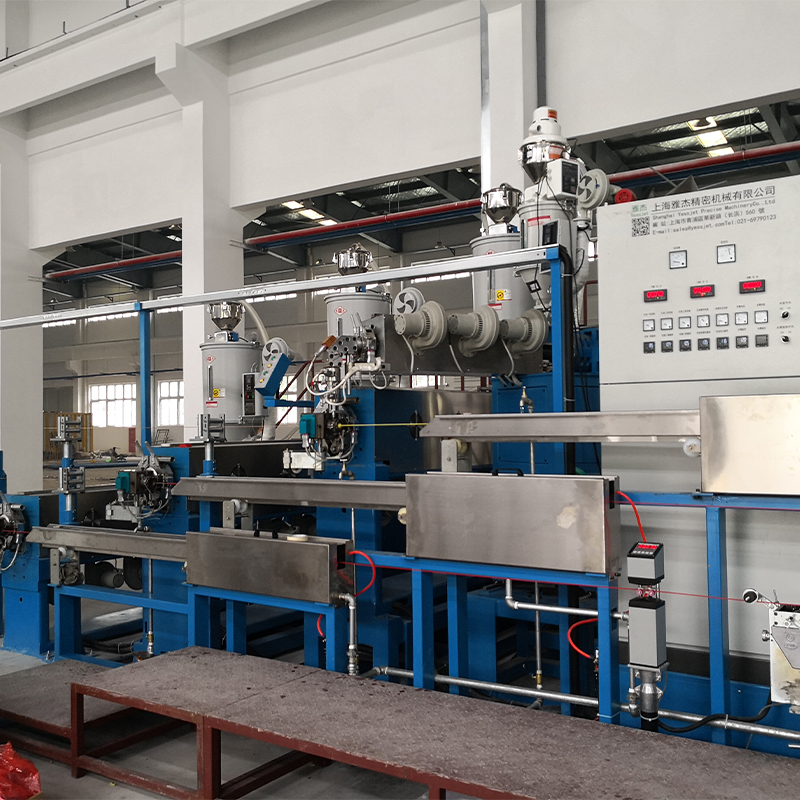
A cable extrusion machine is a core device for cable manufacturing, engineered to extrude and coat plastic materials onto conductor cores. It covers multiple variants, including high-speed durable PVC/PE/UPVC cable extruders, XLPE PE Cable Extruder w/Water Tank, and high-efficiency PP/PVC/PE cable extruders.
Designed for stable continuous operation, the high-speed models boost production efficiency while ensuring uniform material coating. The water tank-equipped extruders enable rapid cooling and shaping of XLPE/PE insulation layers, enhancing product consistency. High-efficiency versions optimize material utilization, reducing waste during PP, PVC and PE processing.
Suitable for power, communication and control cable production, this machine ensures precise insulation thickness and reliable performance, laying a solid foundation for high-quality cable manufacturing.
Shanghai Yessjet Precise Machinery Co., Ltd.
Precision Machinery, Intelligent Solutions Powering Cable Production Worldwide
Shanghai Yessjet Precise Machinery Co., Ltd. was established in Shanghai with investment from
Taiwan
in 2002 as a professional manufacturer dedicated to the research and development of wire and cable
machinery.
In 2017, to expand the company's scale, Jiangsu Yessjet Precise Machinery Co., Ltd. was established with
investment
in Yixing, Wuxi, Jiangsu. Cable Extrusion Machine Manufacturers and OEM/ODM Cable Extrusion Machine Factory in China.
We specialize in designing and manufacturing high-performance production systems — from extrusion lines and automatic coiling machines to robotic palletizing solutions — helping customers achieve efficiency, flexibility, and sustainable growth. Cable Extrusion Machine Custom. Integrate all in-house product lines with external resources to provide clients with comprehensive services spanning process design, equipment selection, layout planning, installation and commissioning, and personnel training, ensuring projects achieve successful first-time startup.
View
More
We specialize in designing and manufacturing high-performance production systems — from extrusion lines and automatic coiling machines to robotic palletizing solutions — helping customers achieve efficiency, flexibility, and sustainable growth. Cable Extrusion Machine Custom. Integrate all in-house product lines with external resources to provide clients with comprehensive services spanning process design, equipment selection, layout planning, installation and commissioning, and personnel training, ensuring projects achieve successful first-time startup.
YESSJET
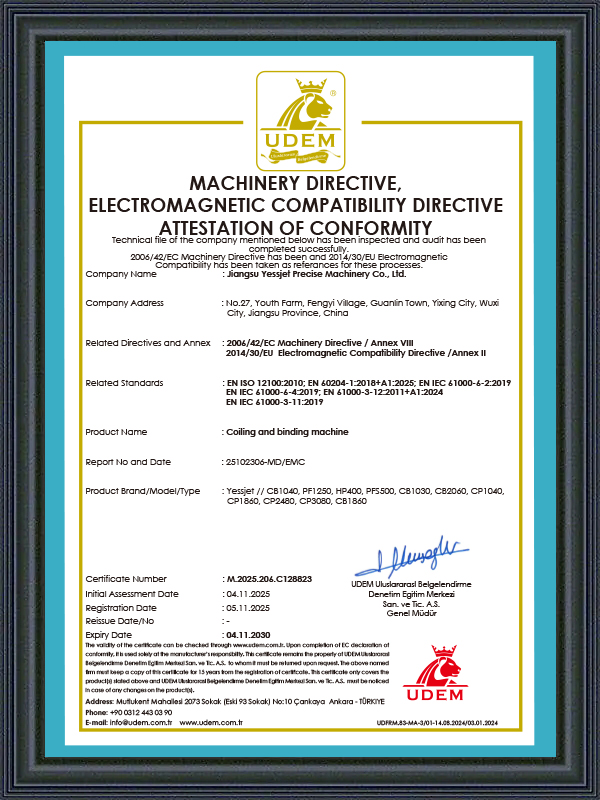
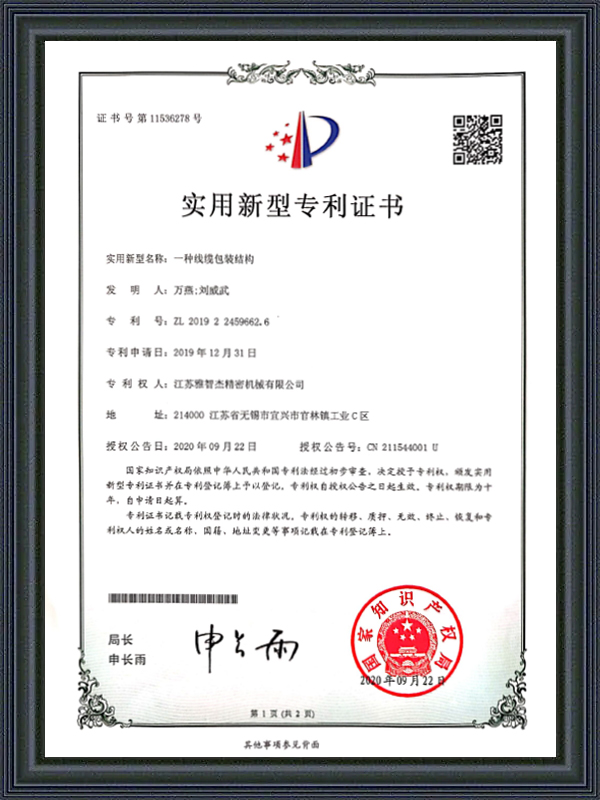
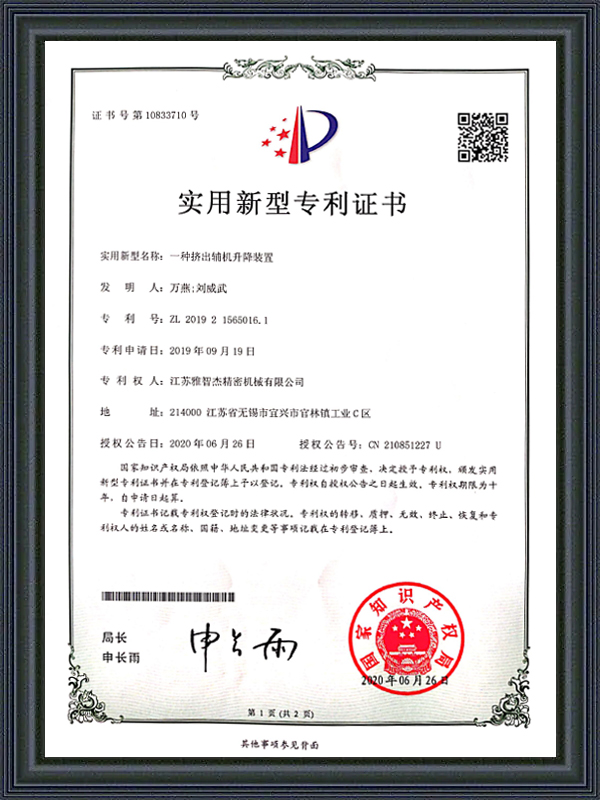
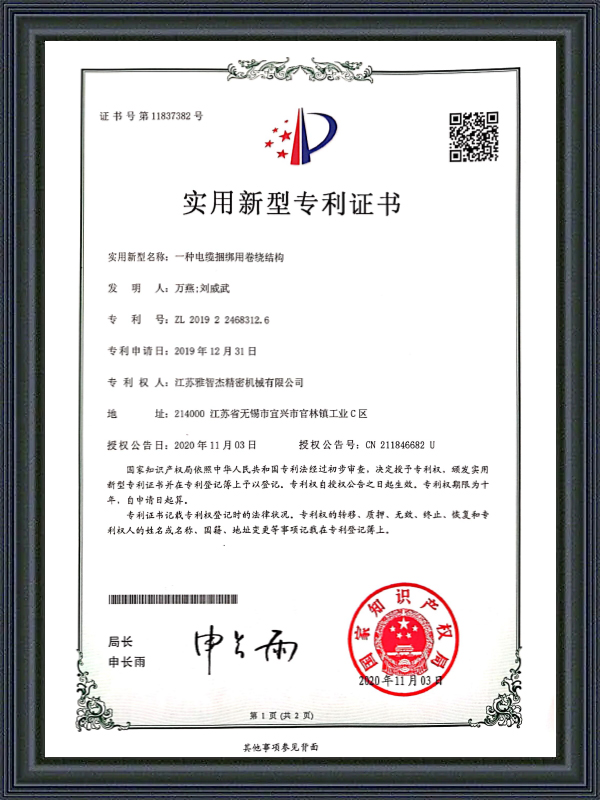
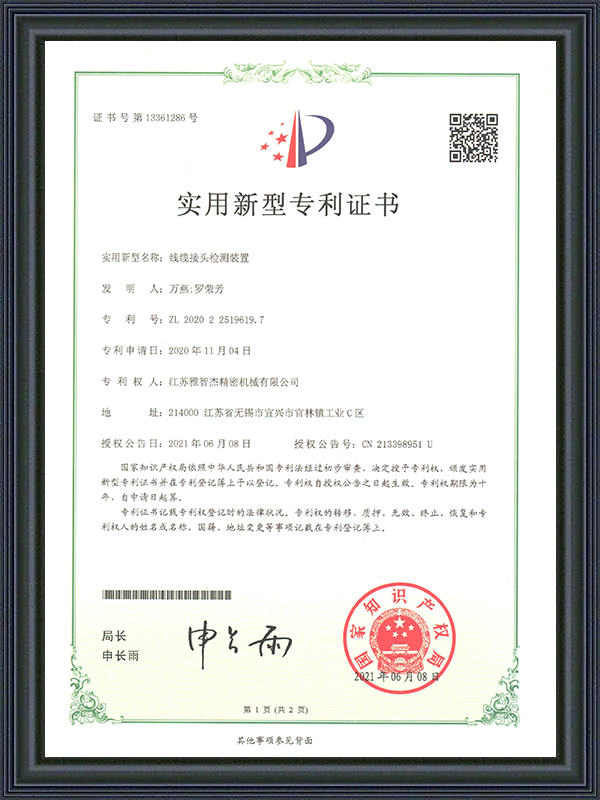
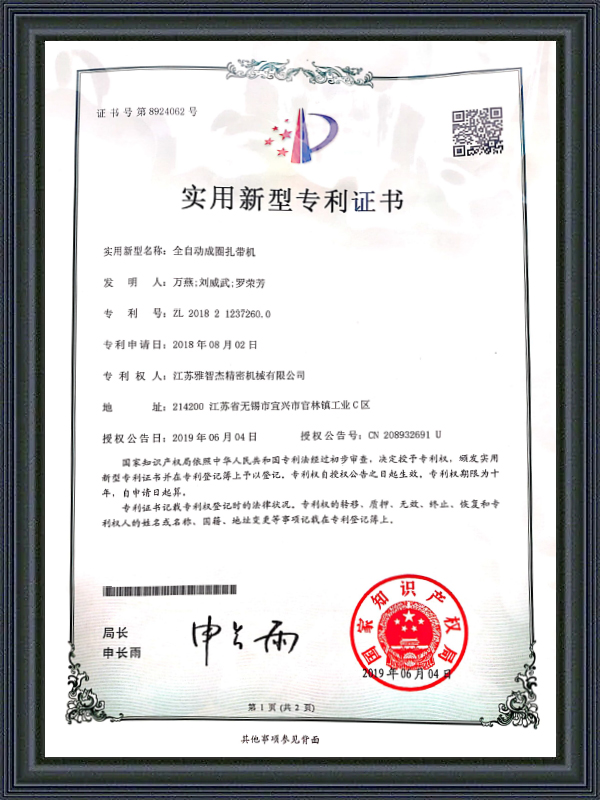
Honorary Certification
CERTIFICATE
Latest Updates
What'S News
-
Extrusion Screw Compression Ratio: How to Match It to Your Cable CompoundA cable plant replacing the screw on a rigid PVC insulation line once ordered a 4.0 compression ratio, on the reasonable-sounding logic that more compression m...
-
Shanghai Yessjet Showcases Cable Extrusion and Packing Solutions at wire China 2026, Booth E2F63Shanghai Yessjet Precise Machinery Co., Ltd. is exhibiting at wire China 2026, the China International Wire & Cable Industry Trade Fair, from September 21 t...
-
Extrusion Process Control: How Temperature, Tension and Line Speed InteractA 70 mm PVC insulation line running at 300 m/min produces roughly 36 km of insulated core in a two-hour window. If the finished diameter drifts 0.05 mm outside...
-
Extrusion Grade Polymers: Selection and Processing Guide for Cable MakersA cable processor in Southeast Asia recently swapped an extrusion-grade polyethylene compound for a cheaper injection-grade resin to save roughly US$0.12 per k...
-
Extrusion Equipment Selection Guide: Cable Manufacturers’ Buying FactorsCable makers often compare extrusion equipment by screw diameter, motor rating, or claimed speed first. Those numbers matter, but they do not tell the whole st...
Industry Knowledge
Thermal Dynamics and Barrel Zoning in Cable Extrusion Machines
Precise thermal management remains the foundation of consistent polymer melting and cross-linking during cable manufacturing. Modern extrusion lines utilize multi-zone heating bands combined with proportional-integral-derivative controllers to maintain temperature variances within plus or minus one degree Celsius across the barrel. The feed section typically operates at lower temperatures to prevent premature melting and bridging, while the compression and metering zones gradually increase heat to achieve optimal shear viscosity. For cross-linked polyethylene applications, nitrogen purging and infrared die heaters are frequently integrated to prevent moisture absorption and ensure uniform curing before the insulation enters the cooling trough. Operators must continuously monitor melt pressure and temperature feedback from thermocouples placed directly in the polymer stream rather than relying solely on external barrel readings, as internal melt temperature can fluctuate independently due to viscous shear heating.
Advanced Die Heating Techniques
Die temperature control directly impacts surface finish, dimensional stability, and material flow uniformity. Cartridge heaters embedded within the die body provide rapid response times and eliminate cold spots that commonly cause melt fracture or shark skin defects. When processing high-viscosity compounds such as low-smoke zero-halogen materials, segmented heating zones allow operators to fine-tune thermal gradients across the die profile, compensating for material thinning in thicker insulation layers. Coupling these heating elements with infrared pyrometers enables non-contact surface temperature verification, ensuring that the polymer exits the tooling at a consistent thermal state before entering the vacuum sizing tank.
Screw Geometry and Material Compatibility
The geometric configuration of the extrusion screw dictates melting efficiency, output stability, and final cable insulation quality. A standard single-screw cable extruder typically employs a length-to-diameter ratio between twenty-four and thirty-two, providing sufficient residence time for homogeneous polymer blending. The compression ratio varies significantly depending on the processed material; polyvinyl chloride formulations generally require a ratio of two point five to three to manage heat sensitivity, while thermoplastic elastomers benefit from lower compression zones to preserve molecular integrity. Incorporating a Maddock mixing element near the metering section enhances distributive mixing, ensuring additives like colorants, flame retardants, and stabilizers are uniformly dispersed before the material reaches the die. Bimetallic screw barrels lined with tungsten carbide or nitrided steel are essential for processing abrasive halogen-free compounds, extending service life by over three hundred percent compared to standard chrome-plated alternatives.
Automation Retrofits and System Integration
Shanghai Yessjet Precise Machinery Co., Ltd. was established in Shanghai with investment from Taiwan in 2002 as a professional manufacturer dedicated to the research and development of wire and cable machinery. In 2017, to expand the company's scale, Jiangsu Yessjet Precise Machinery Co., Ltd. was established with investment in Yixing, Wuxi, Jiangsu. Building on this foundation, targeted retrofits focus on replacing outdated relay-based control panels with programmable logic controllers that synchronize motor drives, tension feedback, and laser diameter measurement into a unified human-machine interface. Installing closed-loop laser micrometers enables real-time thickness monitoring, automatically adjusting haul-off speed and extruder RPM to maintain tight tolerances and minimize material waste. By integrating automated coiling mechanisms, robotic palletizing arms, and advanced diagnostic sensors, manufacturers can transform semi-automatic setups into fully synchronized production environments. This modernization approach consistently delivers measurable improvements in dimensional precision, reduces operator dependency, and maximizes overall equipment effectiveness across aging cable extrusion lines.
Control Architecture Upgrades
Legacy extrusion lines often suffer from communication latency between individual drive modules and centralized monitoring stations. Upgrading to fieldbus or Ethernet-based industrial networks allows instantaneous data exchange between the extruder, haul-off, cooling trough, and capstan systems. This synchronized architecture enables predictive load balancing, where tension spikes in the pay-off unit trigger automatic speed reductions downstream before wire breakage occurs. Implementing digital twin interfaces further allows engineers to simulate material behavior and machine responses offline, optimizing startup parameters and reducing trial-and-error downtime during product changeovers.
Defect Diagnosis and Process Correction Matrix
Systematic troubleshooting requires correlating visible extrusion anomalies with specific machine parameters and material conditions. Addressing these issues promptly prevents scrap accumulation and ensures compliance with international cable standards. The following reference matrix outlines frequent production challenges alongside their primary mechanical causes and recommended corrective actions.
| Observed Defect | Primary Cause | Corrective Adjustment |
|---|---|---|
| Surface Shark Skin | Excessive shear stress at die exit | Reduce screw speed or increase die temperature slightly |
| Insulation Eccentricity | Misaligned tooling or uneven cooling | Recalibrate concentricity adjustment bolts and verify water trough alignment |
| Porosity and Bubbles | Moisture contamination or inadequate venting | Pre-dry raw materials and activate vacuum degassing ports |
| Rough Die Drool | Polymer degradation or filler separation | Purge with compatible cleaning compound and reduce residence time |
Preventive Maintenance and Energy Optimization
Modern cable manufacturing facilities increasingly prioritize energy conservation and predictive maintenance to maintain competitive margins while meeting environmental regulations. Replacing traditional resistive barrel heaters with induction heating systems reduces warm-up time by approximately forty percent and eliminates thermal lag, allowing extruders to reach stable operating temperatures with significantly lower power consumption. Integrating variable frequency drives on haul-off units and cooling water pumps ensures that motor output precisely matches production demand, preventing unnecessary electrical draw during low-speed operations. Routine maintenance schedules must extend beyond basic lubrication and include systematic inspection of gearboxes, thrust bearing assemblies, and die polishing intervals.
- Conduct quarterly vibration analysis on main drive motors and gear reducers to detect early-stage bearing fatigue or misalignment before catastrophic failure occurs.
- Implement closed-loop water cooling filtration systems that continuously remove polymer fines and scale from trough circulation lines, preventing nozzle clogs and maintaining consistent heat transfer rates.
- Schedule annual calibration of laser micrometers, tension load cells, and temperature sensors against certified reference standards to guarantee measurement accuracy across all production batches.
- Establish a documented material changeover procedure that includes comprehensive screw purging, die disassembly, and thermal stabilization steps to prevent cross-contamination between different cable compound formulations.
Quick Links

Product Categories
Contact Us
-
 sales@yessjet.com
-
 +86-0510-87258118
-
 +86-18888031330
-
 No. 27, Youth Farm, Fengyi Village, Guanlin Town, Yixing City, Jiangsu Province China.
Copyright © Shanghai Yessjet Precise Machinery Co., Ltd. Rights Reserved. Custom Cable Extrusion Machine Factory
