LANGUAGE
 中文简体
中文简体 русский
 Français
 Español
 Português
 عربى
عربى
Content
- 1 What the LLDPE Melting Point Actually Is
- 2 Why LLDPE Melts Above LDPE
- 3 Grade-by-Grade Melting Data
- 4 Hidden Indicators Behind One Melting Number
- 5 Turning the Melting Point into Barrel Settings
- 6 Where LLDPE Volume Actually Goes
- 7 Selection and Start-Up Sequence
- 8 Testing, Maintenance and Compliance Notes
A cable plant runs a jacket job on linear low-density polyethylene with a barrel profile left over from an LDPE order. Within half an hour the melt pressure has climbed, the surface looks hazy, and the spark tester starts logging faults. Nothing on the line is broken. The resin simply melts at a different temperature than the one the profile was written for.
Bottom line: the LLDPE melting point is about 120 to 128 °C as a DSC peak, roughly 10 to 15 °C above LDPE and 8 to 12 °C below HDPE. Melting starts near 105 to 112 °C and finishes by about 130 °C. That range, not a single figure, decides the feed-zone temperature, the expected melt pressure, and how much unmelted gel can survive into the insulation wall.
The sections below cover where the number comes from, how comonomer choice shifts it, and how to convert it into barrel settings, tension control and incoming-inspection rules that hold up on a running line.
What the LLDPE Melting Point Actually Is
Differential scanning calorimetry reports melting as a curve, not a point. On the second heating run, a standard LLDPE shows an extrapolated onset near 105 to 112 °C, a peak between 120 and 128 °C, and a return to baseline by 128 to 135 °C. Suppliers quote the peak because it repeats well from lab to lab, but the onset is the figure that matters when a feed zone is being set.
DSC peak, second heat
120 to 128 °C for common butene, hexene and octene grades at 10 °C/min, per ASTM D3418 or ISO 11357-3.
Melting onset
105 to 112 °C. Partial melting begins here, so this is the number to respect when writing a barrel profile.
Vicat softening point
88 to 100 °C. It describes stiffness under load, not melting, and using it as a melt setpoint causes surging.
Practical melt temperature
190 to 220 °C at the die, roughly 60 to 90 °C above the peak, so the polymer is fully melted and homogeneous.
Density moves the peak predictably. Grades between 0.915 and 0.922 g/cm³, the ones used for flexible film and cable jackets, melt near 120 to 123 °C. Grades between 0.926 and 0.940 g/cm³ push the peak to 126 to 130 °C and behave closer to HDPE in the compression zone.
Why LLDPE Melts Above LDPE
The difference comes from branching architecture. LDPE is produced under high pressure and carries long-chain branches on the backbone. Those branches are too bulky to enter the crystal lattice, so they interrupt crystal growth and hold crystallinity at roughly 35 to 45 percent. LLDPE is produced with a coordination catalyst, so its backbone stays linear and only short branches of two to six carbons hang from it. Short branches are excluded from the lattice too, but the linear segments between them fold into lamellae far more efficiently. Crystallinity rises to about 45 to 55 percent, and the melting peak rises with it.
Molecular weight distribution reinforces the effect. LLDPE has a narrower distribution and no long-chain branching, so it is markedly less shear-thinning than LDPE. At the same melt index it demands more screw torque, generates higher die pressure, and shows lower melt strength and less die swell. A screw optimised for LDPE usually underperforms on LLDPE even when every zone temperature is already correct.
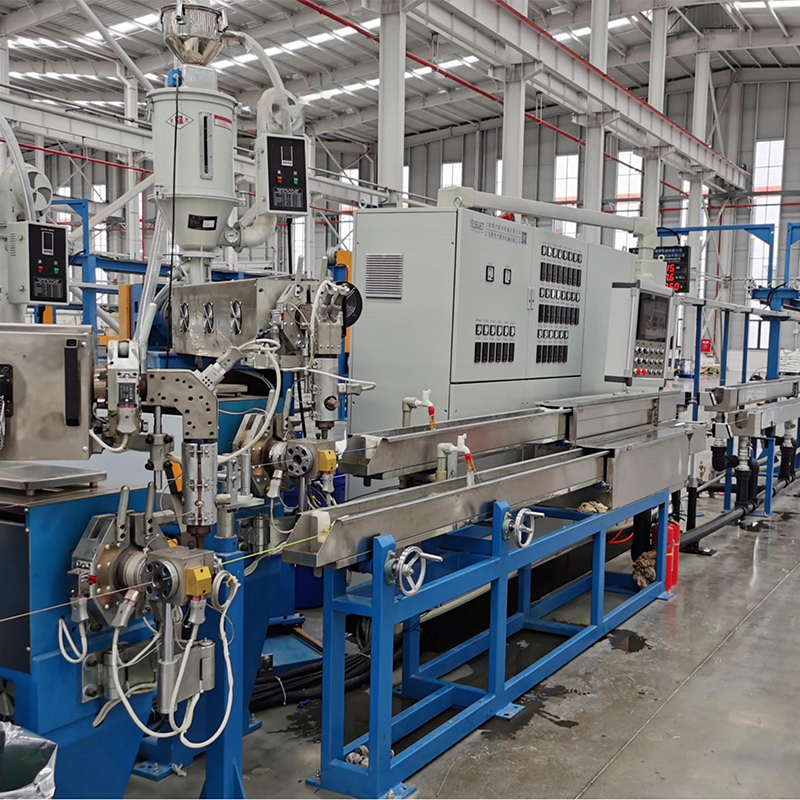
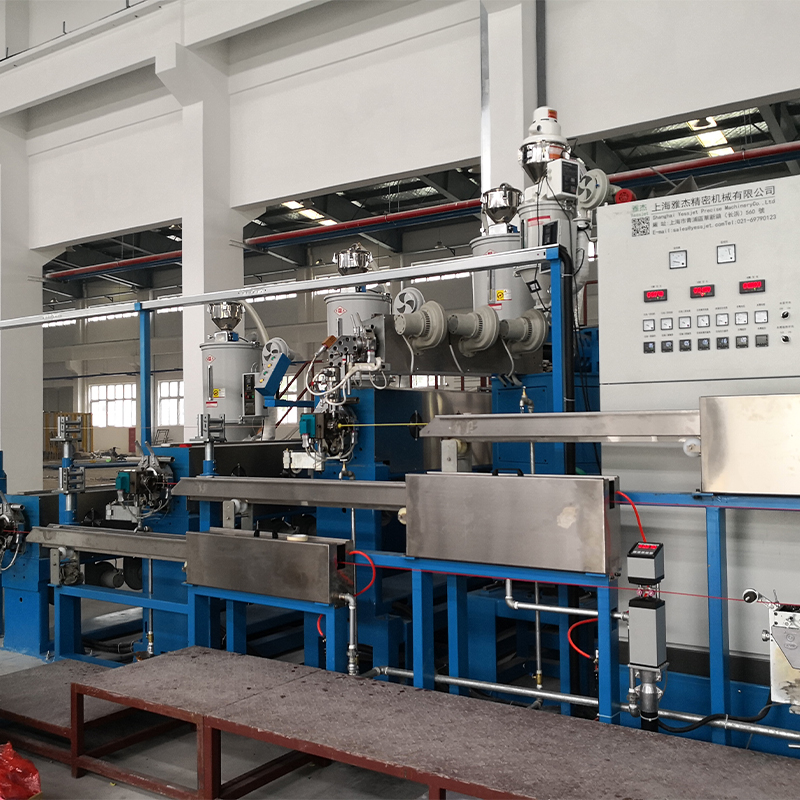 Full Auto PE PVC Cable Extruder for Insulation and JacketingIntegrated extrusion system for PE and PVC cable insulation and jackets, suited when screw and line design must match demanding polyethylene processing.View Product →
Grade-by-Grade Melting Data
The comparison below covers the four polyethylene families that appear most often on cable and film lines. Ranges span commercial grades; a specific lot can sit anywhere inside them.
Resin
Density (g/cm³)
DSC peak (°C)
Crystallinity
Melt behaviour
LDPE
0.918–0.932
108–115
35–45%
Strong shear thinning, high die swell
LLDPE (C4–C8)
0.915–0.940
120–128
45–55%
Low melt strength, low shear sensitivity
Metallocene LLDPE
0.900–0.925
115–124
40–50%
Sharp single peak, high toughness
HDPE
0.941–0.965
130–136
60–80%
High stiffness, highest melt temperature
Peak values are second-heat DSC results at 10 °C/min. Metallocene LLDPE is listed separately because its narrow composition distribution produces a sharp peak rather than a broad melting range.
Hidden Indicators Behind One Melting Number
A datasheet usually lists a single peak. The chart below shows what that number hides: the peak moves by up to 15 °C depending on which alpha-olefin comonomer was used, even when density and melt index look identical.
110 °C
LDPE
118 °C
mLLDPE
121 °C
C4 grade
124 °C
C6 grade
126 °C
C8 grade
133 °C
HDPE
Two more signals hide in the curve. First-heat and second-heat peaks can differ by two to four degrees, and only the second heat reflects the resin itself. Peak width matters as well: a broad melt range points to a wide composition distribution and higher gel risk, while a sharp peak of three to five degrees indicates a uniform metallocene grade. A two-degree shift between supplier lots typically equals a density change of 0.002 to 0.003 g/cm³, enough to move melt pressure by several bar.
Turning the Melting Point into Barrel Settings
Once onset and peak are known, the profile writes itself. The feed zone stays well below onset so the solid bed keeps conveying, the compression zone crosses the melting range, and the metering zone finishes the job above the peak.
- Feed zone: 150 to 170 °C, roughly 40 to 50 °C below onset, to prevent premature melting and surging.
- Compression zone: 185 to 205 °C, where most crystalline structure disappears and the melt densifies.
- Metering zone: 200 to 215 °C, for homogenisation and pressure build-up.
- Adapter and crosshead: 200 to 220 °C, with cable crossheads often at the lower end to limit sag before the cooling trough.
Melt temperature at the die should land between 200 and 220 °C. Drop below roughly 180 °C and unmelted gels survive into the wall, showing up as surface blemishes or weak points in a spark test. Push above 250 °C and oxidation accelerates, residence time becomes critical, and gel formation rises even though the resin is technically still stable.
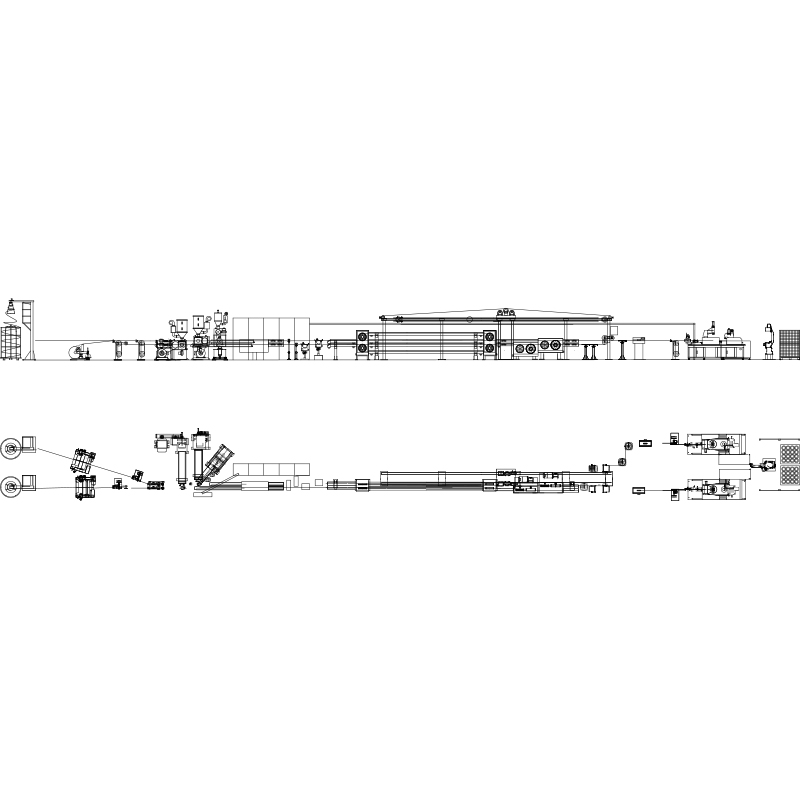 Automated Wire and Cable Extrusion Line with PLC Temperature ControlIntegrated line for insulating or sheathing wires, with imported screw and barrel, PLC control, and precision temperature regulation for stable extrusion.View Product →
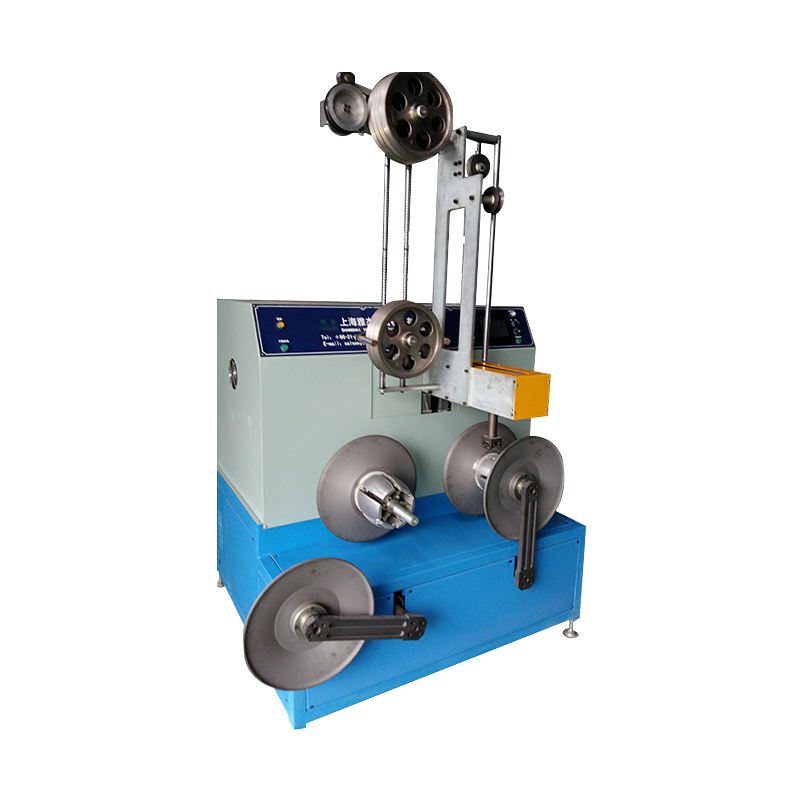
Low melt strength is the second half of the story. LLDPE holds its shape poorly after leaving the die, so diameter control depends heavily on stable pulling and winding rather than on die geometry alone. Accumulator and dancer systems for continuous extrusion lines absorb speed changes during reel changes and keep tension steady while the melt cools.
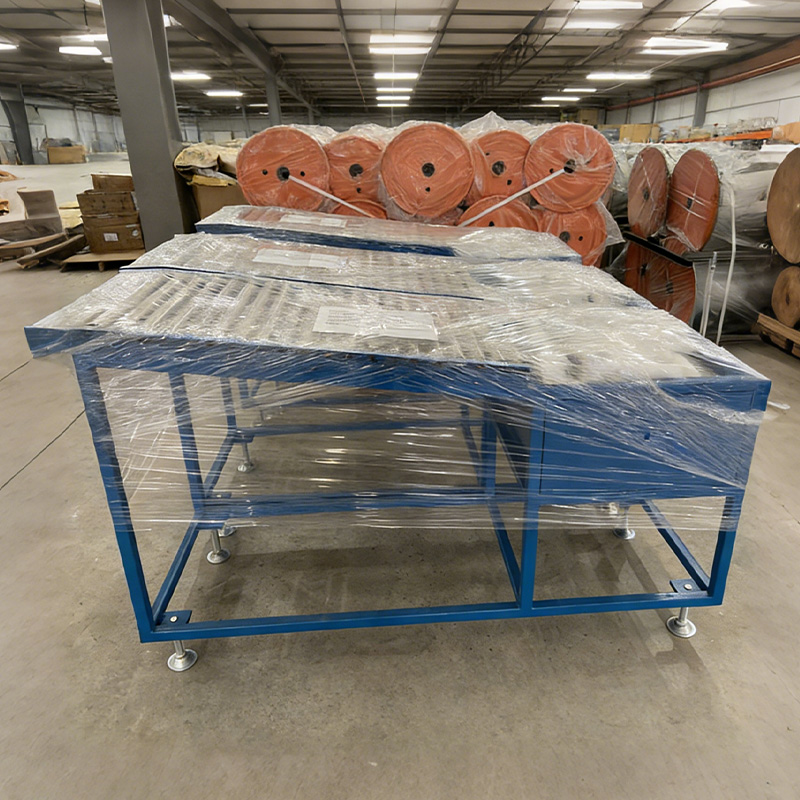
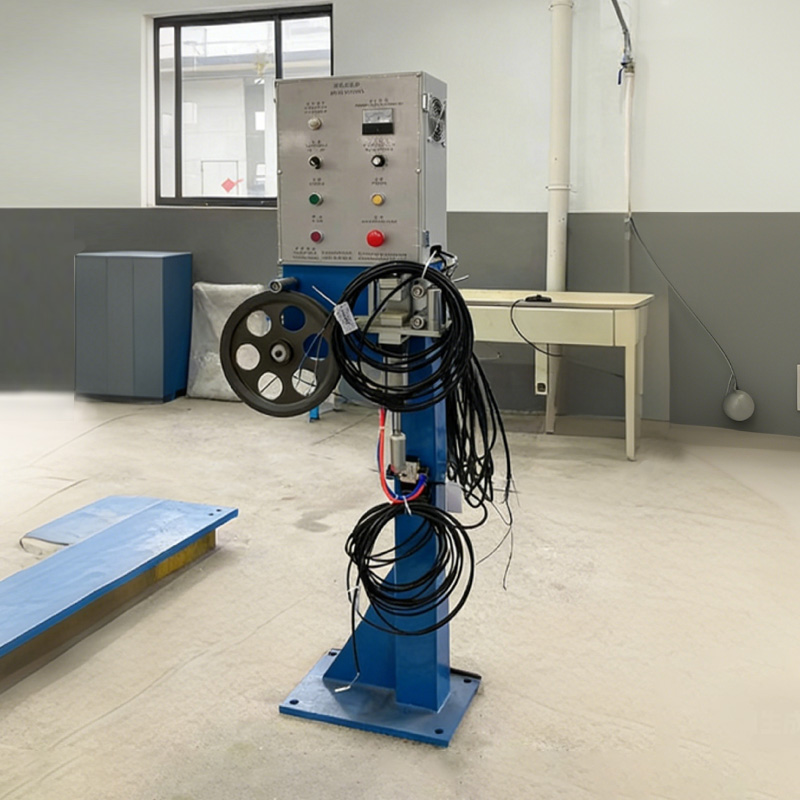 Wire Cable Tension Control System for Stable WindingAccessory system that regulates cable tension during winding to prevent stretching, loose wraps, and disorder, supporting consistent cable quality.View Product →
Where LLDPE Volume Actually Goes
Cable and wire is a real but small slice of global LLDPE consumption. That context matters when a supplier changes grade, reallocates capacity, or when a plant negotiates resin allocation against film producers.
- Film and packaging, including stretch and agricultural film: about 62 percent
- Injection moulded articles: about 12 percent
- Rotational moulding: about 9 percent
- Cable and wire insulation, jacketing and compounds: about 7 percent
- Pipes, conduits and other extrusion: about 5 percent
- Masterbatches, adhesives and miscellaneous: about 5 percent
Selection and Start-Up Sequence
A repeatable order of operations keeps a changeover from turning into a scrap run.
- Pull the actual DSC curve for the lot, not just the datasheet peak, and confirm the onset temperature.
- Match density and comonomer to the end use: flexible jacket grades near 0.920 g/cm³, stiffer constructions up to 0.935 g/cm³.
- Set the feed zone 40 to 50 °C below the measured onset, then raise compression and metering zones in steps.
- Hold melt temperature and melt pressure steady for at least ten minutes before touching line speed.
- Verify wall quality with a spark test or gel count during the first thirty minutes, while the machine is still thermally expanding.
- Record barrel profile, melt temperature and resin lot number together so the next identical job starts from a known point.
Testing, Maintenance and Compliance Notes
Melting point data is only useful if the measurement is trustworthy. Recalibrate the DSC cell with indium at 156.6 °C and verify the baseline at least once a year, because a drifting cell constant shifts every reported peak by a degree or two. Barrel thermocouples deserve the same attention: a five-degree error in a metering zone changes the real profile more than most resin lot variation does.
Storage is straightforward. LLDPE is not hygroscopic and normally needs no drying, but it does need protection from UV and from cross-contamination with PVC, which calls for a proper purging compound at changeover rather than a straight flush. For cable products, melting data supports incoming inspection and lot traceability, while the finished item still has to pass its spark, tensile and elongation tests.
On the process side, routine checks of melt pressure trends, motor load and gel counts catch melting problems before they reach a customer. Where lines are being upgraded rather than replaced, a reviewed extruder setup can be worth more than a new screw, and a high-efficiency PE and PVC cable extruder guide covers the practical checks that come with that review.