LANGUAGE
 中文简体
中文简体 русский
 Français
 Español
 Português
 عربى
عربى
Content
- 1 What Is an Automatic Wire Winding Machine?
- 2 How Does an Automatic Wire Winding Machine Work?
- 3 Key Features to Look for in an Automatic Wire Winding Machine
- 4 Types of Automatic Wire Winding Machines
- 5 Industries and Applications
- 6 How to Choose the Right Automatic Wire Winding Machine for Your Production Line
A single operator manually winding wire onto spools can process roughly 200–400 meters per hour. An automatic wire winding machine running at full speed handles that same volume in minutes — with zero variation in coil tension, zero misalignment, and no fatigue-related errors at the end of a shift. That gap is why manufacturers of BV, BVR, RVV, and UL-certified electrical cables have been replacing manual stations with automated winding equipment at a steady pace.
This guide covers how these machines work, what features actually matter when comparing models, which machine type fits which production scenario, and how to make a sourcing decision that doesn't create problems six months after installation.
What Is an Automatic Wire Winding Machine?
An automatic wire winding machine is an industrial device that winds wire or cable onto spools, reels, or coils without continuous operator involvement. The machine controls wire feed speed, winding tension, traverse positioning, and spool rotation simultaneously — producing consistent, tightly layered coils that are ready for packaging or storage.
The term covers a broad category of equipment. At one end, a basic motorized take-up unit handles a single wire type at fixed speed. At the other end, a fully automatic servo-driven winding system accepts programmable winding parameters, detects faults mid-run, and interfaces with upstream extrusion lines and downstream packaging equipment as part of a continuous production loop.
What all these machines share is the same core function: removing the manual bottleneck from wire organization and replacing it with controlled, repeatable mechanical motion.
How Does an Automatic Wire Winding Machine Work?
The winding process involves four coordinated systems working in real time.
Wire feed and tension control is the first stage. As wire enters the machine from a pay-off reel or directly from an extrusion line, a dancer arm or load cell continuously measures the wire's tension. If tension rises or drops beyond the set range — due to speed fluctuation or wire diameter variation — the system adjusts the feed rate automatically. This prevents loose windings on one layer and over-tensioned, deformed wire on the next.
The traverse guide system moves the wire laterally across the spool face with each rotation. In servo-driven machines, the traverse pitch is calculated from the wire diameter and programmed spool width, ensuring each winding layer sits flush against the previous one. This is what produces the characteristic neat, cross-wound pattern seen in high-quality spooled cable.
The spindle drive rotates the spool at a speed synchronized with the wire feed rate. As spool diameter grows with each layer, the spindle speed adjusts to maintain constant linear wire speed — a function that becomes critical when winding fine-gauge wires where even small speed mismatches cause tangles or slack.
Fault detection and control logic monitor the process continuously. Sensors track parameters including tension deviation, wire break events, traverse positioning errors, and spool fill level. When a fault condition is detected, the machine stops, logs the event, and alerts the operator — rather than continuing to wind defective coils that only get discovered during quality inspection downstream.
Key Features to Look for in an Automatic Wire Winding Machine
Not every feature in a spec sheet translates into production value. These are the ones that have a direct impact on output quality and operational cost.
Servo motor drive system. Servo motors provide closed-loop speed and position control that stepper motors and induction motors cannot match. In wire winding, this precision is what enables accurate traverse pitch at high speeds and consistent tension across different wire gauges. Machines using servo drives on both the spindle and traverse axes offer the most flexibility when switching between wire types or spool sizes.
Wire compatibility range. A machine spec will typically list minimum and maximum wire outer diameter. For production facilities handling multiple cable types — BV single-conductor, BVR stranded, RVV multi-core, or UL-certified electronic wire — the equipment needs to handle that full range without requiring separate machines per product type. Verify this against your actual product catalogue, not just the most common wire you run today.
Automatic fault detection and notification. Machines that stop silently on a fault cause more damage than machines that alert operators immediately. Look for systems with clearly defined fault codes, audible and visual alarms, and a fault log that records event timestamps. This data is directly useful for predictive maintenance planning and shift-level production reporting.
Programmable winding parameters. Production facilities change products frequently. A machine that requires mechanical adjustment every time spool width, wire diameter, or winding pitch changes adds significant downtime per changeover. Machines with PLC-based parameter storage allow operators to recall saved programs for each wire type, reducing changeover time to minutes.
Spool compatibility. Confirm the machine's mandrel size range and maximum spool weight capacity against the plastic spool dimensions you use. A mismatch here is a common source of problems that only surface after installation.
Types of Automatic Wire Winding Machines
Choosing the right machine type comes down to where winding sits in your production workflow and what happens to the wire before and after.
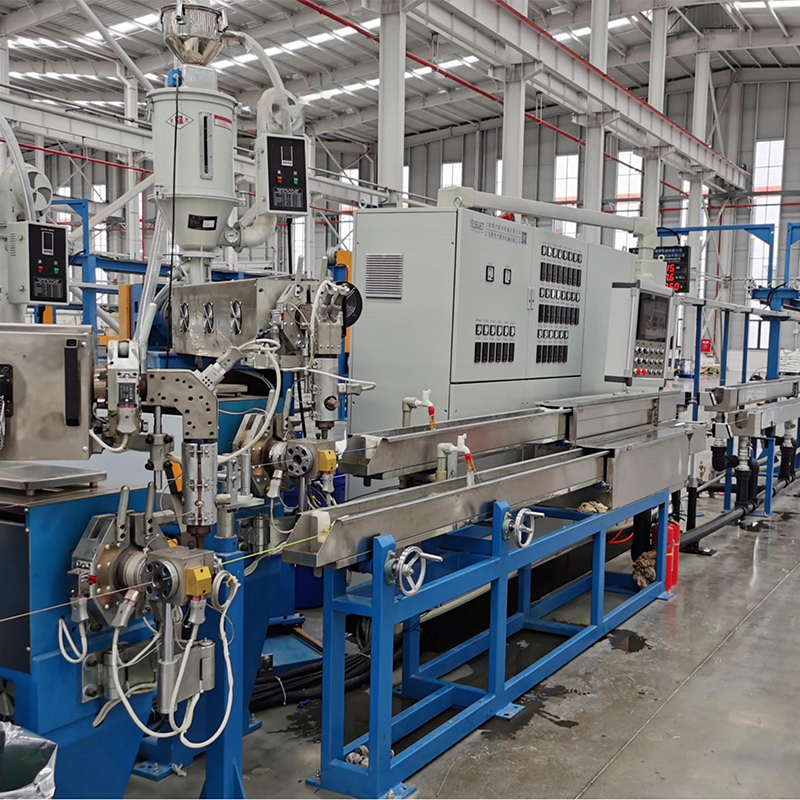
Motorized take-up machines are designed for the output end of a continuous wire processing line — extrusion, drawing, or stranding. They receive wire at line speed and wind it onto large-diameter spools or drums, maintaining constant tension as the spool fills. These machines prioritize speed compatibility with upstream equipment over packaging functionality. motorized take-up equipment for wire and cable production lines of this type is standard on both extrusion and drawing lines.
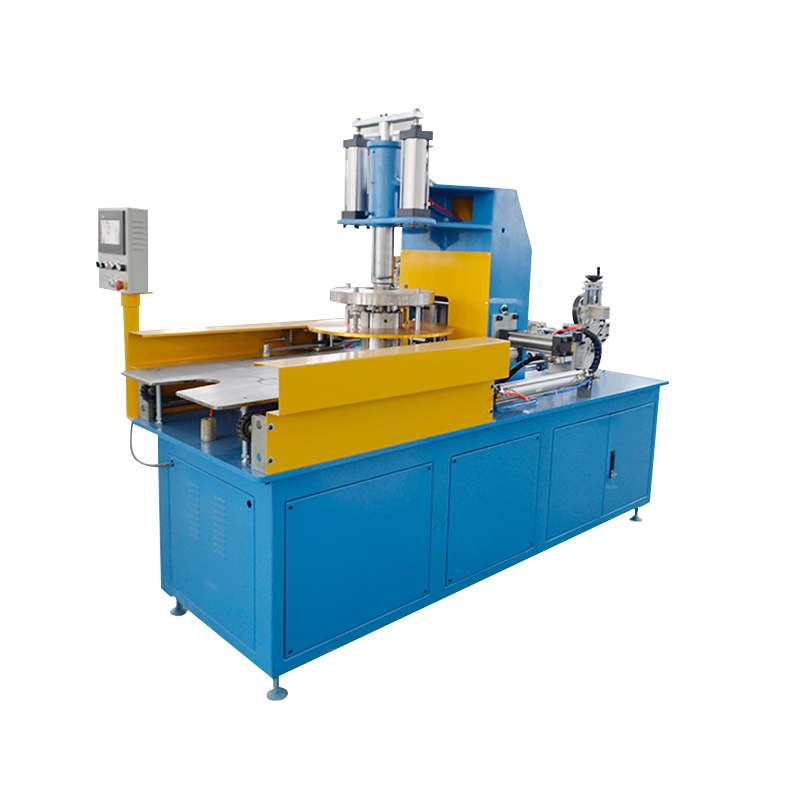
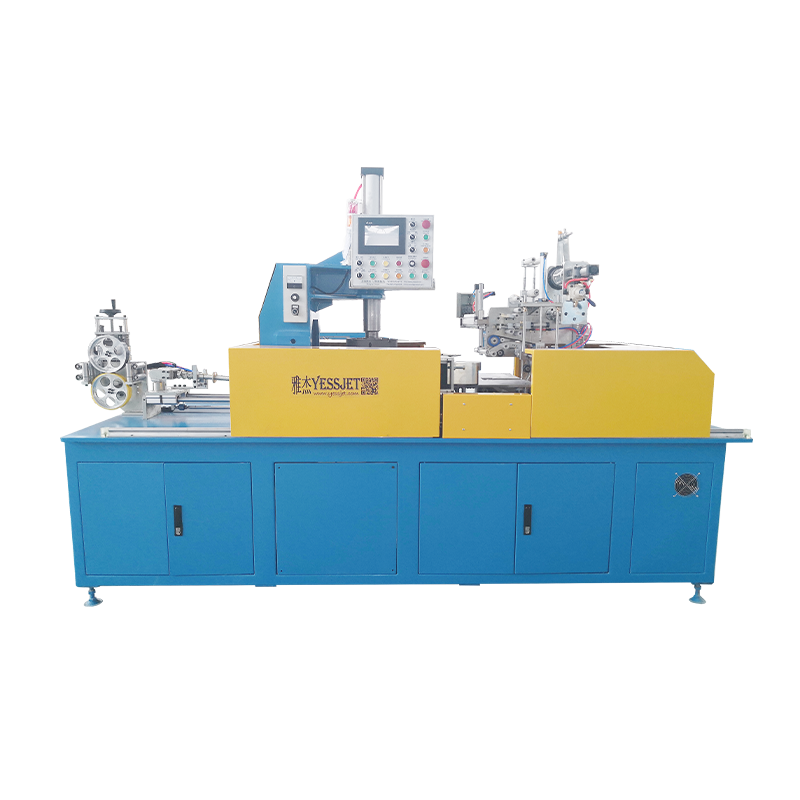
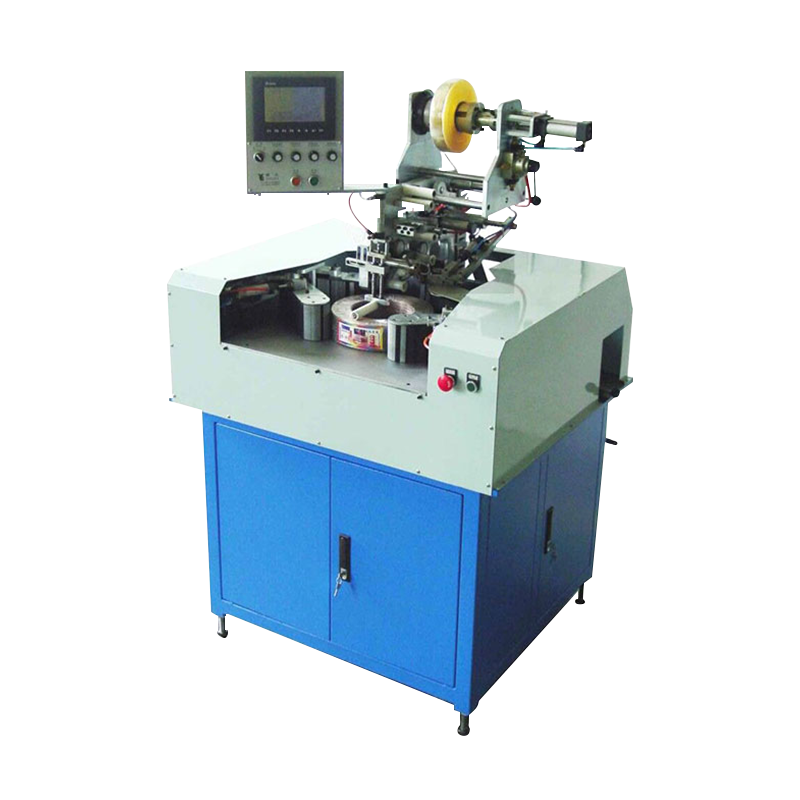
Standalone coiling machines wind finished wire into fixed-diameter coils for retail or distribution packaging. The wire is wound into loops rather than onto a spool, and the machine typically integrates a binding or wrapping function — applying PP tape, paper tape, or woven strapping around the finished coil before it exits. industrial coiling machines for wire and cable of this type handle BV, BVR, RVV, and similar products destined for consumer or construction markets.
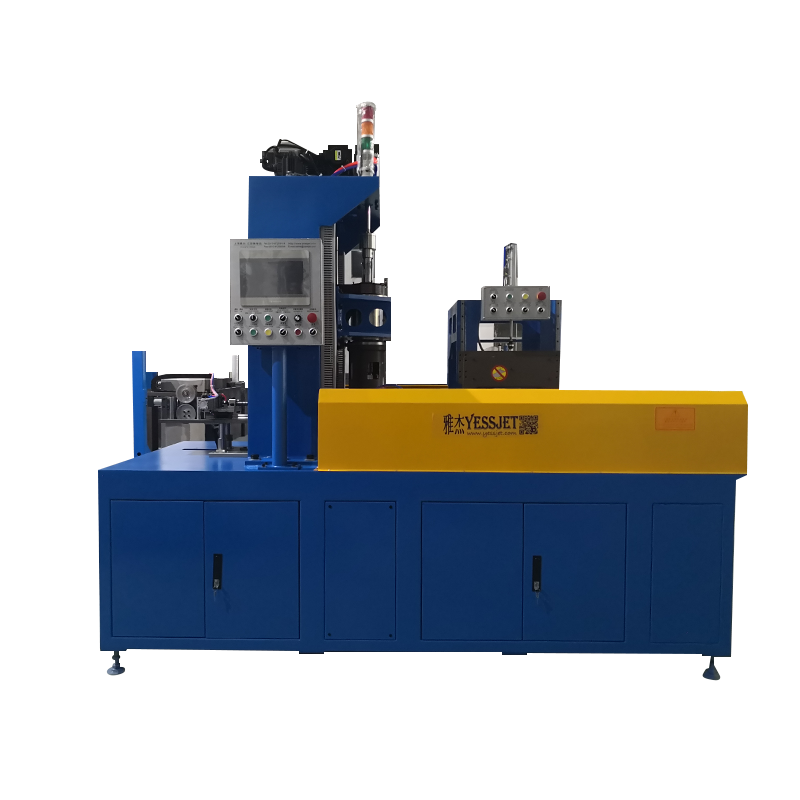
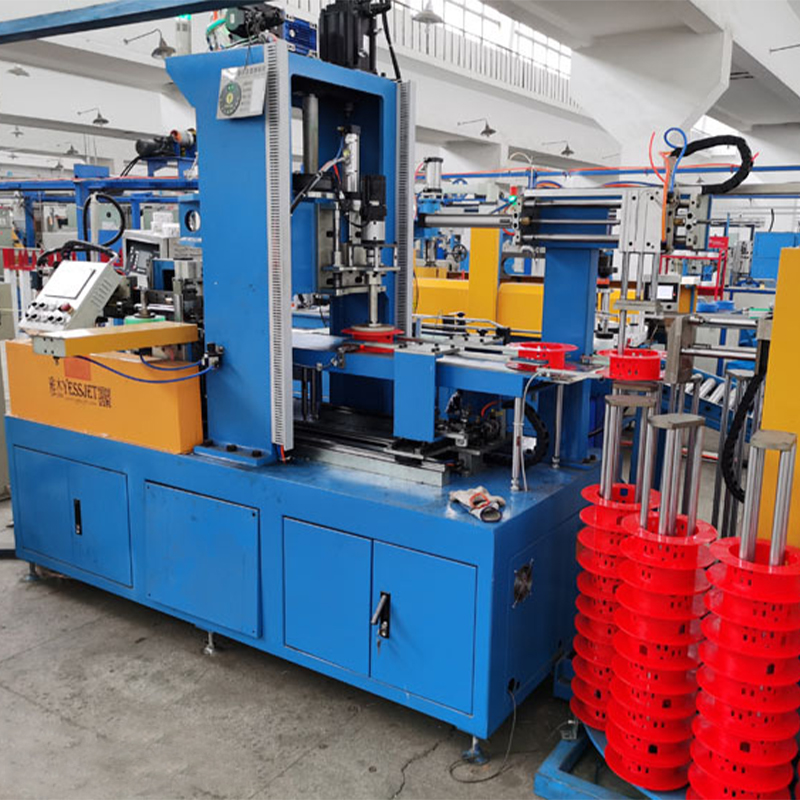
Fully automatic coiling and packaging systems combine winding, binding, wrapping, and in some configurations labeling into a single continuous process. Wire enters from a pay-off or directly from line, and finished, packaged coils exit at the other end. These systems are suited to high-volume standardized production where labor reduction is a primary objective. fully automatic coiling and packaging equipment for cables covers this integration.
Cross winders are a specialized category used for LAN cable, data cable, and similar products where the winding pattern needs to follow a specific cross-wind geometry to meet cable performance specifications. The traverse angle and pitch are tightly controlled to prevent crosstalk-inducing deformation of the twisted pairs inside the cable.
Industries and Applications
The widest application is in wire and cable manufacturing itself — facilities producing BV, BVR, RVV, and UL-listed electrical wire for construction, appliance, and industrial use. Here, winding machines sit at the end of extrusion lines and handle the final organization and packaging of finished product before it ships.
Automotive wire harness production uses winding machines to prepare sub-components — individual wire runs that will later be assembled into harnesses. Precise coil dimensions and consistent tension matter here because the wire feeds directly into automated harness assembly equipment that cannot accommodate irregular coils.
Telecommunications and data cable manufacturing uses cross-winding equipment to handle structured cabling — Cat5e, Cat6, Cat6A — where coil geometry affects electrical performance. The same applies to fiber optic drop cable, where bend radius constraints during winding directly affect long-term signal integrity.
Renewable energy installations, particularly solar farms and wind installations, require large-diameter power cable wound onto substantial drums for transport and on-site deployment. Motorized take-up and pay-off equipment manages these cable weights and dimensions, which are well beyond what manual handling can safely address.
How to Choose the Right Automatic Wire Winding Machine for Your Production Line
Start with your wire specifications, not the machine's feature list. Document the outer diameter range, conductor type (solid vs. stranded), insulation material, and target coil or spool dimensions for every product you need to run. A machine that handles 90% of your product range creates more problems than it solves if the remaining 10% requires a separate manual process.
Production volume determines automation level. A facility running 50,000 meters per day can justify a fully integrated coiling and packaging line. A facility running 5,000 meters across a diverse product mix may be better served by a flexible standalone coiling machine with quick-change tooling. Over-automating low-volume, high-mix production creates changeover overhead that erases the efficiency gains.
Upstream and downstream compatibility matters more than the machine itself. A high-speed winding machine that cannot accept wire at extrusion line speed forces a storage step between processes — adding handling, a buffer inventory, and potential wire damage. Confirm that the winding machine's maximum line speed matches or exceeds your extrusion or drawing line's output speed before specifying equipment.
Evaluate after-sales support as a primary criterion. Winding equipment operates continuously in production environments. Mechanical wear on traverse guides, tension rollers, and spindle bearings is expected. The question is not whether maintenance will be required, but whether spare parts, technical documentation, and remote or on-site support are available when it is. A supplier with a global support network and documented replacement parts reduces unplanned downtime significantly compared to sourcing equipment without established local service.
Finally, request a machine trial or documented test results using wire specifications matching your actual product before committing to a purchase. Winding performance on a specific wire type — particularly fine-gauge stranded cable or multi-core jacketed cable — can differ substantially from what general spec sheets suggest. complete wire and cable production turnkey solutions that include pre-delivery testing and on-site commissioning support remove this uncertainty from the sourcing process.