LANGUAGE
 中文简体
中文简体 русский
 Français
 Español
 Português
 عربى
عربى
Content
Two plants can run the same PVC compound on similar extrusion equipment and end up with very different reject rates. The difference is rarely the screw or the barrel alone. It is how the whole train is coordinated. Payoff tension, dancer response, cooling trough temperature, capstan pull, and take-up winding all interact with the extruder before the diameter gauge shows the first defect.
The practical conclusion follows directly: wire extrusion quality is determined upstream and downstream of the screw. Stabilize tension, hold a consistent cooling profile, and match take-up speed to the extrusion rate, and most dimensional and surface defects disappear without touching the barrel temperature.
High-value conclusion: avoid tuning the extruder first. Audit the whole line — payoff, dancer, cooling, capstan, take-up. Most plants recover 10–15% of lost line time this way, with fewer rejects and more consistent wall thickness.
Wire Extrusion Basics: A Single Synchronized Train
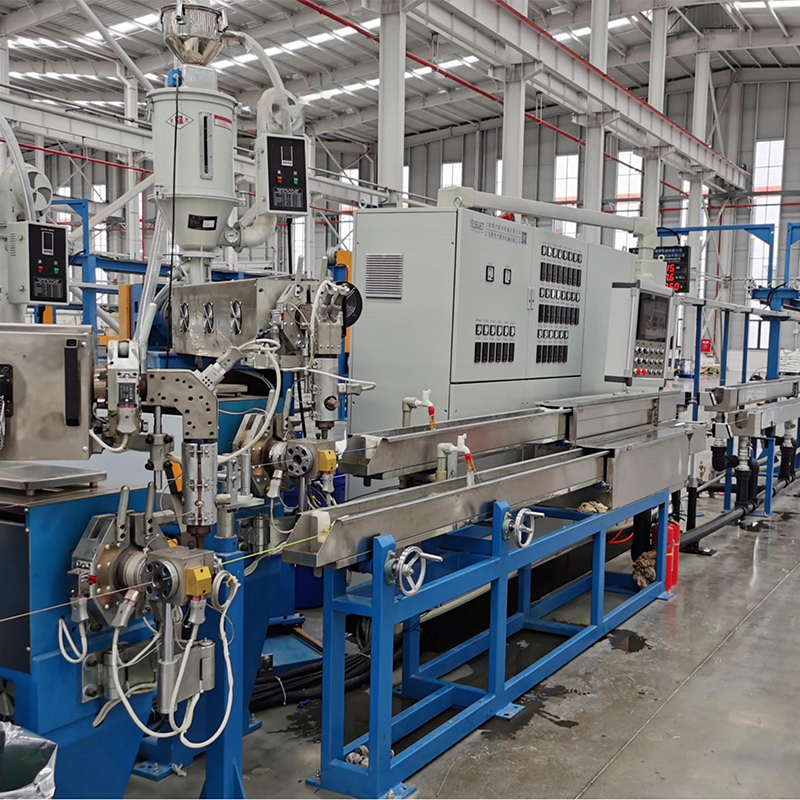
Wire extrusion is the continuous process of melting a polymer and applying it around a metal conductor to form a uniform insulation layer or protective jacket. PE, PVC, PP, or XLPE pellets enter a heated barrel, are melted and homogenized, and are then pumped through a crosshead, where an annular die shapes the polymer as it wraps onto the moving wire.
After the die, the insulated conductor passes through a cooling trough, is dried, gauged, and finally spooled or coiled. The entire line behaves as one machine: screw speed, line speed, and take-up speed must remain synchronized, or the melt draws down unevenly and wall thickness begins to fluctuate.
Main Stations in a Wire Extrusion Line
Payoff and dancer
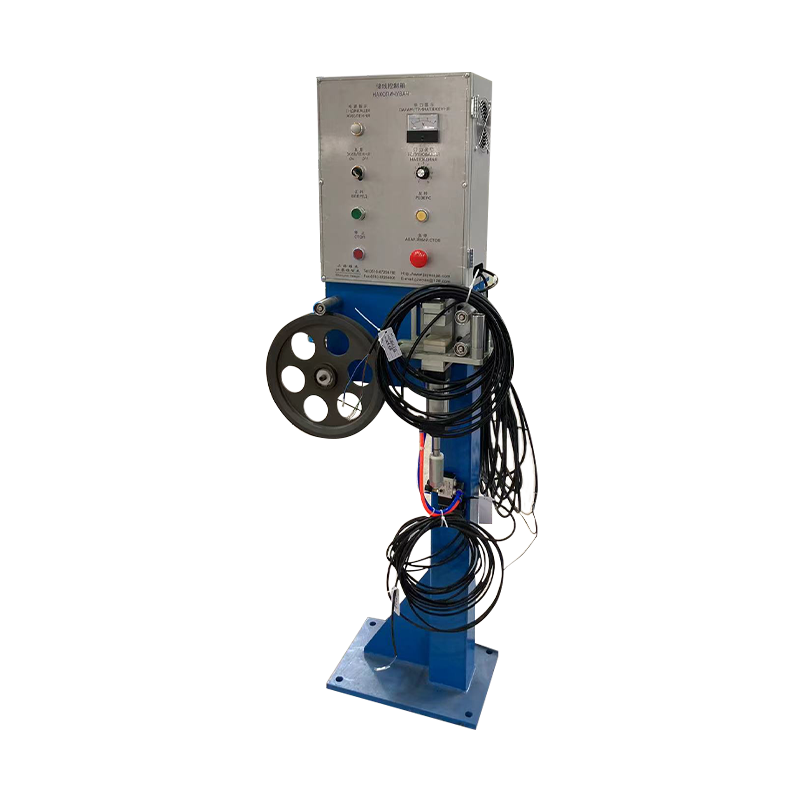
Feeds the bare conductor at constant speed and tension. A dancer or accumulator absorbs inertia changes during spool changes.
Extruder and crosshead
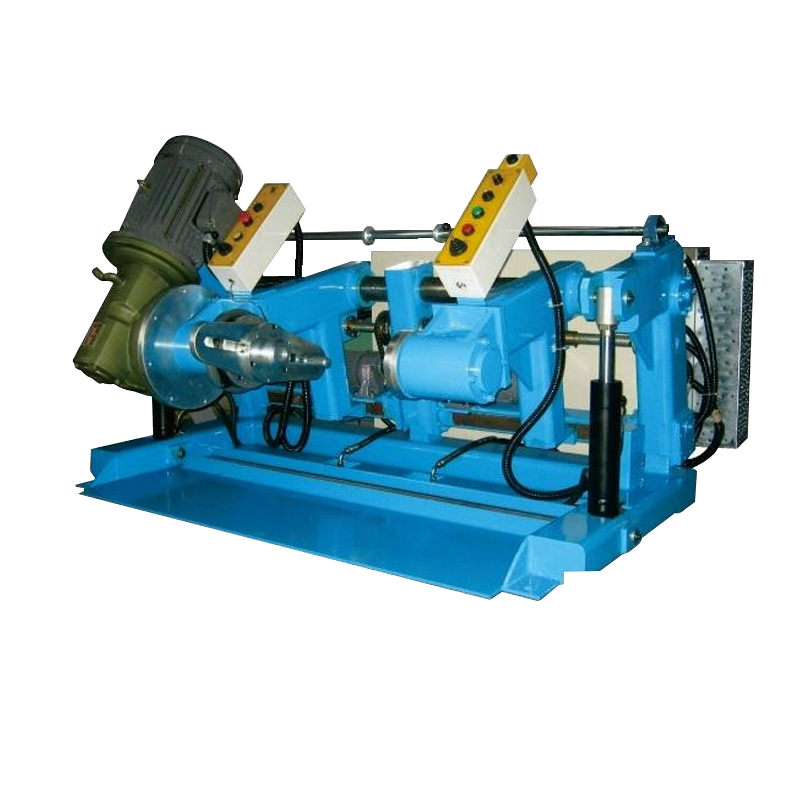
Melts the compound, builds pressure, and applies the layer. Screw geometry and barrel temperature determine melt quality and output stability.
Cooling trough
Sets crystallization and shrink behavior. Water temperature and trough length must match line speed and compound type.
Capstan and take-up
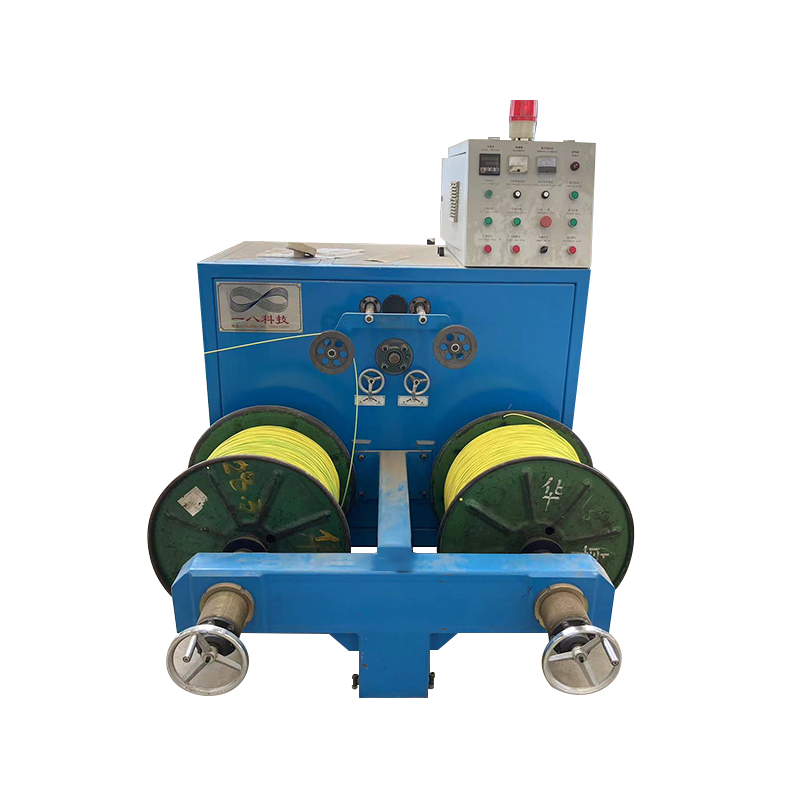
Pulls the line, feeds diameter or capacitance gauges, and winds the finished product without damaging the surface.
Compound Selection: PE, PVC, PP, and XLPE
Material choice changes the extrusion configuration more than any other variable. Building wire made of highly filled PVC behaves differently from medium-voltage XLPE, which needs a pressurized water system. LAN cables require PE with very tight diameter control. The table below compares the most common thermoplastic compounds used in wire extrusion.
| Material | Typical Applications | Melt Temperature | Key Process Risks | Relative Cost Index |
|---|---|---|---|---|
| PE (HDPE/LDPE) | LAN cable, telephone, coaxial insulation | 160–220 °C | Melt fracture at high speed; ovality | 1.0 |
| PVC | Building wire, flexible cords, appliance cable | 150–190 °C | Plasticizer fuming; thermal degradation | 0.8 |
| PP | Automotive wire, thin-wall insulation | 190–240 °C | Limited low-temperature flexibility | 0.9 |
| XLPE | Medium- and high-voltage power cable | 120–140 °C after cross-linking | Scorch if temperature or residence time exceeds limits | 1.4 |
XLPE lines deserve special attention because continuous cross-linking demands precise melt-temperature control and a long cooling path. The practical configuration is a dedicated XLPE/PE cable extruder with water tank, which keeps the compound cool enough to prevent scorch while still allowing the cross-linking reaction to complete in the curing section.
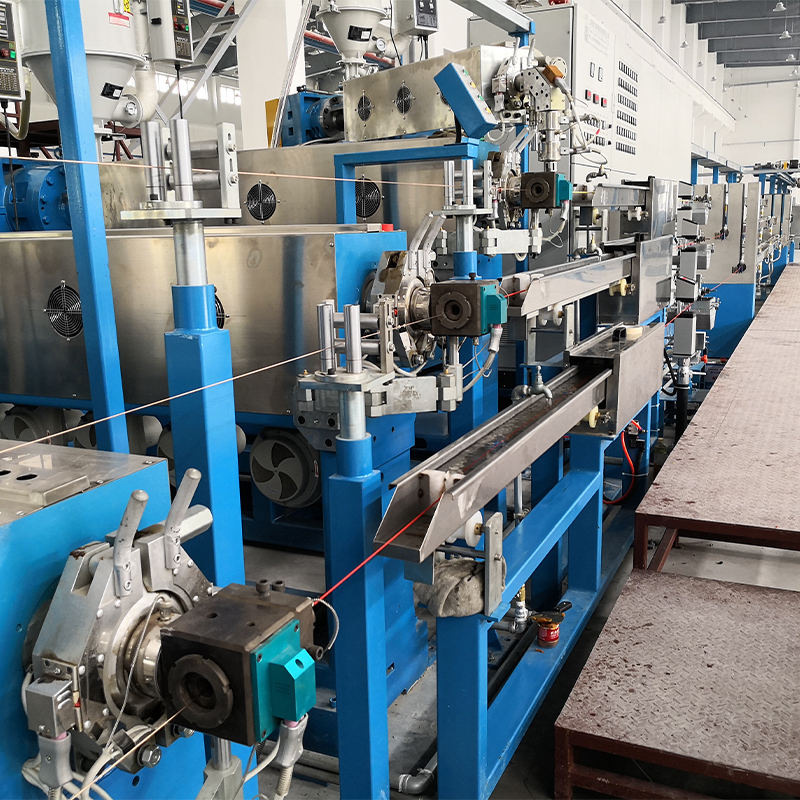 XLPE PE Cable Extruder Machine with Cooling Water Tank, XLPE Cable Extrusion MacAs Wholesale XLPE Cable Extruder Machine Suppliers and PE (Polyethylene) Insulated Cables Extruder Custom Factory, Yessjet Supply XLPE PE...View Product →
Hidden Metrics That Steal Line Efficiency
Rated screw speed does not determine profitability. Efficiency losses from small, repeatable disturbances do. The bar chart below summarizes the most common loss categories observed during wire extrusion line audits.
Changeover & setup delays ~22%
Tension-related scrap ~15%
Cooling imbalance ~12%
Die wear / eccentricity ~9%
Melt temperature drift ~6%
Notice what is missing from the chart: the extruder itself. Once screw and barrel are matched to the compound, losses move to changeovers and tension. A proven remedy is to install accumulator and dancer systems for continuous extrusion lines between the payoff and the crosshead, so conductor speed stays constant while finished reels are changed. On the other end, if the take-up constantly speeds up and slows down, every disturbance propagates back through the capstan to the die, creating gauge variation that is hard to trace.
Application Mix: Where Wire Extrusion Is Used
Wire extrusion covers a wider range of end uses than many buyers assume. The approximate global mix by application looks like this.
- Power cable — 40%
- Communication and data cable — 25%
- LAN and building wiring — 20%
- Automotive and specialty cable — 15%
Power cable dominates because of thick XLPE layers and long cooling sections. Communication and LAN cables demand tighter diameter tolerances, which puts more pressure on tension stability than on screw output. Building wire runs PVC at high speed with high filler content, so screw and barrel wear resistance becomes the deciding factor for maintenance intervals.
Selection Guide: Choosing the Right Wire Extrusion Line
For most medium-sized plants, buying a complete wire and cable extrusion line from one supplier reduces integration risk, because the extruder, cooling trough, capstan, and control system are matched during design. A practical purchase process covers six questions.
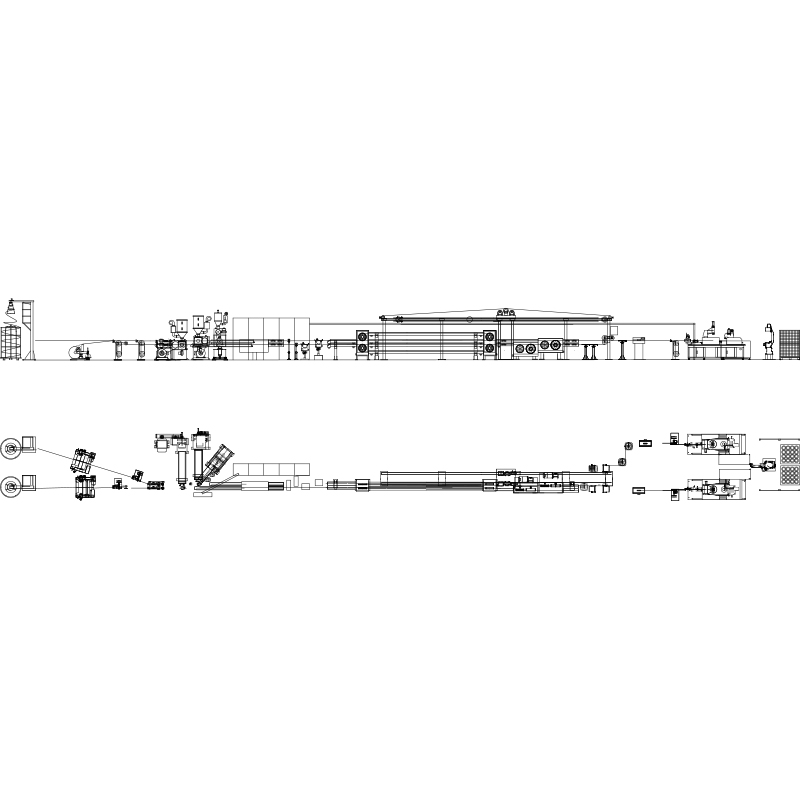 Wire And Cable Extrusion Line Factory, Manufacturers, SuppliersAs Wire And Cable Extrusion Line Factory in China, Cable Extrusion Line Manufacturers and Suppliers, Yessjet offer Custom Wire And Cable ...View Product →
- Define the conductor range. List every conductor cross-section you plan to insulate, from 0.5 mm² to 35 mm² or larger. This fixes the die range and the minimum and maximum line speeds.
- Confirm the compound family. Insulation and jacket materials determine screw geometry, temperature profile, and cooling length. Do not commit to a machine before deciding whether PVC, PE, PP, or XLPE will be the main workload.
- Select screw diameter and drive. High output for PE and PVC typically starts at 45 mm and reaches 120 mm. A full-automatic PE/PVC high-performance cable extruder
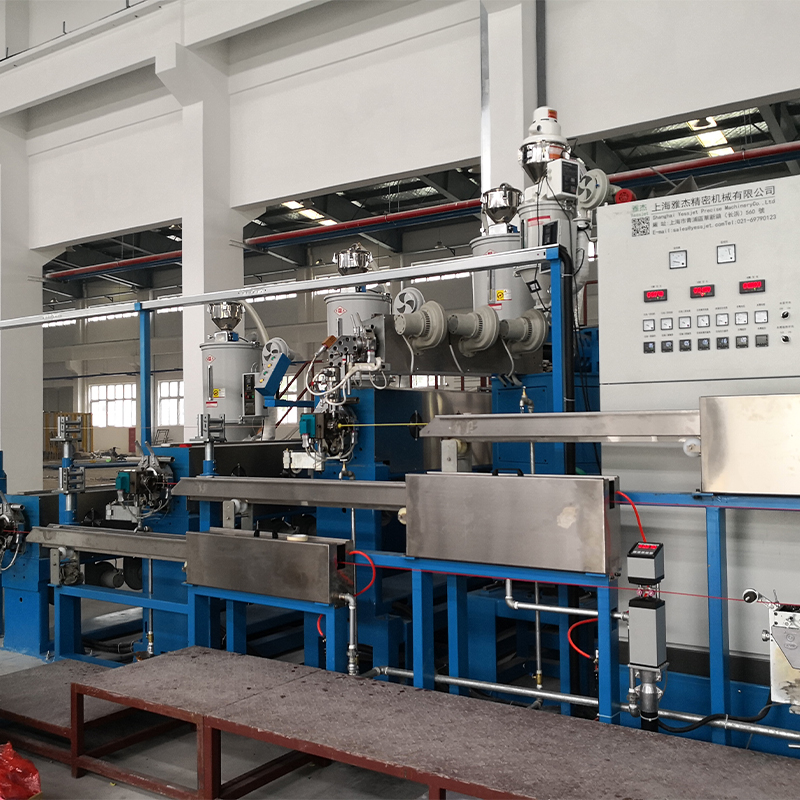 Full Auto PE PVC High-Performance Cable Extruder Manufacturers, Suppliers, CustoYessjet is China Custom Full Auto PE PVC High-Performance Cable Extruder Manufacturers and Full Auto PE PVC High-Performance Cable Extrud...View Product → with a 50–80 mm screw covers the common 0.5–35 mm² insulation range while leaving room for future product additions.
 - Check upstream and downstream matching. Payoff, dancer, capstan, and take-up must handle the same speed window as the extruder. Mismatched take-up speed is one of the most common causes of eccentric insulation.
- Estimate cooling capacity. Cooling length depends on compound, wall thickness, and line speed. A short trough forces you to run slower; an oversized trough is simply a bigger investment than needed.
- Include changeover ergonomics. Time lost to die changes, material changes, and cleaning appears directly on the efficiency chart. Quick-change crossheads and easy-access guards pay for themselves within months.
Maintenance and Compliance: Protecting the Investment
A wire extrusion line that is well maintained produces stable output, while neglected lines drift slowly into scrap. Build a maintenance calendar around these actions.
- Daily: verify barrel temperature consistency, check the diameter or capacitance gauge, and record the spark test result for each production lot.
- Weekly: inspect screw and barrel wear, measure die dimensions, and check dancer or accumulator air pressure and calibration.
- Monthly: clean the cooling trough and nozzles, verify capstan tension, and review scrap reports for the top three defect types.
Compliance requirements depend on your target market. IEC 60228 sets conductor classes, while UL 1581 and EN 50363 cover insulation thickness and physical properties. Keep batch records, wall-thickness measurements, and spark test data organized by lot number; customers and auditors will ask for them.
Finally, plan the downstream handling before the line is installed. Many factories add robotic palletizing systems for cable reel handling in the second or third year, once packaging becomes the bottleneck. Leaving space for that upgrade saves a second round of civil work and keeps the entire process from extrusion to palletized reel on one continuous flow.