LANGUAGE
 中文简体
中文简体 русский
 Français
 Español
 Português
 عربى
عربى
Content
- 1 Start with the Part That Keeps Failing
- 2 What Polycarbonate Extrusion Profiles Are
- 3 Material Properties That Shape Profile Design
- 4 The Extrusion Process: From Pellet to Profile
- 5 Common Quality Problems and How to Avoid Them
- 6 What to Check Before Buying Extrusion Equipment
- 7 Where Polycarbonate Profiles End Up
- 8 Final Recommendations
Start with the Part That Keeps Failing
A project manager orders a 1.5-meter polycarbonate profile for an LED lighting fixture. The first sample is clear and straight. The second run, using a different batch of pellets, comes out with cloudy streaks, tiny bubbles near the surface, and a visible bow. The material specification has not changed. What changed is moisture and process stability.
This scenario is common in profile extrusion. Polycarbonate is not forgiving. It is hygroscopic, sensitive to overheating, and prone to dimensional variation if the line has inconsistent tension or cooling. Before you invest in dies or full production, understand how the process works and what actually controls the outcome. That knowledge will save you from wasted material and rejected batches.
What Polycarbonate Extrusion Profiles Are
In simple terms, a polycarbonate extrusion profile is a continuous thermoplastic part with a fixed cross-section, produced by melting PC pellets and forcing the melt through a shaped die. It is not the same as injection molding. Extrusion creates long strips, tubes, or custom sections that are cut to length after cooling.
Typical profiles include:
- Solid rectangular or triangular glazing support strips
- Hollow tubes for liquid or cable routing
- Multi-channel housings for lighting or electronics
- T-sections, L-sections, and custom gaskets
Because the cross-section is generated entirely by the die, initial tooling cost is lower than an injection mold. That makes extrusion attractive for medium- and high-volume parts with constant cross-section geometry. The trade-off is that undercuts or complex three-dimensional features cannot be produced directly; they need post-machining.
Material Properties That Shape Profile Design
Polycarbonate is an amorphous polymer with a unique balance of transparency, impact strength, and heat resistance. For profile design, these properties matter most:
| Property | Typical Value | Design Impact |
|---|---|---|
| Light transmission | Up to 88-90% in clear grades | Suitable for LED diffusers and transparent covers; use diffusing grades for uniform light |
| Notched Izod impact | 600-800 J/m at 23°C | Allows thinner walls than acrylic or glass-reinforced thermoplastics |
| Heat deflection temperature (1.8 MPa) | 120-135°C | Withstands warm environments, but not continuous contact with hot surfaces above 130°C |
| Dimensional stability | Low equilibrium moisture absorption (0.15% at 50% RH) | Profiles hold tolerances better than nylon, but surface moisture still requires drying before processing |
| UV resistance | Unmodified PC degrades in sunlight | Specify UV-stabilized or coated grades for outdoor use |
| Chemical resistance | Weak to alkalis and aromatic solvents | Verify compatibility when the profile contacts cleaners, oils, or heat transfer fluids |
The most overlooked property is hygroscopicity. PC pellets can pick up enough moisture in a single day to ruin a production run. At processing temperatures above 260°C, that moisture hydrolyzes the polymer chain, causing surface splay and brittleness. Drying to below 0.02% moisture is mandatory.
The Extrusion Process: From Pellet to Profile
Drying Is Non-Negotiable
Dry PC in a dehumidifying dryer at 110-120°C for 3-4 hours, or longer for thick-walled profiles. A hopper dryer with closed-loop dew point control is preferable. If the dryer is undersized, the first few meters may look fine, then problems appear as moisture returns.
Melting and Screw Design
PC needs a gradual temperature profile from the feed zone to the die, typically 260-320°C depending on grade. The screw should have a low-to-medium compression ratio with an L/D of 24:1 to 30:1. Chrome-plated or nitrided barrels resist wear and corrosion. Avoid excessive screw speed; too much shear raises melt temperature and degrades the polymer.
Die, Calibration, and Cooling
The die must distribute melt evenly across the profile section. For hollow profiles, use a spider or breaker plate with balanced flow. After the die, a vacuum sizing tank or calibration sleeve sets the outer dimension. Because PC stiffens quickly, the calibration length must match the wall thickness. Slow cooling in water baths prevents internal stress and warpage; holding coolant at 20-40°C is usually better than ice-cold water.
The process sequence, in short:
- Dry PC pellets to below 0.02% moisture.
- Set barrel temperatures and allow 30-45 minutes heat soak.
- Start the screw slowly and verify melt quality at the die.
- Pull the strand through calibration and cooling.
- Adjust haul-off speed to match output, not the other way around.
- Cut with a saw or guillotine designed for rigid profiles.
For a closer look at how barrel and screw designs affect throughput and melt quality in similar thermoplastics, see our high-efficiency PP/PVC/PE cable extruder guide.
Common Quality Problems and How to Avoid Them
Most defects in PC profiles are traceable to three sources: moisture, melt temperature, and downstream tension. The table below lists the failures seen most often on production lines.
| Problem | Likely Cause | Practical Fix |
|---|---|---|
| Splay or silver streaks | Moisture in pellets or excessive melt temperature | Redry pellets, check dryer dew point, lower barrel temperature |
| Bubbles or voids | Trapped air in the hopper or insufficient venting | Use forced feeding, add a vented barrel, reduce screw speed |
| Die lines or surface streaks | Damaged die lands or degraded polymer | Polish the die, purge the system, use corrosion-resistant die materials |
| Dimensional variation | Fluctuating haul-off speed or melt pressure | Maintain steady screw speed, use encoder feedback on the haul-off |
| Warpage or bow | Uneven cooling or uneven die flow | Balance die flow, increase cooling tank length, use an adjustable calibrator |
The critical point is not to chase each symptom in isolation. Check melt temperature and line speed before changing the dies. Many so-called material problems are actually process problems.
What to Check Before Buying Extrusion Equipment
PC processes at higher temperatures than commodity olefins, and it does not tolerate hot spots or pressure surges. The extruder must be stable, not exotic. Look for:
- Temperature control: barrel heaters with PID control and accuracy around ±1°C.
- Screw and barrel: hardened steel or bimetallic materials designed for high-temperature amorphous polymers.
- Motor and gearbox: enough torque to hold constant screw speed during pressure fluctuations.
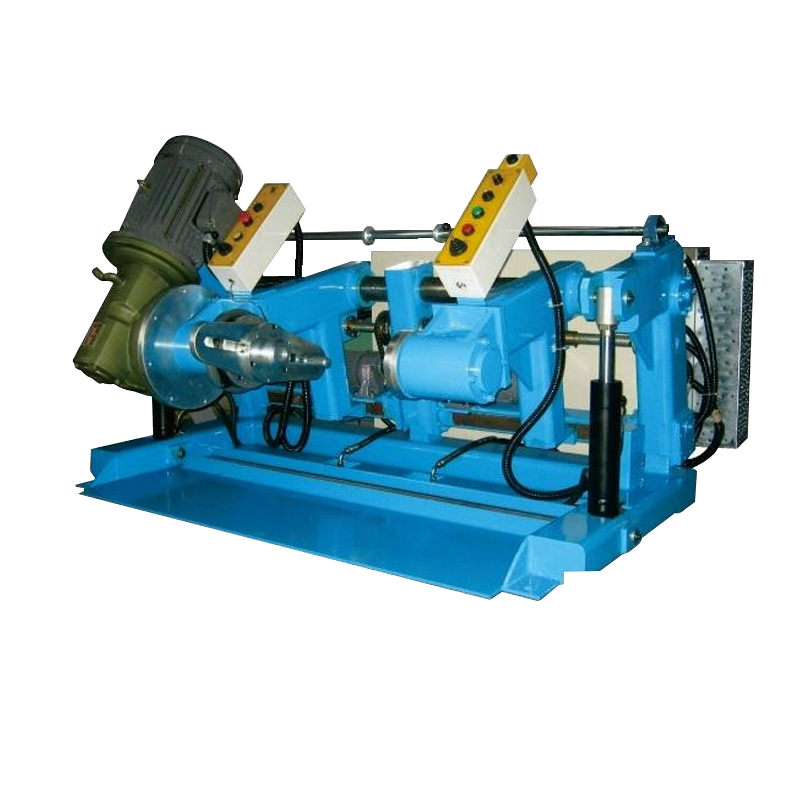
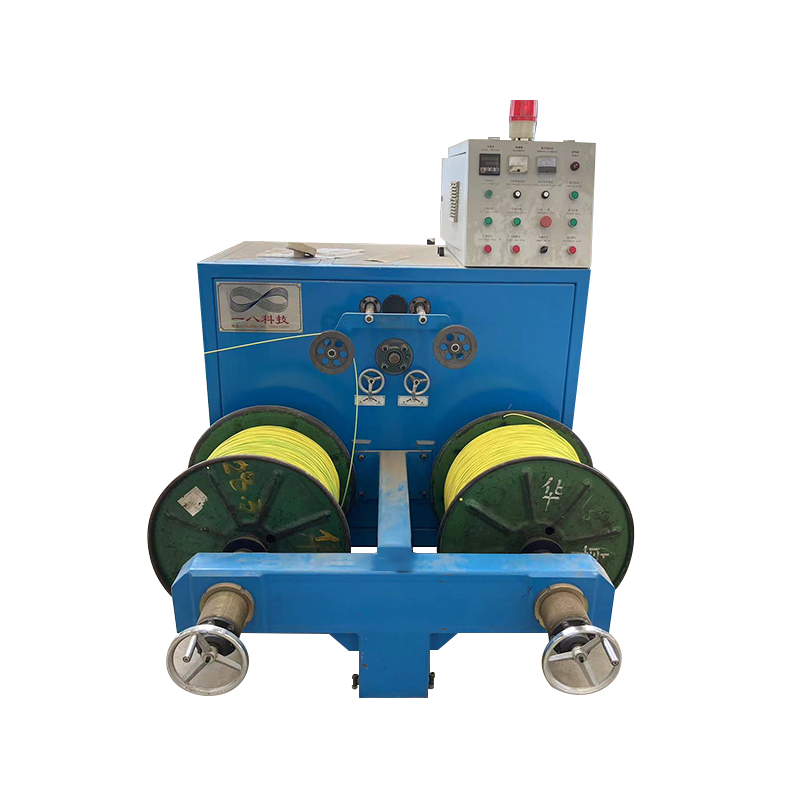
- Downstream equipment: calibration table, cooling trough, haul-off, and cutting station supplied as one system.
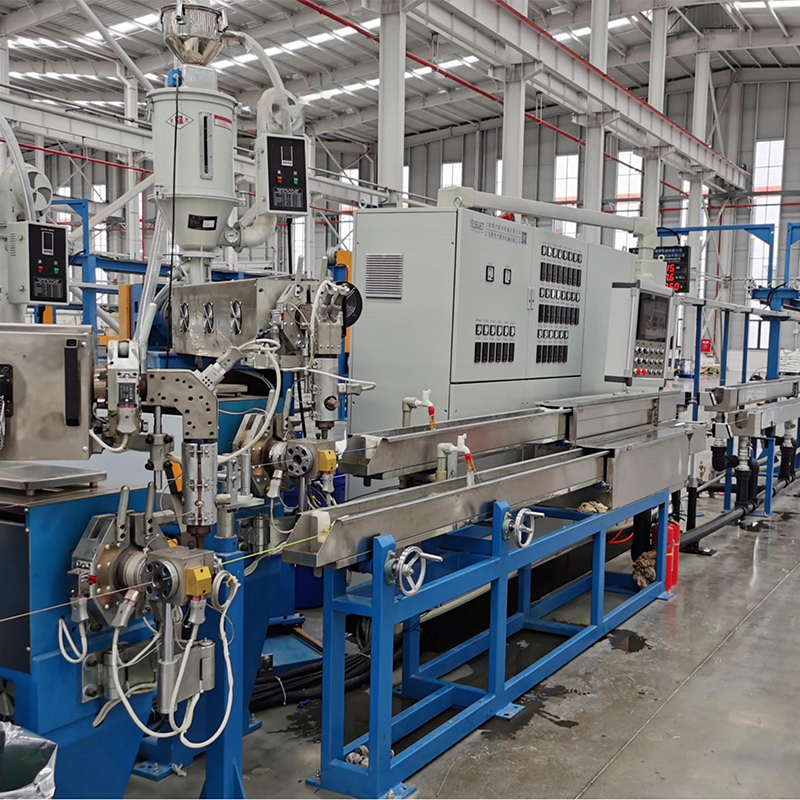
A common mistake is buying a bare extruder and assembling downstream components from different vendors. The result is misalignment and inconsistent tension. At Yessjet, we build integrated equipment for wire and cable processing lines. Our full-auto PE/PVC high-performance cable extruder is engineered for long industrial runs, and it demonstrates the kind of barrel precision and heater zoning you should insist on for amorphous materials.
For complex cross-sections, an integrated cable extrusion line shows how upstream extruder, calibration, cooling, and haul-off can be matched to maintain speed and dimensional control. Even though the line is designed for cable products, it is a useful reference for what a complete profile line should look like.
If you are modernizing an older line, read our summary of recent extrusion machine efficiency upgrades to identify the modifications with the highest return.
Where Polycarbonate Profiles End Up
Extruded PC profiles appear in almost every industry that needs tough, transparent, or heat-resistant plastic sections:
- Lighting: LED diffuser profiles, light guide channels, lamp housings.
- Building and construction: glazing gaskets, expansion joint profiles, façade mounting sections.
- Automotive: instrument panel trims, headlamp bezels, bus window support frames.
- Electrical: transparent terminal covers, insulating channels, cable routing profiles.
- Medical: device housings, transparent shielding, sterilization trays for gamma-stable grades.
- Retail and display: shelf labels, sign holders, point-of-purchase display stands.
When impact resistance rules out acrylic, and transparency rules out metal, PC profiles are often the practical compromise. The material also offers a natural surface finish that can be printed, painted, or laser-marked after extrusion.
Final Recommendations
Start with a complete performance specification, not just a sketch. Include load, temperature range, UV exposure, chemical contact, dimensional tolerances, and impact requirements. Then select an extrusion partner who understands drying, thermal control, and downstream handling.
If you plan to bring profile production in-house, pilot the line before committing to high output. Test with the exact grade of polycarbonate you intend to use, because pellet lots vary more than people expect. Insist on documented process settings for barrel temperature, screw speed, vacuum level, and cooling water temperature.
Polycarbonate extrusion profiles reward attention to detail. When moisture is controlled, temperatures are stable, and downstream equipment is matched, the process is capable of producing precise, impact-resistant profiles at high speed. The failures happen upstream of the die, not in the material itself.