LANGUAGE
 中文简体
中文简体 русский
 Français
 Español
 Português
 عربى
عربى
Content
- 1 Why Multi-Material Capability Is Now a Baseline Requirement
- 2 How the PP PVC PE Cable Extruder Handles Three Different Polymers
- 3 Output, Efficiency, and What 240 kg/h Actually Means in Production
- 4 IEC 60228 Compliance: Why It Matters for Your Extruder Selection
- 5 Key Specifications to Compare When Selecting a Cable Insulation Extruder
- 6 Applications: From Insulation Layers to Large-Caliber Cable Jackets
Switch a cable extrusion line from PVC to PP mid-run and two things will go wrong fast: barrel temperatures set for PVC's amorphous melt behavior will overshoot what PP's crystalline structure needs, and output consistency will drop before an operator can react. For manufacturers running mixed orders — power cable one shift, automotive wire the next — that material-switching problem is the central technical and financial challenge of 2026. A PP PVC PE cable extruder machine engineered for genuine multi-material production, rather than nominal compatibility, is what separates profitable operations from frustrated ones.
This guide covers how these machines actually handle three structurally different polymers, what the production numbers mean in real-factory terms, and which specifications should drive your purchasing decision.
Why Multi-Material Capability Is Now a Baseline Requirement
The global cable market is fragmenting. A single manufacturer supplying automotive harness wire, building power cable, and data communication cable to different clients cannot afford to run dedicated extrusion lines for each material. The economics simply don't work at mid-scale production volumes. What they need is one platform that handles PVC for standard building wire insulation, PE for low-capacitance data cables, and PP for heat-resistant automotive applications — without the 4-hour purge cycles that make material switching economically painful.
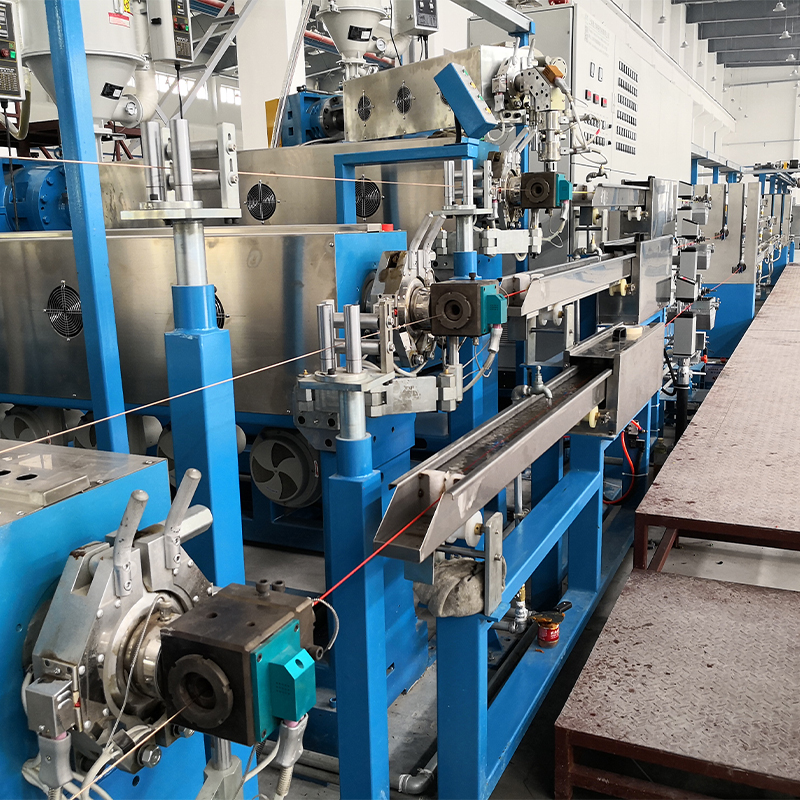
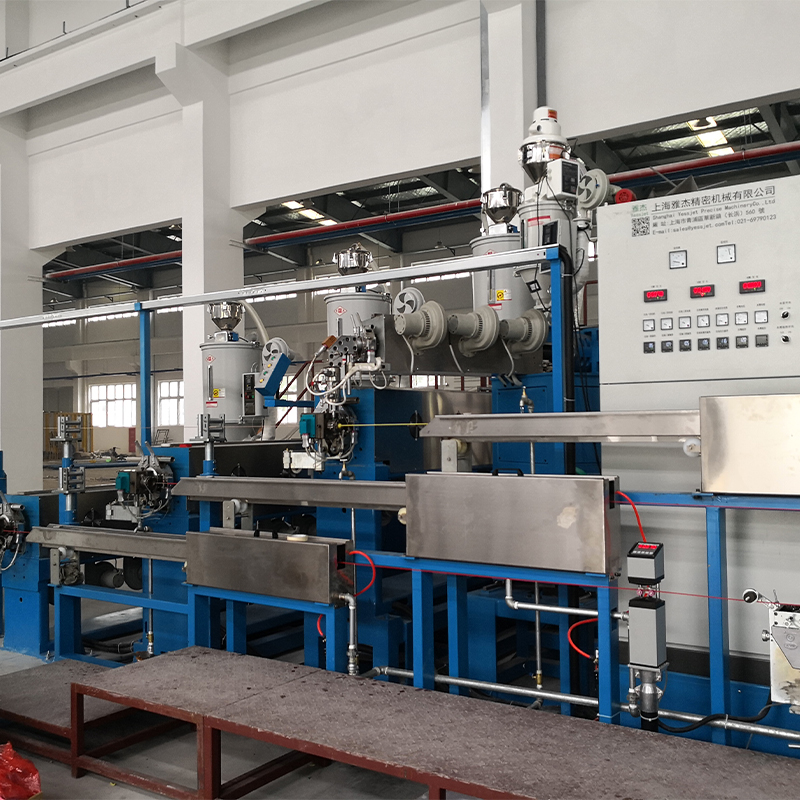
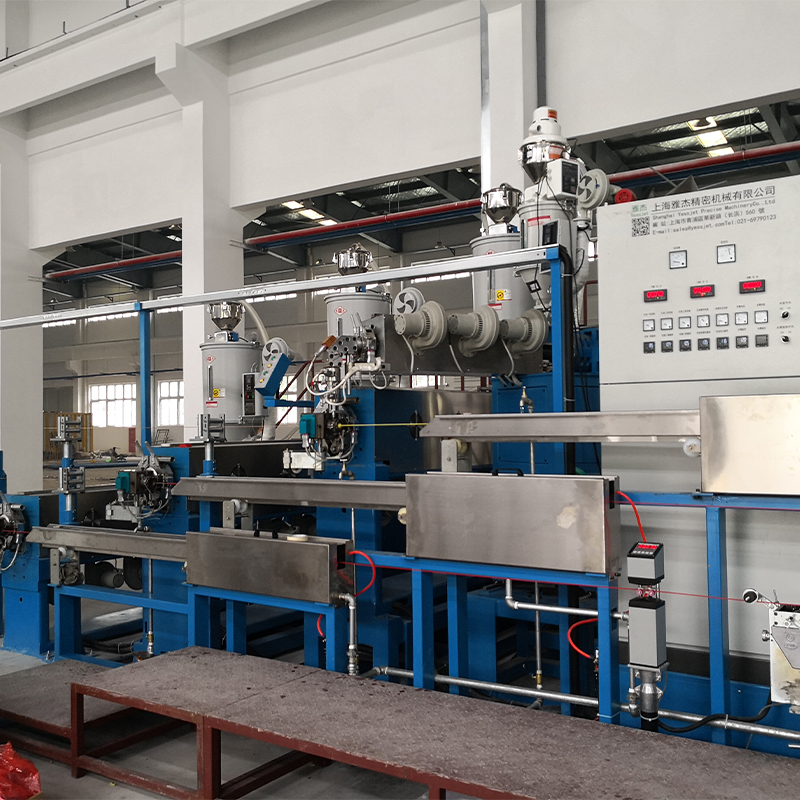
This demand has pushed OEMs to develop extruders where multi-material compatibility is a designed-in capability, not a specsheet checkbox. The difference is visible in the torque transmission system, the screw geometry, and the barrel zone resolution — not in the marketing copy. Manufacturers evaluating complete wire and cable extrusion line solutions should treat genuine material switching performance as a non-negotiable evaluation criterion.
How the PP PVC PE Cable Extruder Handles Three Different Polymers
PP, PVC, and PE are not interchangeable. They process differently, melt differently, and tolerate thermal error differently. Understanding these differences is what allows a well-designed machine to handle all three without compromise.
PVC is thermally sensitive. Its processing window sits between roughly 170°C and 205°C, and thermal degradation — releasing hydrochloric acid — begins to occur at temperatures uncomfortably close to that upper limit. PVC is also amorphous, meaning it softens gradually rather than melting at a defined point. The screw must deliver controlled, gentle shear rather than aggressive compression to avoid localized hot spots.
PP, by contrast, is semi-crystalline. It has a sharp melting point (typically 160–170°C) and requires more heat energy to melt fully, but it tolerates a wider thermal window once melted. The risk with PP is insufficient shear — unmelted crystalline structures passing into the die cause surface defects in the finished insulation layer.
PE falls between the two. It is semi-crystalline like PP but processes at lower temperatures, making it the most forgiving of the three. PE is the reference material against which most single-screw extruder designs are optimized.
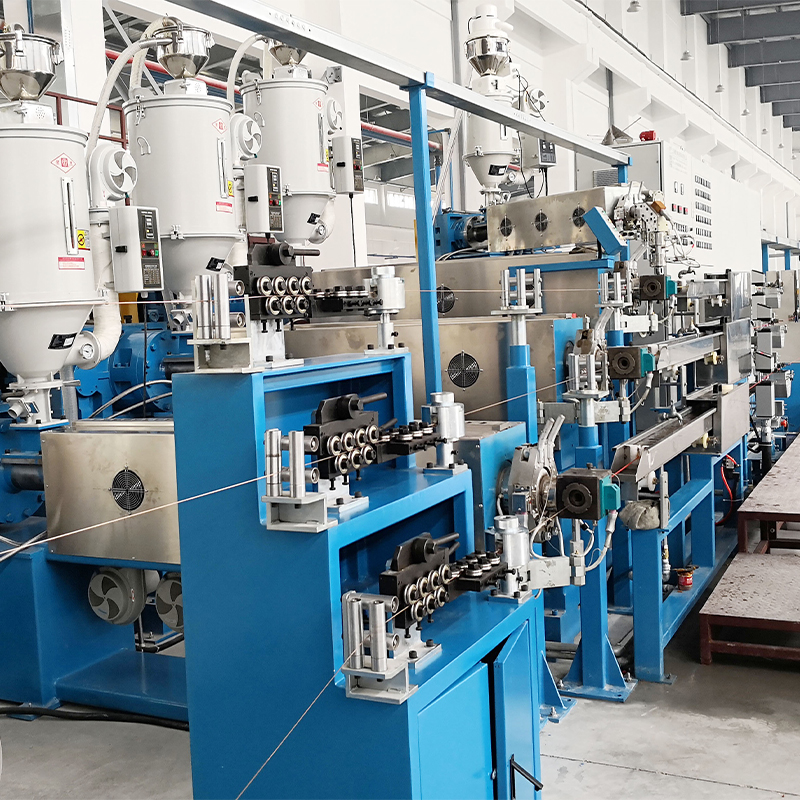
A cable extruder designed for all three addresses these differences through two mechanisms. First, a hardened helical gear reducer with high torque-to-speed ratio maintains stable screw rotation when material resistance changes during transitions — particularly the crystalline-to-amorphous shift when moving between PP and PVC. Second, an intelligent power regulation system adjusts heating zone outputs in real time, preventing the temperature overshoot that causes degradation during PP-to-PVC transitions. The result is a machine that reaches stable extrusion within minutes of a material switch rather than requiring extended purge cycles.
Output, Efficiency, and What 240 kg/h Actually Means in Production
A rated maximum output of 240 kg/h for large-caliber cable applications is only meaningful when the machine can sustain it at acceptable quality. Many extruders achieve peak output numbers under ideal lab conditions with a single material at optimal temperature — numbers that fall significantly in real multi-shift production with material variation and ambient temperature fluctuations.
The key metric to pair with output capacity is specific energy consumption. High-efficiency PP PVC PE cable extruders with integrated intelligent power regulation typically achieve 15% better material utilization compared to conventional designs. In practice, for a facility processing 200 metric tons per month, a 15% improvement in material utilization means roughly 30 fewer tons of raw material purchased per month — a cost reduction that compounds directly against margins in price-sensitive cable markets.
| Parameter | Conventional Extruder | High-Efficiency PP/PVC/PE Extruder |
|---|---|---|
| Max output (large-caliber cable) | ~180 kg/h | 240 kg/h |
| Material utilization | Baseline | +15% vs. conventional |
| Material switching downtime | 3–5 hours (purge) | <30 minutes (optimized screw + zone control) |
| Compatible materials | Typically 1–2 | PP, PVC, PE (switchable) |
For cable manufacturers focused on cost control, the energy-efficiency dimension is equally important. Intelligent power regulation — adjusting drive output based on real-time melt pressure and screw torque feedback — reduces energy waste during steady-state operation and eliminates the power spikes that occur when operators manually compensate for temperature drift. Over a three-shift production schedule, these savings accumulate into a measurable reduction in per-kilogram processing cost.
IEC 60228 Compliance: Why It Matters for Your Extruder Selection
Most extruder purchase decisions focus on hardware specifications: screw diameter, L/D ratio, motor power. Standards compliance rarely enters the conversation — yet for cable manufacturers supplying international markets, it should be an early filter.
IEC 60228 defines the international standard for conductors of insulated cables, specifying conductor cross-sections, resistance values, and construction requirements. A cable produced on a non-compliant extrusion line — with inconsistent wall thickness or uneven plasticization — will fail dimensional and resistance requirements under IEC 60228 testing even if the conductor itself is correct. The extruder is the upstream variable that determines downstream compliance.
An extruder certified to IEC 60228 production requirements means the machine's temperature control resolution, screw geometry, and melt pressure consistency have been validated against the tolerances the standard demands. For manufacturers supplying European utilities, Middle Eastern infrastructure projects, or Southeast Asian industrial customers — all markets where IEC 60228 compliance is contractually specified — this certification removes a significant qualification risk.
ASTM D2240 compliance adds a complementary layer for hardness and material property consistency, particularly relevant for PVC insulation on building wire and power distribution cable supplied to North American-standard projects.
Key Specifications to Compare When Selecting a Cable Insulation Extruder
Comparing extruder datasheets is easier when you know which numbers carry real weight and which are marketing artifacts. These are the specifications that determine actual production performance.
- Gear reducer type and torque rating: A hardened helical gear reducer handles the torque variations that occur during multi-material operation. Look for torque ratings that provide at least 20% headroom above the maximum screw torque at full output — constant operation at rated torque ceiling accelerates gearbox wear.
- Temperature zone count and resolution: More zones with tighter resolution (±1°C or better) enable the precise thermal profiles that PVC processing demands. Fewer zones force compromises that show up as streaks or wall thickness variation in finished cable.
- Drive system: Intelligent power regulation systems that adjust motor output based on process feedback outperform fixed-speed drives in both energy consumption and output consistency. For multi-material lines, this is a meaningful differentiator.
- Screw metallurgy: PVC releases hydrochloric acid during processing. Screws without corrosion-resistant metallurgy (bimetallic or nitrided steel minimum) will show accelerated wear when running PVC regularly — resulting in declining output quality and early replacement costs.
- Control system integration: PLC-based control with recipe storage is essential for multi-material production. The ability to recall validated process parameters for each material eliminates startup variability and reduces scrap during transitions.
Evaluate the cable extrusion machine product range with these criteria in hand — and ask suppliers for documented test data from multi-material runs, not just single-material peak performance figures.
Applications: From Insulation Layers to Large-Caliber Cable Jackets
The same PP PVC PE extruder platform serves a broad range of cable production needs, which is precisely what makes it economically attractive for manufacturers with diverse order books.
Insulation layer extrusion is the primary application. PVC remains dominant for building wire and low-voltage power cable insulation due to its cost, flame resistance, and processing ease. PE is preferred for data cable insulation where low dielectric loss is critical. PP has gained significant share in automotive wire insulation for high-temperature underhood environments where standard PVC would soften.
Outer jacket extrusion for large-caliber cables — where the 240 kg/h output rating becomes most relevant — benefits from the machine's ability to maintain stable melt pressure across the higher-viscosity compounds used in heavy-duty cable jackets. Consistent jacket thickness on cables above 50mm diameter directly affects cable weight, material cost per meter, and compliance with dimensional standards.
Power cable manufacturing for infrastructure projects typically specifies IEC 60228-compliant production, making the machine's certification status a prerequisite rather than a differentiator in tender responses.
For manufacturers planning new lines or expanding existing capacity, integrating the extruder into a turnkey cable production line planning process — including downstream calibration, cooling, haul-off, and coiling — ensures the full line is matched to the extruder's output capacity and eliminates the bottleneck mismatches that degrade effective throughput.