LANGUAGE
 中文简体
中文简体 русский
 Français
 Español
 Português
 عربى
عربى
Content
- 1 What Is an Automatic Cable Coiling and Wrapping Machine?
- 2 Wrapping Materials: PP Tape, Paper Tape, and Woven Tape Compared
- 3 The Role of the Servo Motor Cable Arrangement System
- 4 Automatic Error Detection and Alarm Systems
- 5 Fully Automatic Coiling, Binding, and Wrapping: Understanding the Three-Stage Process
- 6 PLC Control and Recipe Management for Multi-Product Facilities
- 7 Selecting the Right Automatic Coiling and Wrapping Machine: Key Specification Checklist
What Is an Automatic Cable Coiling and Wrapping Machine?
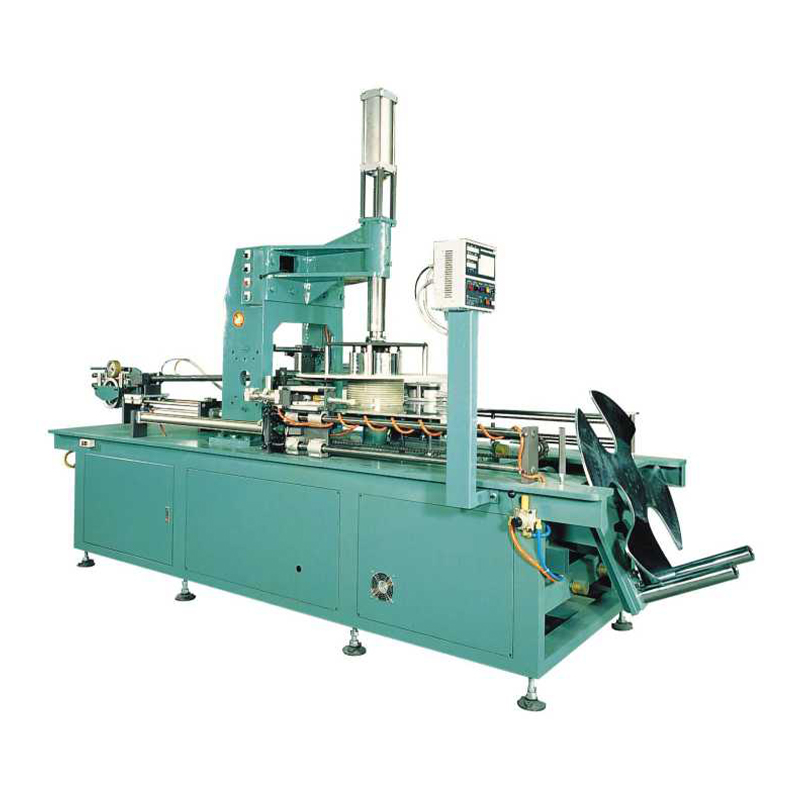
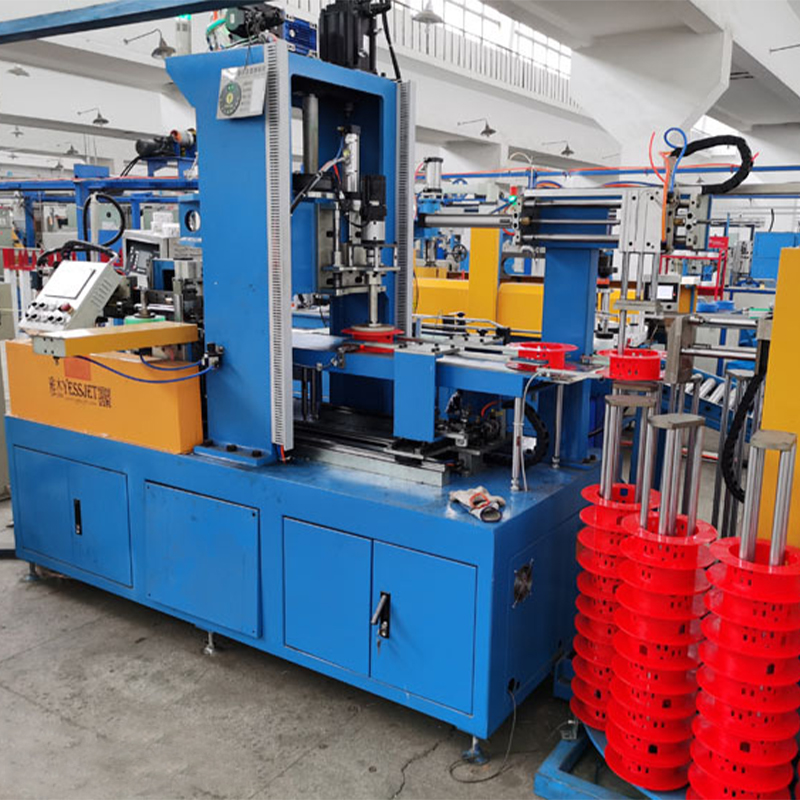
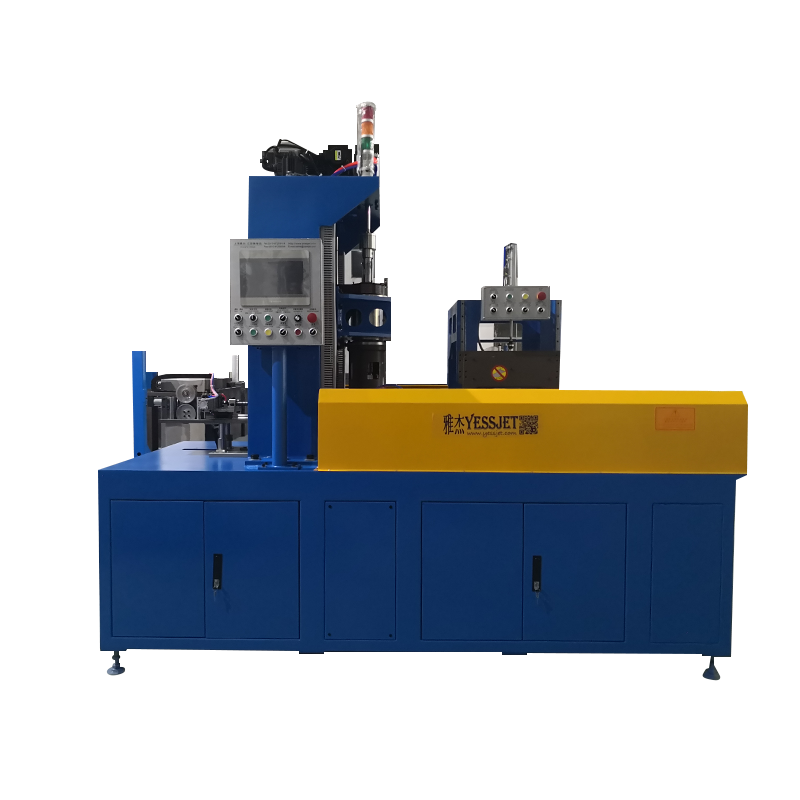
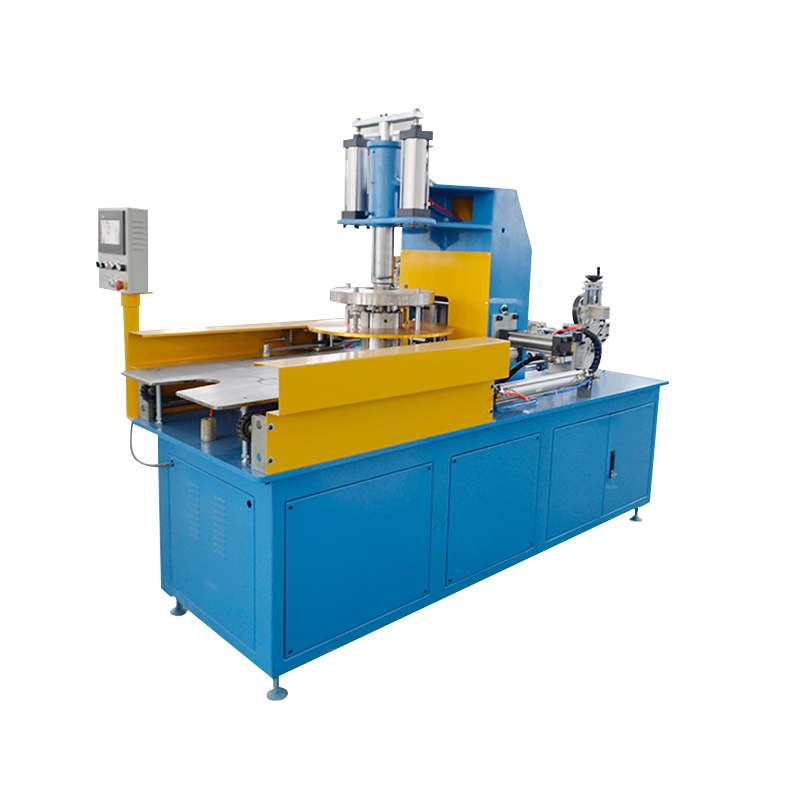
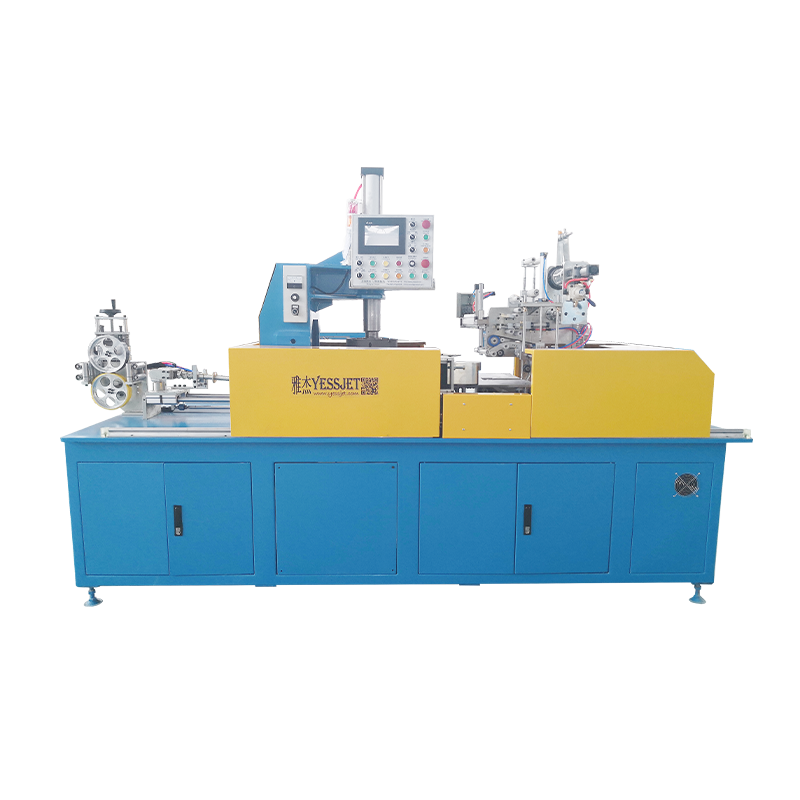
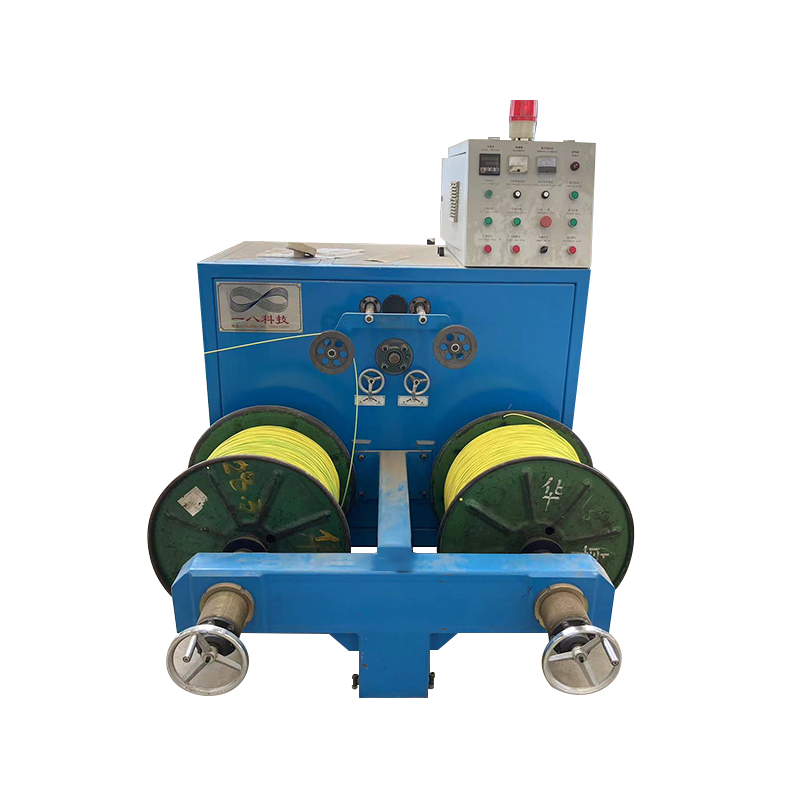
An automatic cable coiling and wrapping machine combines two traditionally separate production steps — coiling the wire or cable into a circular bundle and securing that bundle with a wrapping or binding material — into a single, continuous automated process. Once the machine completes a coil of the preset length, it immediately transfers the coil to an integrated binding or wrapping station where PP tape, paper tape, woven tape, stretch film, or heat-shrink sleeve is applied without any manual intervention between the two operations.
This integration is what distinguishes a coiling and wrapping machine from a standalone coiler: there is no operator required to pick up finished coils, carry them to a separate binding bench, and apply tape by hand. The entire sequence — feeding, measuring, coiling, cutting, transferring, and wrapping — executes automatically under PLC control, enabling one operator to supervise multiple machine lines simultaneously.
Wrapping Materials: PP Tape, Paper Tape, and Woven Tape Compared
The choice of wrapping material significantly affects the finished coil's appearance, protective performance, and cost. Automatic coiling and wrapping machines are designed to handle multiple tape types through simple material changeover, but each material has characteristics that make it better suited to specific applications:
| Material | Key Properties | Typical Applications | Appearance |
|---|---|---|---|
| PP Tape | High tensile strength, moisture-resistant, economical, wide color range | General-purpose building wire, power cord, PVC cable coils | Clean, professional; color-coding possible for product differentiation |
| Paper Tape | Breathable, printable, recyclable, biodegradable | Eco-labeled products, EU market cable coils, branded retail packaging | Natural appearance; supports custom-printed branding directly on tape |
| Woven Tape | High tensile resistance, tear-resistant, suitable for heavy coils | Heavy power cables, industrial cables, export coils subject to rough handling | Robust, industrial finish; reinforced against edge damage during transit |
| Stretch Film (PE/PVC) | Full coil encapsulation, dust and moisture protection, high clarity | Retail display coils, premium product lines, outdoor storage applications | Transparent or colored; coil fully sealed against contamination |
When selecting wrapping material for a new machine installation, consider not only the primary product but also any secondary products the machine may be asked to run in future. Machines that can handle PP tape, paper tape, and woven tape through a common wrapping head — without requiring a full mechanical changeover — offer the greatest long-term flexibility. Our fully automatic coiling and wrapping machine is designed to accommodate multiple wrapping material types with minimal changeover time.
The Role of the Servo Motor Cable Arrangement System
The visual quality of a finished cable coil depends almost entirely on what happens during winding: how precisely each turn of cable is laid alongside the previous one, how accurately the traversing system changes direction at the coil edge, and how consistently these parameters are maintained across thousands of coils during a production run. This is where the servo motor cable arrangement system — also called a servo traversing system — delivers a measurable quality advantage over machines using mechanical cam drives or stepper motors.
In a servo-driven traversing system, an independent servo motor moves the cable guide along the coiling head axis at a speed and pitch calculated in real time from the coiling spindle position. Because the servo controller receives continuous position feedback from both the spindle encoder and the traversing axis encoder, it can adjust the cable guide movement instantaneously to compensate for speed variations, cable diameter tolerances, and direction reversals at the coil edges. The result is a coil surface where each layer lies flat and parallel, without the gaps, overlaps, or edge pile-up that characterize mechanically traversed machines.
The practical benefit extends beyond aesthetics. A neat, tightly wound coil:
- Maintains its circular shape during binding and wrapping, producing a uniform finished package that stacks efficiently on pallets.
- Reduces the risk of cable damage during coil ejection and transfer, since a loose or poorly wound coil is more likely to snag on machine components.
- Presents a higher-quality appearance to the end customer — particularly important for retail-facing products and branded cable lines.
- Ensures predictable coil dimensions (inner diameter, outer diameter, height) that are consistent with the recipe parameters stored in the PLC, enabling downstream palletizing robots and conveyors to handle each coil reliably.
Servo traversing parameters — pitch, reversal point, and layer transition speed — are stored as part of each cable recipe in the machine's HMI. When switching between cable sizes, the operator selects the new recipe and the servo system reconfigures automatically, eliminating the manual adjustments required on cam-driven machines.
Automatic Error Detection and Alarm Systems
A fully automatic coiling and wrapping machine operating across two or three shifts without constant operator attention must be capable of detecting its own fault conditions and responding without human observation. Automatic error detection is therefore not an optional add-on but a fundamental safety and productivity feature of any serious coiling line.
Modern automatic coiling machines incorporate multiple sensor-based fault detection systems operating in parallel:
- Cable break detection: A tension sensor or dancer roller detects the loss of feed tension that occurs when the incoming cable breaks or runs out. The machine halts the coiling spindle immediately, preventing the formation of a partial-length coil that would pass through the machine as a rejects-length product.
- Length error alarm: If the measured cable length deviates from the preset value beyond a configurable tolerance — typically caused by metering wheel slippage or a sensor fault — the machine flags the affected coil and stops for operator inspection before releasing the coil to the binding station.
- Cutter fault detection: If the cutting mechanism fails to complete a clean cut within its programmed cycle time, the machine stops and alarms rather than attempting to tear the cable mechanically, which would damage the insulation and jam the cutting head.
- Binding/wrapping material runout: When the PP tape, paper tape, or woven tape roll approaches depletion, a sensor triggers a low-material warning alarm so the operator can load a fresh roll during a natural machine pause, preventing a binding failure on the next coil cycle.
- Servo drive fault: The PLC monitors the status output of the servo drives controlling the spindle and traversing axes. A drive fault — caused by overtemperature, overcurrent, or encoder loss — triggers an immediate controlled stop and alarm, protecting both the drive hardware and the cable being wound.
All fault events are logged in the HMI with a timestamp and fault code, giving maintenance personnel a diagnostic record to identify recurring issues and plan corrective maintenance before unplanned downtime occurs.
Fully Automatic Coiling, Binding, and Wrapping: Understanding the Three-Stage Process
The most capable machines on the market today integrate three distinct packaging steps in a single continuous line: coiling, binding, and wrapping. Understanding what each stage contributes to the finished product helps in specifying the right machine configuration for your production requirements:
- Coiling: The wire or cable is wound onto the mandrel to form the circular bundle at the preset inner diameter, outer diameter, and length. The servo traversing system ensures neat, ordered winding. This stage determines the coil's dimensional accuracy and structural integrity.
- Binding: After coil ejection from the mandrel, one or more binding straps — typically PP tape or woven tape — are applied at defined positions around the coil circumference to prevent it from unraveling during handling and transport. Binding machines can apply two to four straps per coil in a single automatic cycle, with strap tension controlled to avoid deforming the coil profile.
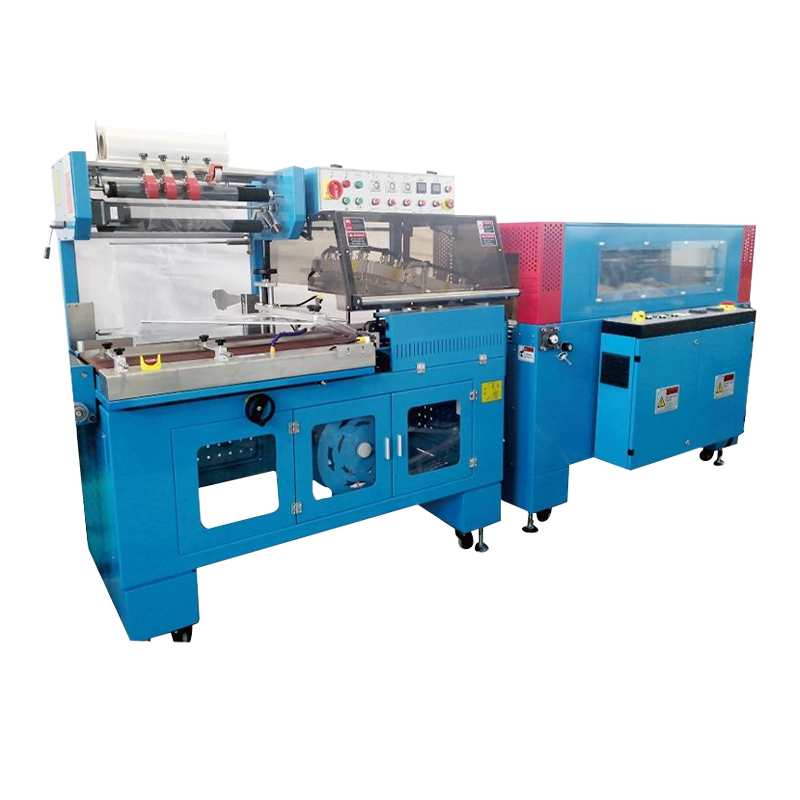
- Wrapping: A separate wrapping head applies the outer protective layer — stretch film, PP tape spiral-wound, or a sleeve of heat-shrink tubing — that provides dust, moisture, and mechanical protection to the coil surface. The wrapping station orbits around the coil or rotates the coil past a stationary tape dispenser, depending on the machine design.
In a three-stage integrated line, the coiling, binding, and wrapping stations are linked by conveyors and synchronized by a master PLC so that each station is always processing a different coil simultaneously. This pipelining approach maintains throughput equivalent to the slowest station in the line — typically binding — without requiring buffer storage between stages. Explore our fully automatic coiling binding and wrapping machine for complete line specifications.
PLC Control and Recipe Management for Multi-Product Facilities
A cable manufacturer running multiple product types on a single coiling and wrapping line faces a fundamental challenge: each cable size, coil specification, and wrapping requirement demands different machine parameters — mandrel speed, traversing pitch, cut length, binding strap positions, and wrapping overlap. Manual parameter entry at every changeover is time-consuming and error-prone.
Modern automatic coiling and wrapping machines address this through PLC-based recipe management. Each unique combination of cable type and coil specification is stored as a numbered recipe in the HMI. A typical machine can hold 50 to 100 or more recipes. At the start of a production run for a different product, the operator selects the appropriate recipe on the touchscreen and the machine automatically applies all stored parameters — coil dimensions, cable length, traversing pitch, binding positions, wrapping overlap — without further manual adjustment.
Recipe management has measurable impact on changeover efficiency. A manual parameter entry changeover that takes 15 to 20 minutes on an older machine is reduced to under two minutes on a recipe-controlled system, enabling cable manufacturers to respond more flexibly to small production orders and frequent product mix changes without absorbing excessive changeover downtime costs.
Selecting the Right Automatic Coiling and Wrapping Machine: Key Specification Checklist
Before requesting a quotation or committing to a machine purchase, work through the following specification checklist to ensure the equipment you select will handle your current and anticipated production requirements:
- Cable outer diameter range — minimum and maximum OD across all cable types intended for the machine
- Coil inner diameter — required inner diameter(s); confirm whether multiple mandrel sizes are needed and the time required for mandrel changeover
- Coil outer diameter and height — maximum finished coil dimensions the machine can accommodate and eject cleanly
- Cable length range — minimum and maximum preset coil lengths; confirm length accuracy specification
- Production speed — required coils per hour; confirm whether online synchronization with upstream equipment is needed
- Wrapping material types — confirm which of PP tape, paper tape, woven tape, stretch film, or heat-shrink the machine must handle
- Servo traversing — confirm inclusion of servo motor cable arrangement system rather than cam or stepper drive
- Automatic fault detection — verify alarm coverage for cable break, length error, cutter fault, material runout, and drive faults
- Downstream integration — confirm interface compatibility with labeling, palletizing, or conveyor systems if required
- Power supply and footprint — verify availability of required power supply and that the machine fits the allocated floor space, including maintenance access clearances
For assistance working through these specifications for your production environment, visit our coiling machine product range or fully automatic packaging equipment pages for detailed technical parameters, and reach out to our engineering team for a tailored recommendation.