LANGUAGE
 中文简体
中文简体 русский
 Français
 Español
 Português
 عربى
عربى
Content
- 1 What Is an Automatic Cable Coiling Machine?
- 2 How an Automatic Cable Coiling Machine Works
- 3 Types of Automatic Cable Coiling Machines
- 4 Key Features to Evaluate When Buying an Automatic Cable Coiling Machine
- 5 Cable Types Compatible with Automatic Coiling Machines
- 6 Online vs. Offline Cable Coiling: Which Configuration Suits Your Line?
- 7 Return on Investment: Automatic Coiling vs. Manual Operations
- 8 Maintenance Best Practices for Long Machine Life
What Is an Automatic Cable Coiling Machine?
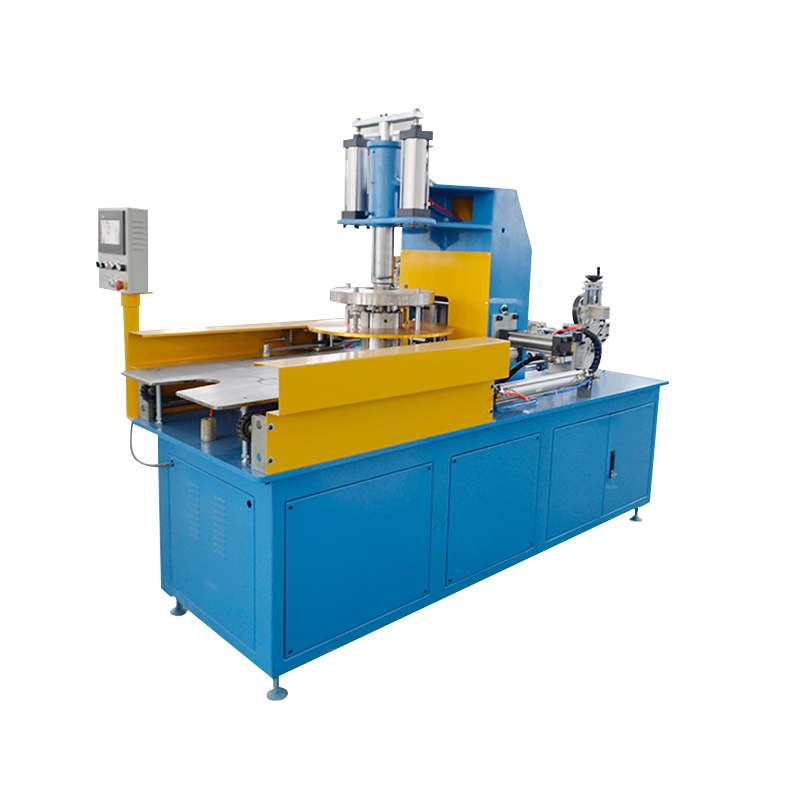
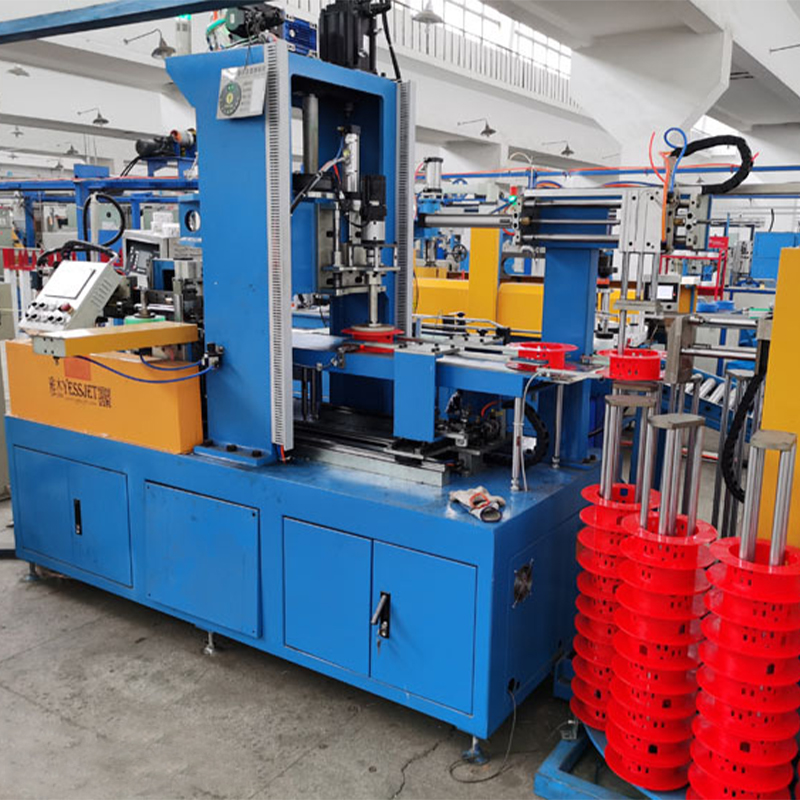
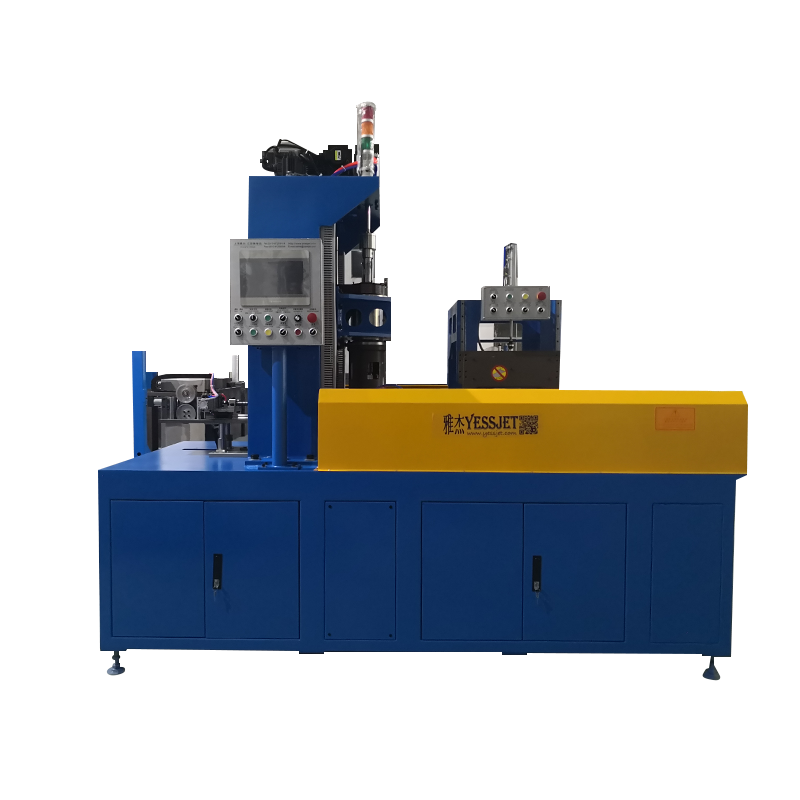
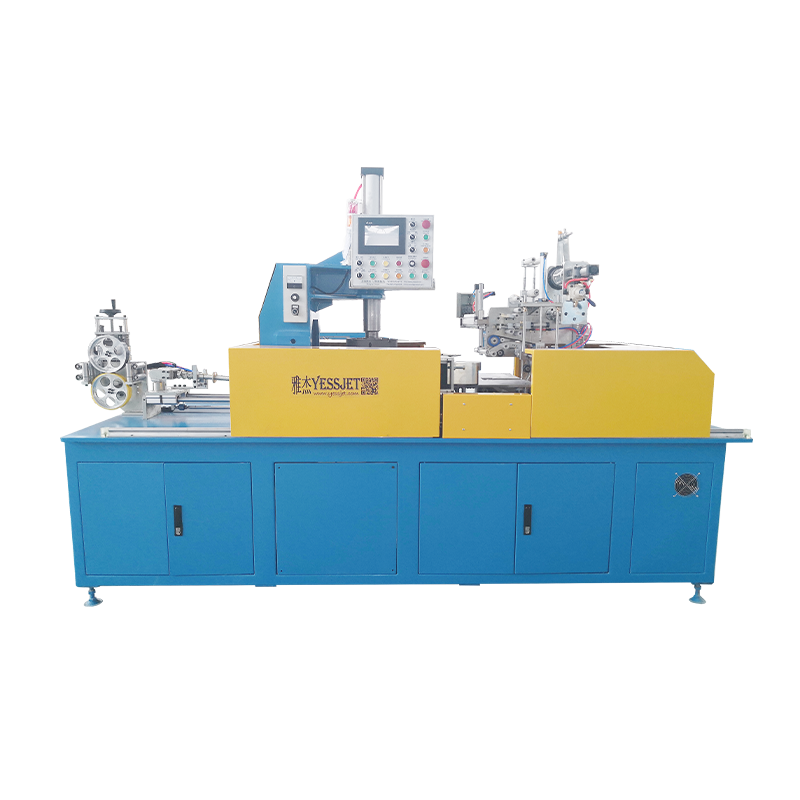
An automatic cable coiling machine is a specialized piece of production equipment that winds electrical wires and cables into uniform, preset coils — and, in fully integrated configurations, wraps or binds those coils automatically without operator intervention. By replacing the manual coiling stations that once defined the tail end of every cable production line, these machines deliver consistent coil geometry, accurate length measurement, and packaging-ready output at speeds that manual methods cannot match.
Unlike tube coiling equipment designed for rigid pipe and metal tubing, cable coiling machines are engineered around the physical characteristics of flexible insulated conductors: variable outer diameters, different insulation materials, and the need to maintain a minimum bend radius to prevent internal conductor damage during winding. The machine's coiling head, traversing system, and clamping mechanism are all calibrated to handle these requirements across a wide range of cable types — from fine communication wire to heavy power cables with outer diameters exceeding 30 mm.
How an Automatic Cable Coiling Machine Works
The operating cycle of a modern automatic cable coiling machine follows a clearly defined sequence that repeats continuously during a production run:
- Cable feeding: Cable is fed from a payoff rack or directly from an upstream extrusion line through a tension control system that maintains consistent feed tension regardless of the payoff reel diameter.
- Length counting: A high-precision encoder or metering wheel counts the cable length in real time. The system decelerates automatically as the cable approaches the preset length, ensuring meter accuracy within fractions of a percent across thousands of coils.
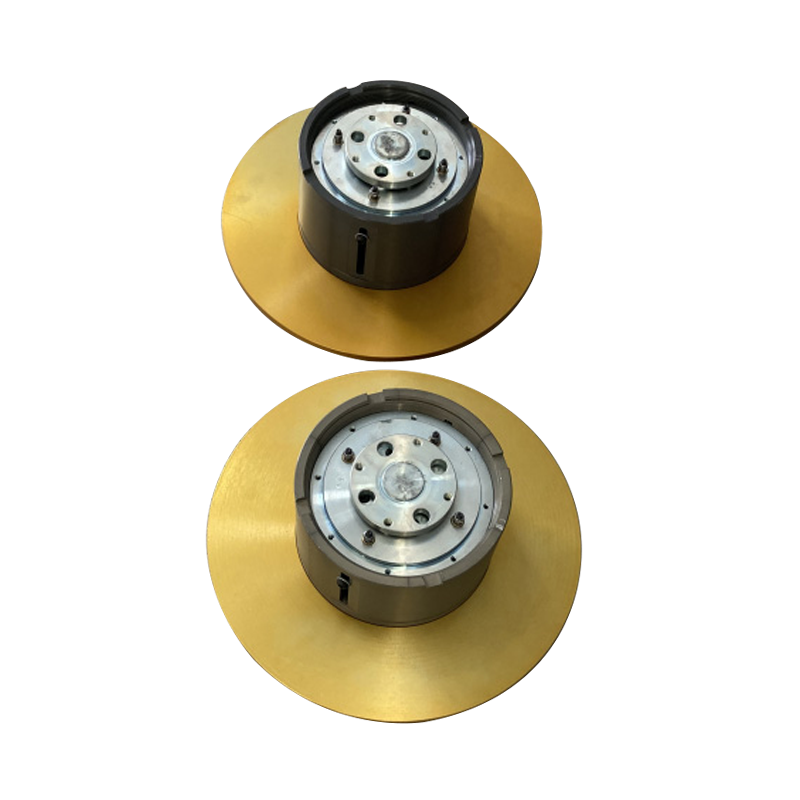
- Coiling: The cable winds onto a rotating coiling head (mandrel) in neat, adjacent layers guided by the traversing system. The coiling head diameter determines the coil inner diameter, and the traverse pitch is set to match the cable outer diameter.
- Cutting: At the preset length, a pneumatic or servo-driven cutter severs the cable cleanly. Many machines use SKD-11 tool steel blades for durability across insulation materials including PVC, PE, and rubber.
- Coil ejection: The completed coil is automatically released from the mandrel and transferred — by conveyor, robot arm, or gravity chute — to the downstream binding or wrapping station.
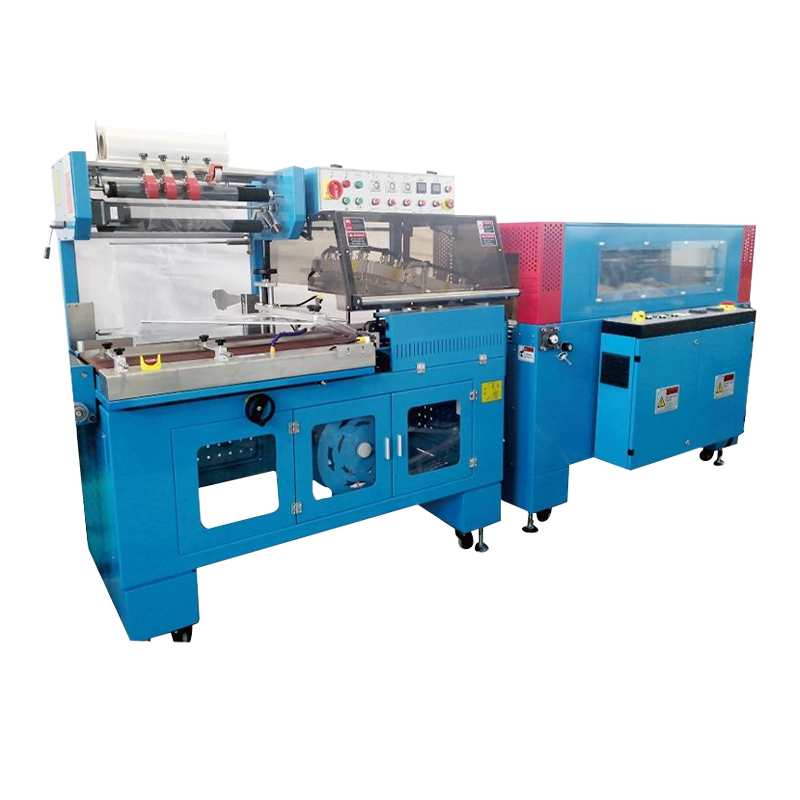
- Binding or wrapping: Depending on the machine configuration, the coil is then secured with PP tape, paper tape, woven binding tape, or encapsulated in stretch film before being discharged for palletizing or packing.
The entire cycle — from the start of winding to coil discharge — typically completes in 15 to 30 seconds for standard cable sizes, enabling a single machine to outperform multiple manual coiling stations. For a detailed look at our automatic coiling machine specifications and cycle time data, visit the product page.
Types of Automatic Cable Coiling Machines
Automatic cable coiling machines are broadly available in three operational configurations. Understanding the differences is essential for matching equipment to production requirements:
| Configuration | Description | Best For |
|---|---|---|
| Online (Inline) | Directly connected to and synchronized with the upstream extrusion line or stranding machine. Cable feeds continuously from production into the coiler without intermediate storage. | High-volume, single-product production runs; new line installations |
| Offline (Standalone) | Operates independently from a reel or barrel. Cable is pre-spooled upstream and fed to the coiler as a separate process. | Multi-product facilities; flexible production scheduling; retrofit installations |
| Fully Integrated Packing Line | Coiling, binding, wrapping, labeling, and palletizing in a single linked system. Each station communicates via PLC for synchronized throughput. | Large-scale cable manufacturers requiring end-to-end automation with minimal labor |
A further distinction exists between single-head and double-head (twin-spindle) coiling machines. Double-head configurations alternate between two mandrels: while one mandrel is completing a coil and ejecting it, the other is already beginning the next coil. This eliminates idle time during coil transfer, effectively doubling throughput on a single machine footprint.
Key Features to Evaluate When Buying an Automatic Cable Coiling Machine
When specifying or sourcing an automatic cable coiling machine, the following features have the greatest influence on long-term production performance and total cost of ownership:
- Servo motor traversing system: The traversing system guides cable side-by-side across the mandrel face as the coil builds up. Servo-driven traversing delivers precise, programmable pitch control that adapts automatically to different cable diameters stored in the recipe database, ensuring a neat, professional coil surface finish regardless of the cable being run. Older machines using mechanical cam-driven traversing cannot achieve the same level of adaptability or repeatability.
- PLC and HMI control with recipe storage: A programmable logic controller (PLC) paired with a touchscreen human-machine interface (HMI) allows operators to store dozens to hundreds of cable recipes — defining coil inner diameter, outer diameter, cable length, traversing pitch, and binding parameters. Switching between products requires only selecting the stored recipe, eliminating manual setup time between production runs.
- Length counting accuracy: High-precision length measurement — typically achieving accuracy within ±0.1% or better — protects your business from under-length coils that fail customer acceptance testing and over-length coils that give material away unnecessarily. Verify the counting method (encoder, metering wheel, or laser) and the manufacturer's stated accuracy specification before purchase.
- Automatic fault detection and alarm: When a sensor detects a fault condition — such as a cable break, jam at the cutting station, or binding material runout — the machine should halt automatically and trigger an alarm at the operator panel. This prevents wasted material and potential equipment damage from continuing to operate in a degraded state.
- Coil inner and outer diameter range: Confirm that the machine's mandrel diameter range and maximum outer coil diameter accommodate all cable types currently in production — and those planned for future products. Mandrel changes for different inner diameters should ideally be tool-free or achievable in under ten minutes to minimize changeover downtime.
- Compatible cable diameter range: Most automatic cable coiling machines are optimized for a specific cable outer diameter range, often stated as the minimum and maximum the traversing and clamping mechanisms can reliably handle. Attempting to run cables outside this range typically results in poor coil formation and potential equipment damage.
- Downstream integration capability: If the machine will feed a binding, wrapping, labeling, or palletizing station, verify that the coil discharge conveyor, coil orientation, and PLC communication protocol are compatible with the downstream equipment.
Cable Types Compatible with Automatic Coiling Machines
Automatic cable coiling machines are suitable for a broad range of flexible insulated conductor types. The most commonly processed include:
- PVC-insulated building wire and flexible power cord (1.5 mm² to 16 mm² and beyond)
- PE and XLPE-insulated low-voltage power cables
- LAN cables (Cat5e, Cat6, Cat6A) — including cross-wound configurations for data cables that must be dispensed without twist
- Extension cords and appliance power cords with moulded or stripped ends
- Rubber-sheathed flexible cables for industrial and portable tool applications
- Flat cables and ribbon cables where coil geometry must be maintained
Very stiff cables — such as armoured cables or cables with outer diameters above the machine's rated maximum — may require specialized coiling heads or larger mandrel formats. Always provide the manufacturer with the full range of cable constructions intended for the machine during the quotation stage.
Online vs. Offline Cable Coiling: Which Configuration Suits Your Line?
The choice between online and offline cable coiling has significant implications for production flexibility, capital cost, and floor space planning. Online coiling integrates the coiler directly with the upstream process — typically an extrusion line or stranding machine — so that cable flows continuously from production into coiling without intermediate storage on large reels. This approach minimizes double-handling and reduces reel inventory, but it ties the coiler's cycle time to the upstream machine speed. If the coiler experiences a fault stop, the upstream process must also stop or divert.
Offline coiling, by contrast, feeds from a storage reel or cable drum. This decouples coiling from extrusion, allowing both processes to run at their optimum speeds independently. Offline machines are also easier to schedule across multiple cable products within a single shift. For facilities running frequent product changeovers or integrating coiling into an existing line without modifying upstream equipment, an offline machine typically offers greater operational flexibility at lower integration cost.
Our fully automatic coiling and packaging equipment is available in both online and offline variants, with engineered integration packages for connection to extrusion lines and motorized payoff systems.
Return on Investment: Automatic Coiling vs. Manual Operations
The business case for investing in automatic cable coiling machines rests on three measurable improvements over manual operations:
- Labor reduction: A single fully automatic coiling and packaging line can replace four to eight manual coiling and binding operators, depending on the cable type and target coil weight. With one operator monitoring multiple machine lines, the labor cost saving typically recovers the machine investment within 12 to 24 months in medium-to-high-volume production environments.
- Material savings: Accurate length counting eliminates the systematic over-length that manual coilers apply as a buffer against short-measure customer complaints. At scale, a 0.5% reduction in average over-length across a production volume of 1,000 km per month represents 5 km of cable recovered — a meaningful material cost saving.
- Quality consistency: Automatic machines produce coils with consistent inner and outer diameters, uniform binding tension, and repeatable weight. This reduces packaging variation, simplifies palletizing, and eliminates the customer complaints associated with poorly formed coils that unravel during distribution.
For guidance on selecting the right coiling configuration for your production volume and cable mix, explore our automatic coiling machine guide or contact our engineering team directly for a line assessment.
Maintenance Best Practices for Long Machine Life
Automatic cable coiling machines are high-cycle production equipment — a single machine running two shifts may complete more than 2,000 coiling cycles per day. Preventive maintenance disciplines that preserve uptime include:
- Cutter blade inspection and replacement: The cutting blade is a wear item. Inspect cutting quality (clean cut vs. frayed insulation) at the start of each shift and replace blades before cut quality degrades to the point of causing production rejects.
- Traversing guide lubrication: The linear guide rails and ball screw of the servo traversing system require periodic lubrication per the manufacturer's schedule. Neglecting this accelerates wear and degrades traversing precision, resulting in uneven coil layers.
- Encoder and metering wheel cleaning: Cable dust and insulation debris accumulate on length-counting components. Weekly cleaning of the metering wheel contact surface prevents slippage that introduces length measurement errors.
- PLC backup: Recipe data and machine parameters should be backed up to an external storage device at regular intervals. A PLC memory failure without a recent backup requires re-entry of all stored cable recipes — a significant downtime event on a machine running many product variants.
Our wire and cable tension control systems are designed to complement coiling machine operation and extend the service life of both the machine and the cable being processed.