LANGUAGE
 中文简体
中文简体 русский
 Français
 Español
 Português
 عربى
عربى
Content
- 1 The Forming Tool That Defines Your Finished Coil
- 2 Positioning vs. Non-Positioning: Selecting the Right Control Mode
- 3 Customization Parameters: Tailoring the Head to the Cable
- 4 Quick-Change Design and Its Impact on Production Efficiency
- 5 Application-Specific Heads Across Coiling Machine Types
- 6 Material and Surface Finish for Cable Protection
The Forming Tool That Defines Your Finished Coil
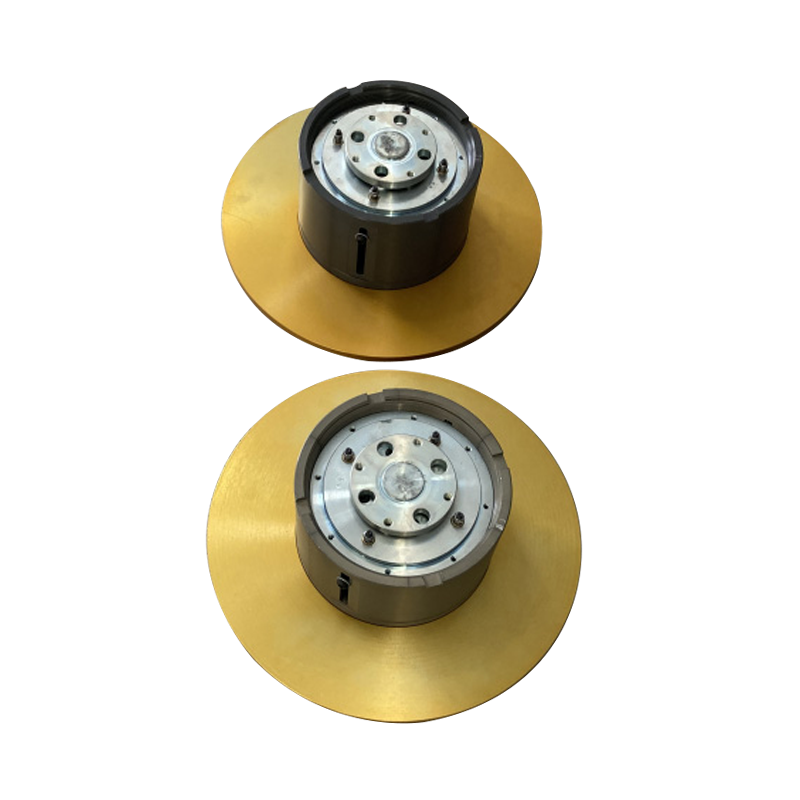
A cable coiling head is the interchangeable end-effector that physically shapes the cable into its final coil geometry. It is not a universal fixture but a precisely dimensioned tool that determines the inner diameter, traverse pitch, and lay pattern of every coil produced. Mounted directly onto the spindle of a coiling machine, coiling and wrapping machine, or coiling and binding machine, this head rotates at the line speed while the cable feeds through its guides. The result is a repeatable, controlled coil package. The coiling head directly converts the machine's rotary motion into a finished, bound coil ready for packaging or the next production stage.
Positioning vs. Non-Positioning: Selecting the Right Control Mode
The fundamental functional divide in coiling heads is between those that lock the cable into a defined, indexed position on every wrap, and those that allow a free, unregistered wind. This choice directly affects coil density, unwinding behavior in downstream automation, and the repeatability of the coil length. The selection must match the end-use requirement of the coil: is it a precise, automated payoff application, or a general-purpose bulk coil?
Positioning Coiling Head
A positioning head incorporates a mechanical index mechanism or a servo-driven registration feature that places each successive wrap of cable in a known, repeatable location relative to the start point. The practical outcome is a coil where every layer has the same number of wraps, and the inner and outer tails are at a known, consistent angular position. This is non-negotiable for automated downstream processes where a robot arm must locate and grip the outer tail for de-reeling. The positioning head typically achieves a wrap-to-wrap position accuracy of ±1.0 mm on the coil face, ensuring that a coil off the same machine yesterday has its tail in the same place as a coil run today. This repeatability eliminates the need for manual tail-finding by an operator and enables lights-out packaging lines.
Non-Positioning Coiling Head
A non-positioning head dispenses with the registration mechanism in favor of a simpler, more robust design. The cable wraps onto the head in a continuous helix without indexing. This offers maximum flexibility for irregular coiling scenarios: cables with varying diameters, stiff or springy conductors that resist precise laying, or short-run specialty cables where rapid size changeover is the priority over exact coil geometry. The coil produced will have a slightly variable tail position and a less dense wind profile, which is perfectly acceptable for bulk coils that will be manually handled or that undergo a secondary re-spooling process. The reduced mechanical complexity also means lower maintenance and faster cleaning between product changeovers, a significant advantage in multi-product cable factories.
Customization Parameters: Tailoring the Head to the Cable
A coiling head is not an off-the-shelf item for most production environments. It is dimensioned to the specific cable outer diameter, the required coil inner diameter, and the width of the coil package. The core dimensions that define a custom head are mapped in the table below.
| Customization Parameter | What It Controls | Typical Range |
|---|---|---|
| Coil Inner Diameter (ID) | The core opening of the finished coil | 80 mm to 400 mm |
| Traverse Width | The axial width of one complete coil | 50 mm to 300 mm |
| Cable Groove Profile | Grip on the cable; prevents slip and surface marring | V-groove, U-groove, or flat with edge lips |
| Mounting Interface | Compatibility with machine spindle | Flange mount, taper lock, or collet system |
Quick-Change Design and Its Impact on Production Efficiency
The coiling head is a major replaceable accessory specifically because a single cable factory processes multiple cable diameters and coil specifications across a production shift. The time taken to swap the head is direct lost production time. Modern coiling heads are engineered with a quick-change mounting interface that reduces a head changeover from a 15-minute bolted-flange procedure to a sub-60-second tool-free swap. The mechanism is typically a spring-loaded bayonet lock or a pneumatic collet that clamps the head onto the spindle with a single actuation. An operator can pull the entire head assembly off the spindle, place it on a storage rack, and mount the next head for a different product with no tools and no re-calibration. This rapid changeover capability directly enables the economic viability of small-batch production runs, allowing a line to switch from a 2.5mm² cable coil to a 6mm² cable coil between shifts without the line downtime that erodes profitability.
Storage and Preservation of Multiple Heads
A cable factory running a diversified product range will own a library of coiling heads, each dimensioned to a specific cable and coil specification. These heads represent a significant capital investment and must be stored on a purpose-built rack with each head's dimensions, the cable part number it is matched to, and the date of its last inspection clearly labeled. The groove surfaces, which contact the cable jacket, must be protected from dents and scratches during storage. A single burr on a head groove, invisible without close inspection, will score the jacket of every cable coiled on that head until the defect is discovered, creating a continuous quality issue across an entire production batch.
Application-Specific Heads Across Coiling Machine Types
The type of coiling machine the head is mounted to determines the functional demands on the head design. The following list breaks down how the head's role adapts to the three primary machine categories.
- Cable Coiling Machines: The head is the primary forming tool. It dictates the coil's inner diameter and the concentricity of the wraps. For a simple coiling machine producing loose coils for hand-packing, the head often incorporates retractable fingers that collapse to release the finished coil without disturbing its lay.
- Cable Coiling and Wrapping Machines: The head must allow clearance for a stretch film or paper wrap to be applied during or immediately after coiling. The head diameter is often undersized relative to the finished coil ID, leaving a deliberate gap for the wrapping film to pass under the coil and seal against the inner circumference.
- Cable Coiling and Binding Machines: The head includes integrated channels or clearance slots that allow a binding tie or tape to be threaded around the coil's waist while it is still on the head. The tie is applied and tensioned before the head releases the coil, ensuring the coil remains tightly bound and does not spring apart upon removal. The slot geometry must protect the cable from contact with the tie tensioning mechanism.
Material and Surface Finish for Cable Protection
The coiling head is in dynamic, repeated contact with the cable jacket under line-speed tension. Any surface roughness on the head will abrade the cable jacket. The head body is typically machined from aluminum alloy for light-duty signal cables, or from stainless steel for heavier power cables and for corrosion resistance in humid production environments. The cable-contact surfaces are polished to a surface finish of Ra 0.8 µm or better, and critical edges are radiused to prevent cutting. For particularly sensitive cables with soft PVC or LSZH jackets, the head grooves are lined with a replaceable nylon or PTFE insert that provides a low-friction, non-marring contact surface. These wear inserts are a consumable item, designed to be replaced at scheduled intervals rather than allowing the harder head body to eventually wear through its surface treatment and begin abrading the cable.